
A 4x4 can look clean and road-ready while corrosion starts out of sight underneath. If you drive along Sydney’s coast, across sandy tracks or through mud and wet conditions, the underbody may face more exposure than routine checks reveal. Choosing 4x4 underbody rust protection Sydney drivers can rely on means considering how the vehicle is used and its current condition, not just product claims.
The options can be difficult to compare. Chemical rustproofing creates a physical protective layer, while electronic systems work differently, so they shouldn’t be judged as if they’re the same solution. Regular underbody cleaning remains important too, particularly after beach or muddy trips.
This guide explains which Sydney driving conditions can increase corrosion exposure, how chemical and electronic approaches differ, and what information about your 4x4 can help you make a considered choice. A & M Hamadache Car Detailing is a family-owned Northern Beaches business established in 1995, offering both chemical and electronic rustproofing as part of vehicle preservation.
Key Takeaways
- Choose 4x4 underbody rust protection Sydney based on your vehicle’s condition and driving habits, not product claims alone.
- Compare chemical and electronic rustproofing by their approach and intended role. Existing corrosion may need attention separately.
- Consider factory protection and the visible condition of the underbody when weighing up additional treatment.
- Before discussing rustproofing, note your vehicle’s history, previous treatments, repairs, visible corrosion and typical driving conditions.
- A & M Hamadache offers both rustproofing approaches for vehicle preservation.
Why 4x4 Underbody Rust Protection Matters in Sydney
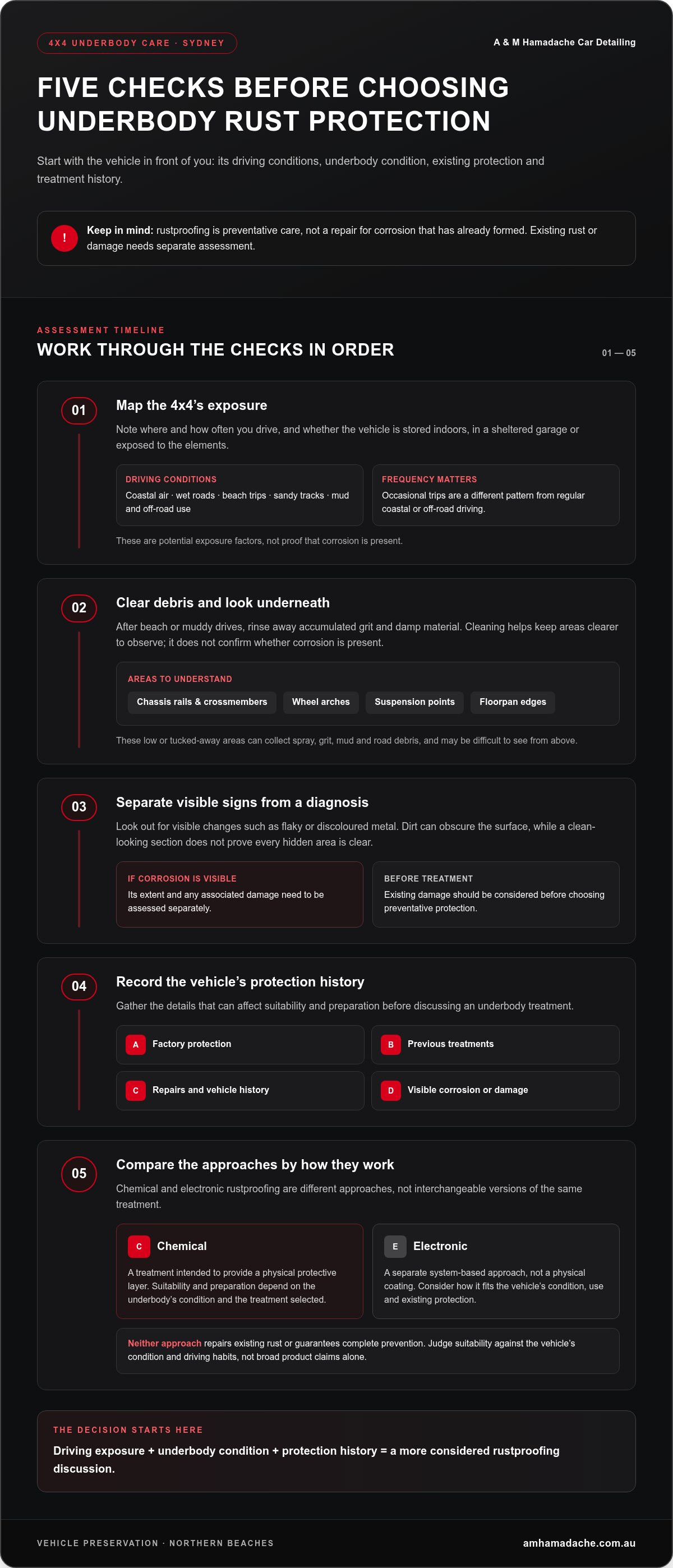
Underbody rust protection is intended to reduce corrosion exposure on metal beneath a vehicle. It’s preventative care, not a repair for corrosion that has already formed. If rust is present, its extent and any associated damage need to be assessed separately before deciding what care is appropriate. A protective treatment is not a substitute for identifying and addressing existing damage.
Rust develops through a combination of conditions, including moisture and exposed metal. Sydney’s coastal air, wet roads and beach use can add to a vehicle’s exposure, but none automatically means a 4x4 will rust. Factory protection, vehicle condition, storage and frequency of use all matter. For a general overview of factory and aftermarket approaches, see Understanding Rustproofing Methods.
A 4x4’s underbody deserves attention in coastal conditions because exposure can build up out of sight, beyond the reach of routine checks from above.
Which Sydney driving conditions can increase underbody exposure?
Coastal air and wet roads are potential exposure factors, not a diagnosis. A vehicle kept in a sheltered garage between occasional beach trips has a different routine from one regularly driven near the coast or used on off-road tracks. More frequent exposure creates more opportunities for moisture, sand or mud to collect underneath. Regular cleaning and checks help keep that use in view.
After a beach or muddy drive, grit and damp material may remain around underbody components, especially in tucked-away spaces. Rinsing away accumulated debris helps keep these areas clearer to observe, but it doesn’t establish whether corrosion is present. Consider the whole pattern: where and how often you drive, and whether the 4x4 is stored indoors or exposed to the elements.
Which underbody areas should a 4x4 owner understand?
The underbody includes chassis rails and crossmembers, as well as exposed metal around wheel arches, suspension points and the edges of the floorpan. These areas sit low and can be exposed to spray, grit and road debris. Their shape can also trap dirt, so a quick glance at the vehicle’s sides won’t show the full picture.
Some surfaces are difficult to see from above, and mud or built-up dirt can obscure their condition. Look out for visible changes such as flaky or discoloured metal, but don’t assume a particular patch confirms the extent or cause of a problem. A clean-looking section doesn’t prove every hidden area is clear either. The condition needs to be assessed before choosing preventative treatment.
To describe your 4x4’s exposure, note its usual routes, beach or off-road use, storage and recent cleaning. Occasional trips may call for a different discussion from regular coastal driving, while existing damage should be considered before further protection. The right 4x4 underbody rust protection Sydney approach starts with the vehicle in front of you, not a blanket assumption about every four-wheel drive.
How Chemical and Electronic Rustproofing Differ
Chemical and electronic rustproofing are different approaches, so compare them by how they work rather than by broad claims such as “complete protection”. Chemical rustproofing is a treatment that provides a physical protective layer. Electronic rustproofing is a separate system-based approach, not a coating. Neither should be treated as a repair for existing corrosion, and no rust protection system guarantees complete prevention. The vehicle’s condition and use remain central to the decision.
The Industry Standards for Automotive Corrosion Protection discussion from AMPP offers wider context on standards in this field. For an individual 4x4, general information doesn’t replace consideration of its condition, existing protection and exposure.
| Comparison point | Chemical rustproofing | Electronic rustproofing |
|---|---|---|
| Approach | A chemical treatment intended to provide a physical protective layer. | A rustproofing system that takes a different approach from applying a physical coating. |
| Intended role | Considered as part of preventative underbody care, subject to vehicle condition and treatment suitability. | Considered as an alternative rustproofing approach, with suitability assessed for the vehicle and its use. |
| Considerations | Preparation and suitability depend on the underbody’s condition and the treatment selected. | It isn’t a coating, a repair for existing rust or a guarantee against corrosion. |
| Questions to consider | What is the current condition, and what preparation is appropriate before treatment? | How does this approach suit the vehicle’s condition, use and existing protection? |
What does chemical rustproofing aim to do?
Chemical rustproofing is intended to add a protective layer to relevant vehicle surfaces. The approach should be considered in light of the 4x4’s condition and the treatment selected, rather than assumed to be identical for every vehicle. Dirt, existing corrosion and previous treatments may affect what is suitable. This is preventative care, not a way to restore metal that has already corroded.
How should owners assess electronic rustproofing claims?
Think of electronic rustproofing as a different category, not another name for an underbody coating. Consider what the approach is intended to do and how it fits your vehicle, rather than assuming it is automatically better or worse. Be cautious of absolute promises: neither electronic nor chemical rustproofing can be presented as stopping all corrosion or fixing existing rust.
For 4x4 underbody rust protection Sydney owners are weighing up, start with the vehicle’s condition, existing protection and regular driving conditions. A & M Hamadache offers both chemical and electronic rustproofing solutions as part of vehicle preservation.
Which Underbody Protection Suits Your 4x4 and Driving Habits?
The right approach depends on more than whether your 4x4 is new or used. Consider its factory protection, how it has been driven and stored, and what the underbody looks like now. A vehicle used mainly for sealed-road commuting has a different exposure pattern from one taken off-road most weekends. 4x4 underbody rust protection Sydney owners consider should reflect those details, rather than vehicle age or type alone.
- Occasional beach use: Note how often you drive on sand and whether you clean the underbody afterwards. Infrequent trips call for a different discussion from repeated beach use.
- Regular off-roading: Muddy tracks can leave debris around underbody areas. The frequency and type of track, along with your cleaning routine, help describe the vehicle’s exposure.
- Daily commuting: Mostly sealed-road driving may mean less off-road debris, but wet-road use and where the vehicle is parked still form part of its care history.
- Long-term storage: Record whether the 4x4 is kept in a garage or exposed to the elements, and how long it may sit between drives. Storage is relevant context, not a guarantee of condition.
Does a new or used 4x4 need the same approach?
No. Age alone doesn’t establish underbody condition or show whether additional treatment is suitable. A new 4x4 may already have factory protection, so don’t assume it automatically needs another treatment. For a used vehicle, previous driving, storage and rustproofing history can be as relevant as age. Consider these details alongside any visible corrosion before deciding on preventative care.
Be clear about what you’re seeing. Early surface corrosion may be a reason to have an area assessed, but it isn’t the same as advanced damage. Flaking, deterioration or corrosion that appears to affect the structure needs assessment beyond a preventative treatment decision. Don’t rely on an added protective layer to repair damaged metal or assume a visible mark tells the whole story.
How do beach and off-road habits affect the decision?
Describe your routine in practical terms: how often the 4x4 visits beaches, muddy tracks or coastal roads, and whether you rinse it after those trips. Cleaning habits help explain how much debris may remain underneath between drives. This use-and-condition approach supports a more tailored discussion than asking whether every four-wheel drive needs the same treatment. The broader guide to car rustproofing in Sydney also explores coastal vehicle care.
Decision rule: Match the protection discussion to how the 4x4 is used, then let its current underbody condition determine the next step. If corrosion is visible or the history is unclear, have the condition assessed before treating prevention as the answer.
How to Prepare Your 4x4 for an Underbody Rust Protection Assessment
A useful assessment starts with a clear account of the vehicle, not assumptions based on age or appearance. Share what you know about its history and use, and point out visible concerns. Then the underbody’s actual condition can inform the next step, helping distinguish preventative treatment from areas that may need further attention.
Before discussing rustproofing, work through these steps:
- Note the vehicle history. Record the model, age, approximate use, previous repairs and any rust treatments you know about. If the vehicle has changed hands, note where its history is uncertain.
- Describe its driving routine. Include regular beach visits, coastal roads, wet-road driving, muddy tracks and how often you clean underneath after those trips.
- Record visible concerns. Note where you’ve seen discolouration, flaking or other changes. Clear photos can help explain what caught your attention, but they aren’t a professional diagnosis.
- Discuss the vehicle’s needs. Share the information you’ve gathered so its condition and use can guide a conversation about suitable treatment and preparation.
What vehicle details should you have ready?
Bring the basics together: model, age, approximate kilometres or use pattern, known repairs and any previous underbody treatments. Be straightforward about beach, coastal, wet-road and off-road driving, including how often it happens and whether you rinse away sand or mud afterwards. If you’ve noticed a concern, photograph it in good light and note its location. Treat images as useful context, not proof of the condition underneath.
Small details help build a clearer history. Distinguish between a one-off beach trip and regular beach driving, and note whether the vehicle is usually garaged or left outdoors. If you don’t know whether it has been treated before, say so rather than guessing. The aim is to give an accurate account, not diagnose corrosion yourself.
What should a useful assessment clarify?
A useful discussion connects the vehicle’s condition with its use, then explains whether the proposed rustproofing approach is suitable. Ask for a clear explanation of what the treatment is intended to do and what it won’t address. Keep expectations realistic: preventative protection isn’t a repair for existing damage, and no system can promise complete prevention of corrosion.
Preparation should reflect the underbody’s actual state and the treatment being considered. If corrosion or previous repairs are present, their condition matters before preventative work is considered. You should understand the proposed approach, its purpose and its limits, without relying on broad claims or assumed maintenance schedules.
For owners considering 4x4 underbody rust protection Sydney, vehicle-specific information makes the discussion more useful. Coastal routines also form part of broader vehicle care, including professional car detailing on the Northern Beaches. A & M Hamadache offers chemical and electronic rustproofing solutions for vehicle preservation. Discuss underbody rustproofing in light of your 4x4’s condition and use.
A & M Hamadache 4x4 Rustproofing on the Northern Beaches
Choosing rustproofing is a vehicle-preservation decision, and a clear understanding of the 4x4 is the best starting point. A & M Hamadache Car Detailing is a family-owned Northern Beaches business, established in 1995. The business offers both chemical and electronic rustproofing, giving owners different approaches to consider as part of ongoing vehicle care.
For Northern Beaches drivers, coastal conditions are a practical part of the conversation, but they don’t tell the whole story. A 4x4 used for regular beach trips has a different routine from one driven mostly on sealed roads. Previous treatments, visible underbody condition, cleaning habits and storage also help shape what may be suitable. Rather than assuming every vehicle needs the same treatment, consider its condition and how it’s used.
A locally focused approach to vehicle preservation
On the Northern Beaches, coastal vehicle care is relevant to many owners’ routines. That local setting provides useful context for discussing beach, coastal-road and off-road use, without treating location alone as a diagnosis of corrosion. A & M Hamadache is a family-owned business established in 1995 and offers rustproofing as part of vehicle preservation.
Discuss rustproofing for your 4x4
A helpful conversation begins with the details you know: your vehicle’s model and age, previous rust treatments or repairs, visible concerns, and how often it’s used on beaches, coastal roads or muddy tracks. These details connect the protection discussion to your vehicle, rather than generic claims or assumptions. If you’re unsure about the underbody’s condition, an assessment can help inform the next step.
A & M Hamadache offers chemical and electronic rustproofing for 4x4s, with the discussion focused on the vehicle and its typical use. Understand the proposed approach and its role, while keeping in mind what preventative treatment can and can’t do.
If you’re considering 4x4 underbody rust protection Sydney drivers can match to their vehicle and routine, share your 4x4’s history and typical driving conditions with the team. Contact A & M Hamadache to discuss rustproofing for your vehicle.
Make a considered plan for your 4x4
Your vehicle’s use can change over time. A 4x4 that mostly handles weekday commuting today might later take regular coastal trips or muddy tracks. Review its care as those habits shift, and record relevant changes alongside its maintenance history. That gives future decisions clearer context and helps you avoid treating rust protection as a one-off choice separate from the vehicle’s condition.
For 4x4 underbody rust protection Sydney owners can plan with confidence, ground the discussion in your vehicle’s current needs. Bring the details you’ve gathered and consider what approach makes sense for its use. A measured, vehicle-specific plan supports thoughtful long-term care without relying on broad promises.
Discuss underbody rust protection for your 4x4 with A & M Hamadache and take a practical next step towards caring for your vehicle.
Frequently Asked Questions
Is underbody rust protection worthwhile for a 4x4 in Sydney?
It may be worth considering if your 4x4 regularly faces coastal air, beach trips or muddy tracks, but suitability depends on the vehicle’s condition and use. For 4x4 underbody rust protection Sydney owners should weigh up how often the vehicle is exposed, how it’s stored and whether it already has factory protection. A mostly garaged commuter and a frequently used beach vehicle may have different needs, so consider the individual vehicle rather than applying a blanket rule.
Can rustproofing stop existing rust from spreading?
Rustproofing shouldn’t be relied on to stop or repair corrosion that’s already present. If you notice flaking, pitting or a patch that appears to be worsening, have the area assessed before deciding on preventative treatment. A small surface mark and deterioration around a structural section aren’t necessarily the same issue. Understanding the condition first helps separate prevention from any repairs that may be needed.
Does a new 4x4 need additional underbody rust protection?
Not automatically. A new 4x4 may already have factory protection, and its intended use matters before adding another treatment. Check the vehicle information for details of its existing protection, then consider whether your regular driving includes beach access, coastal roads or off-road tracks. If you’re planning a change in use, such as taking a commuter vehicle on frequent beach trips, review its underbody care needs.
How often should underbody rust protection be inspected?
There isn’t one inspection interval that suits every 4x4, so avoid relying on a fixed schedule without considering its use and condition. Follow the treatment’s care guidance and factor in changes to your driving routine. An underbody check can also be considered during routine vehicle servicing or after frequent beach and off-road use. If you notice new corrosion, damage or a change to a treated area, arrange an assessment rather than waiting for a scheduled check.
Can beach driving increase the risk of underbody corrosion?
Beach driving can increase exposure to sand, moisture and coastal conditions, but it doesn’t mean corrosion will inevitably occur. How often you drive on the beach, whether you rinse the vehicle afterwards and where it’s stored all contribute to its care picture. After a trip, pay attention to areas where sand may remain around the wheels or underneath the vehicle. Have persistent visible corrosion assessed rather than judging it from a quick glance.
How much does 4x4 underbody rust protection cost in Sydney?
The cost depends on the vehicle, its condition and the approach being considered, so a single figure wouldn’t reflect every 4x4. Existing corrosion, previous treatments and any preparation required can affect what’s suitable. For an accurate price, the vehicle’s underbody and rustproofing needs need to be considered together. When discussing a quote, have your vehicle details and treatment history ready so the scope relates to your 4x4.
Does rustproofing prevent corrosion completely?
No rustproofing system can guarantee complete prevention of corrosion. Protection is one part of ongoing vehicle care, not a reason to ignore cleaning or changes in the underbody’s condition. After beach or muddy use, rinsing away accumulated debris helps keep the area clearer to observe. Continue to look for visible changes and have concerns assessed, especially if the vehicle’s use or exposure changes over time.


