
What if the most worthwhile pre-sale detail isn’t the most extensive one, but the work that addresses what buyers notice first? If you’re unsure which marks, smells or signs of wear to tackle, pre-sale car detailing Northern Beaches can help you focus on your vehicle’s condition and your plans for selling. A clean, cared-for presentation matters, but not every car needs the same level of work.
It’s understandable to want the car looking its best before listing while avoiding work that doesn’t suit its condition. This guide explains what to prioritise, when to arrange detailing around your listing photos, and how to focus on visible areas that can shape a buyer’s first impression. Detailing can improve presentation, but it can’t promise a particular sale outcome.
You’ll also learn where a full detail may fit and when paint correction and restoration could be appropriate for the visible condition and desired finish. A & M Hamadache Car Detailing is a family-owned Northern Beaches business established in 1995. Its Full Detail Package and paint correction and restoration services can help prepare a clean, presentable vehicle. Start by identifying the areas that matter most and the work that suits your car.
Key Takeaways
- Inspect the exterior, cabin, glass and trim to identify presentation issues buyers are most likely to notice.
- For pre-sale car detailing Northern Beaches, prioritise work according to the vehicle’s condition and your intended listing date.
- Compare DIY cleaning with professional detailing based on the finish you want, the time you have and whether any areas need specialist attention.
- Prepare for detailing by setting your sale date, removing personal belongings and noting the areas you want addressed before photography.
- A & M Hamadache’s Full Detail Package and paint correction and restoration services can help address different presentation needs.
Why pre-sale car detailing matters for Northern Beaches
Pre-sale detailing is presentation-focused cleaning and restoration carried out before a vehicle is advertised. It brings attention back to the car itself by addressing visible dirt, wear and neglected surfaces. The right work depends on the vehicle: a well-maintained car may need a careful clean, while one with noticeable cosmetic wear may benefit from selected restoration work.
For sellers arranging pre-sale car detailing Northern Beaches, the aim is a clean, cared-for appearance, not a promise of a particular result. A buyer’s decision can also depend on the vehicle’s age, condition, service history, mechanical state and asking price. Detailing supports presentation, but it doesn’t replace those considerations or guarantee buyer interest, a higher offer or a faster sale.
What do buyers notice when viewing a car?
First impressions are shaped by the surfaces a buyer sees and uses straight away: the exterior paintwork, windows, wheels, door areas and cabin. Clean glass makes it easier to see the interior, while tidy seats, carpets and trim help the cabin look cared for. These details don’t prove how a vehicle has been maintained, but they can stop avoidable dirt from becoming the focus during an inspection.
Small, neglected-looking areas can draw attention away from an otherwise well-kept car. Dusty vents, marks on door trims or grime around the boot opening may stand out when a prospective buyer looks closely. That doesn’t mean every blemish needs correction. First distinguish ordinary signs of use from dirt or presentation issues that cleaning can address.
What detailing can and cannot do before a sale
Auto detailing covers more than a standard wash. As Auto detailing involves thorough cleaning, aesthetic restoration, and protection of a vehicle's surfaces, both interior and exterior. Before a sale, the focus is on choosing work that suits the car’s visible condition and intended presentation. Cleaning can make surfaces look tidier, while professional paint correction and restoration may be appropriate when the paint’s condition and desired finish call for it.
Detailing is not a mechanical inspection or repair, and it can’t establish a vehicle’s service history. A polished exterior doesn’t confirm that the engine, brakes or other components are in good order. Keep presentation work separate from decisions about servicing, repairs, records and the asking price. Those matters need their own assessment and should be represented accurately when advertising the car.
Set realistic expectations before deciding how much work to request. Results depend on the starting condition, the areas selected and what can reasonably be improved. Some marks or wear may remain. The aim is to present the vehicle thoughtfully, not to make a used car look new or conceal its condition.
- Presentation: address visible dirt, cabin untidiness and areas that may distract during a viewing.
- Condition: match cleaning or restoration work to the surfaces and finish the car actually has.
- Sale decisions: assess mechanical condition, service records and asking price separately from detailing.
This distinction helps you choose preparation that fits the vehicle and your plans, without treating cosmetic work as a guarantee of a sale outcome.
What to prioritise in pre-sale car detailing
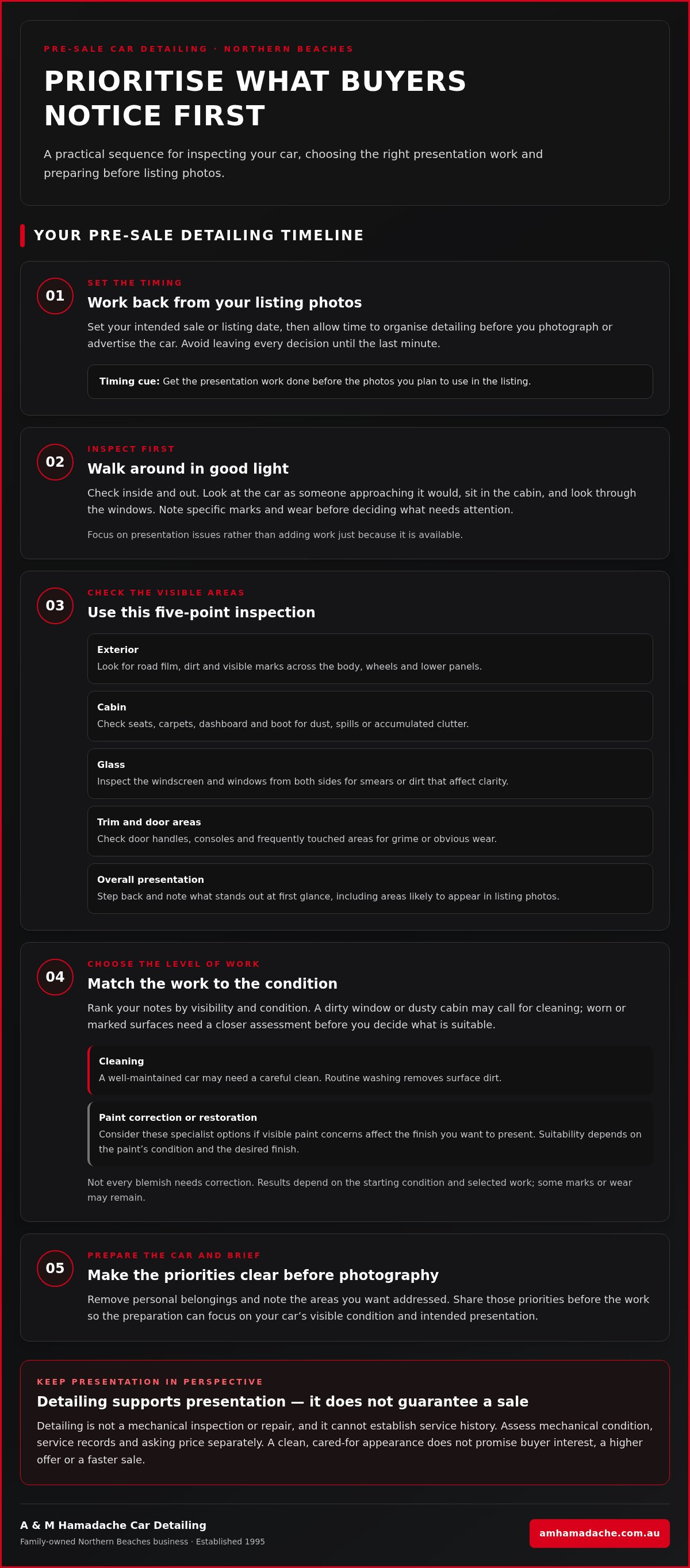
Start with a deliberate walk-around rather than assuming the whole vehicle needs the same level of attention. The right priorities depend on what is visible, the car’s existing condition and how soon you plan to list it. For pre-sale car detailing Northern Beaches, a short inspection helps separate straightforward cleaning from work that needs a more considered approach.
Which areas deserve attention first?
Inspect the car in good light, inside and out. Look at the surfaces buyers will see as they approach, sit in the cabin and look through the windows. Note specific marks or wear before deciding what to address. This keeps the focus on presentation concerns instead of adding work simply because it is available.
- Exterior: Look for road film, dirt and visible marks across the body, wheels and lower panels.
- Cabin: Check the seats, carpets, dashboard and boot for dust, spills or accumulated clutter.
- Glass: Inspect the windscreen and windows from inside and outside for smears or dirt that affect clarity.
- Trim: Look at door handles, consoles and other frequently touched areas for grime or obvious wear.
- Overall presentation: Step back and note anything that stands out in the car’s first view, including areas likely to feature in listing photos.
Rank your notes by visibility and condition. A dirty window or dusty cabin may call for cleaning, while worn or marked surfaces need a closer assessment before you decide what work is suitable. Your listing date matters too. Allow enough time to organise the work before you intend to photograph or advertise the car, rather than leaving every decision until the last minute.
When might paint correction be worth considering?
Routine washing removes surface dirt; paint correction and restoration are specialist options for improving the appearance of paintwork. They may be worth considering if visible paint concerns affect the finish you want to present. Suitability depends on the paint’s condition and your goals. Not every mark can be removed, and correction shouldn’t be treated as a way to change what a buyer will offer.
Before deciding, identify the specific areas that concern you and consider whether they’ll be prominent in a viewing or photograph. A condition-led assessment can help distinguish paint concerns from dirt that may come away with cleaning. For more detail on paint-specific considerations, see the professional paint correction and restoration guide.
A & M Hamadache Car Detailing offers professional paint correction and restoration. If paint appearance is one of your concerns, professional paint correction and restoration can be considered alongside the condition of the vehicle and the finish you want.
DIY vs professional pre-sale detailing: how to decide
Choosing between a DIY clean and professional detailing comes down to three things: the vehicle’s current condition, the time you can set aside and the presentation you’re aiming for. If the car is already tidy and needs only routine attention, a careful clean may be enough. If it has heavier build-up or presentation concerns that need a more considered approach, professional detailing can help address the right areas.
When is a careful DIY clean a reasonable choice?
DIY cleaning can suit a vehicle that’s already presentable and needs a straightforward refresh before listing. You can wash the exterior, tidy the cabin and clean the glass using products intended for vehicle surfaces. Be realistic about the result: routine cleaning can remove dirt, but it won’t restore worn trim or resolve paint defects. Avoid attempting paint repair or machine polishing without the right expertise.
DIY cleaning
- Suitable when: the car is already presentable and needs routine cleaning.
- Likely limitation: it may not address persistent marks, worn surfaces or more involved presentation concerns.
- Specialist attention: paint appearance issues or restoration needs may call for professional attention.
Professional detailing
- Suitable when: the vehicle’s condition, limited preparation time or desired finish calls for a more considered approach.
- Likely limitation: detailing improves presentation, but it can’t guarantee a sale, a particular offer or a sale date.
- Specialist attention: paint correction and restoration are different from routine cleaning and should be considered in light of the paint’s condition.
When can a tailored professional detail help?
Professional detailing may suit a car that needs attention across several areas, or when you want to prioritise particular concerns without assuming every surface needs the same treatment. A full detail is one option when the vehicle needs broader attention. A & M Hamadache Car Detailing offers a Full Detail Package to help prepare a vehicle for sale, with the work suited to the car’s presentation needs.
Paint correction and restoration deserve separate consideration. They address paint appearance concerns rather than forming part of an ordinary wash, and may be relevant when the visible finish doesn’t match the presentation you want. The right approach depends on the paint’s condition; not every mark can be removed, and correction doesn’t determine what a buyer will offer.
For wider advice on caring for a vehicle in the local environment, the complete coastal car detailing guide offers broader context. For pre-sale car detailing Northern Beaches, weigh the time you have against the work the car genuinely needs. If a Full Detail Package suits your plans, you can enquire about detailing with A & M Hamadache.
How to prepare your car for detailing before listing it
A little planning helps keep detailing, listing preparation and photography in the right order. Start with your intended sale date, then allow the schedule to flex around the vehicle’s condition, the work you choose and practical arrangements for getting the car ready. There’s no need to set an arbitrary gap between detailing and photos. The useful rule is to photograph the vehicle after the selected presentation work is complete.
What should you do before the detail?
Before arranging the work, make a short note of what you’d like addressed. Be specific: for example, identify a mark on a seat, dusty trim or paintwork that concerns you. Clear personal belongings from the cabin and boot, and remove child seats if practical. This gives a clearer view of the areas needing attention and helps ensure the requested work reflects the actual vehicle.
- Set your target listing date. Use it to plan when you want the vehicle prepared and photographed, while leaving room to adjust if the car needs more attention than expected.
- Inspect and record concerns. Walk around the exterior, look through the cabin and note visible marks, wear or areas you want considered.
- Clear the vehicle. Remove personal items, loose belongings from the boot and child seats where practical, so the relevant surfaces are accessible.
- Decide what presentation work suits the car. Separate routine cleaning needs from concerns that may call for more specialised attention. The vehicle’s condition and your preferred finish should guide the scope.
- Review the result before photography. Once the selected work is complete, check the cabin and exterior, remove any remaining clutter and choose a suitable place for listing photos.
Keep the plan flexible. A car that needs only a modest refresh may be ready for photos sooner than one requiring more involved presentation work. Access to the vehicle and your own schedule can also affect the order. A & M Hamadache’s Full Detail Package provides a clear option for broader preparation. Describe the car and the areas you’ve noted so the requested work reflects its condition.
When should you photograph the car?
Take listing photos after the chosen cleaning or restoration work is finished, so the images reflect the car’s prepared presentation. Choose a tidy, uncluttered setting and even natural light where practical. Before taking photos, check that personal items are out of view, the cabin looks orderly and the windows are clear. Photos are a separate part of your listing preparation.
For pre-sale car detailing Northern Beaches, a clear sequence makes it easier to organise the work around your sale plans without rushing every decision. If you’re ready to discuss detailing for your vehicle’s condition and presentation priorities, enquire about the Full Detail Package.
Arrange pre-sale car detailing with A & M Hamadache in Northern Beaches
Start by assessing the car as it stands, identifying the presentation issues that matter most and choosing work to suit. There’s no need to assume every vehicle needs paint correction. The right preparation depends on the car’s condition and what you want prospective buyers to see when they view it or look through your listing.
A & M Hamadache Car Detailing is a family-owned Northern Beaches business established in 1995. Its Full Detail Package provides a professional detailing option for preparing a vehicle, while paint correction and restoration can address paint appearance concerns. A clear description of your priorities is a useful first step towards choosing work that suits the car.
What information helps plan the right detail?
Before making an enquiry, gather a few practical details about the vehicle and your plans. You don’t need a technical assessment; a straightforward account of what you can see and what you hope to improve gives the conversation a helpful starting point.
- Vehicle details: note the make, model and general condition.
- Presentation now: describe whether the main concerns are in the cabin, on the exterior or both.
- Specific priorities: identify visible issues, such as a marked interior surface or paintwork whose appearance concerns you.
- Sale plans: share when you intend to list the vehicle, so preparation can be considered alongside your schedule.
Being specific keeps the discussion focused on the actual car and the work you’re requesting. For example, if the cabin is already tidy but the paint finish is your main concern, say so. If you’re unsure which areas deserve attention, describe what you’ve noticed and the presentation you’re aiming for. This makes it easier to discuss the Full Detail Package or paint correction and restoration in relation to your vehicle’s condition.
What to expect from a tailored approach
A full detail can suit a vehicle with presentation needs across several areas. If your main concern is paint appearance, paint correction and restoration are specialist services to consider separately from routine cleaning. The aim is to choose work that fits the car’s condition and your plans, with realistic expectations about what cleaning or restoration can achieve.
Paint correction and restoration may be relevant if paint appearance is a priority, depending on the visible condition and desired finish. They shouldn’t be assumed necessary for every car, and no detailing work can promise a particular offer, buyer response or sale timing.
If you’re preparing a car for sale, take the next step with a clear picture of its condition and your main priorities. Request a pre-sale detailing quote from A & M Hamadache to discuss the work that suits your vehicle.
Make your next step a considered one
Before you list the car, decide what you want a prospective buyer to notice and what preparation fits your plans. A clean, well-presented vehicle can make the viewing feel more considered, while its condition, history and asking price remain important parts of the sale. Keep expectations realistic: detailing is preparation, not a promise of a particular offer or timeline.
If you’re weighing up what work makes sense, start with the vehicle’s current presentation and the areas you’d most like addressed. That gives you a practical basis for discussing pre-sale car detailing Northern Beaches and choosing an approach suited to your car, rather than paying for work that doesn’t match your priorities.
When you’re ready to take that step, share your vehicle’s condition, main presentation concerns and intended sale timing. Request a pre-sale detailing quote from A & M Hamadache to discuss the Full Detail Package and any paint correction or restoration needs.
Frequently Asked Questions
Does pre-sale car detailing guarantee a higher sale price?
No, detailing can’t guarantee a higher sale price, more buyer interest or a faster sale. It can help present the vehicle cleanly, making it easier for someone viewing it to assess its appearance without avoidable dirt or clutter getting in the way. Buyers also weigh factors such as condition, history and asking price. Treat detailing as preparation for presenting the car, not a substitute for accurate advertising or a promise about the result.
How much time should I allow before listing my car?
Allow time according to the vehicle’s condition and the work you choose, rather than relying on a standard number of days. A car needing straightforward cleaning may require less planning than one with several areas to address. For pre-sale car detailing Northern Beaches, consider your intended listing date, the detailing arrangements and when you can take photos afterwards. Build flexibility into your plan if the vehicle needs a more involved approach.
Is a full detail necessary before selling a car?
No, a full detail isn’t automatically necessary. If the car is already tidy and your concerns are limited, you may decide that a careful clean is enough. A vehicle with presentation needs across several areas may benefit from a broader detail. For example, you might focus on the cabin if that’s where wear is most noticeable, rather than choosing more extensive work by default. Let the car’s condition guide the scope.
Can paint correction remove every scratch before a car sale?
No, paint correction can’t be assumed to remove every scratch. What may be improved depends on the particular paint concern and the vehicle’s paint condition. A surface mark and more substantial damage aren’t necessarily the same problem, so don’t expect one process to make all paintwork flawless. If a scratch is your main concern, describe where it is and how it looks when discussing professional paint correction and restoration.
Should I get ceramic coating before selling my car?
It depends on your sale plans and whether you expect to keep the vehicle for longer. If you’re preparing to list soon, consider whether ceramic coating suits your priorities alongside the immediate presentation work. If you’ll retain the car, paint protection may remain relevant beyond the sale. Don’t choose a coating on the assumption it will increase resale value. Consider the service in light of your intended ownership and the vehicle’s needs.
What should I remove from my car before detailing?
Remove personal belongings from the cabin, door pockets and boot so they don’t obstruct the areas being prepared. Take out child seats if practical, and keep valuables, documents and loose items somewhere secure. Beforehand, make a brief note of concerns such as a mark on a seat, a dusty storage area or paintwork you want assessed. This helps distinguish your main priorities from general clutter and keeps the requested work focused.
Should I photograph my car before or after detailing?
For listing photos, it’s generally more useful to photograph the car after the selected detailing work is complete. The images can then show the presentation you intend buyers to see, rather than a condition you’ve since changed. Choose a tidy location with even natural light, and check that personal items aren’t visible through the windows. If you take reference photos before the work, keep them separate from the final listing images.


