
Could a small-looking sag call for more than a simple re-glue? Drooping roof fabric can make the cabin look untidy and distract the driver, but the repair sagging car roof lining cost isn’t determined by appearance alone. A useful quote starts with the vehicle and the repair scope, not a generic price.
The right approach depends on what’s happening beneath the fabric. A local repair may suit a limited area, while deteriorated backing or widespread sagging can mean broader re-trimming or replacement. Vehicle size, roof fittings, a sunroof and the lining’s condition all help shape the assessment. This guide explains what affects a quote, how repair options differ and what details and photos can help assess the work. A & M Hamadache Car Detailing is a family-owned Northern Beaches business established in 1995, offering headlining and trim repairs.
Key Takeaways
- The repair sagging car roof lining cost depends on your vehicle, the affected area and the work needed to restore the lining.
- Localised attention, broader re-trimming and replacement are different approaches, and the lining’s condition helps determine which may suit.
- Prepare your vehicle’s make, model and year, along with details of the affected area, fittings and any sunroof.
- Clear photos can support an initial assessment, while an inspection helps establish the lining’s visible condition and repair scope.
- A & M Hamadache Car Detailing provides headlining and trim repairs for Northern Beaches drivers.
Why a Sagging Car Roof Lining Repair Cost Is Difficult to Estimate from Photos Alone
Sagging roof fabric can make a cabin feel neglected, and a loose section may distract the driver or passengers. But a photo of the visible droop rarely shows the full repair. An assessment needs to account for the vehicle and the lining’s condition, not just the size of the sag in one image.
The headlining is the fabric-covered panel fixed to the inside of the vehicle’s roof. A photo taken from below can show where the fabric hangs, but not always how far it has separated or the condition of the material beneath it. A close-up is useful, although a wider view can also show how the lining meets the edges and fits around overhead components.
A roof-lining estimate depends on the vehicle, access and repair scope. That’s why the repair sagging car roof lining cost can’t be judged reliably from a single image. Photos help with an initial assessment, while a vehicle-specific inspection can establish what work is appropriate.
What is happening when a car roof lining sags?
Sagging occurs when the fabric, its backing, or both loosen from the roof panel. You might first notice fabric hanging near a door, a loose edge or a broader area drooping towards the cabin. The visible shape is a useful clue, but it doesn’t confirm how much material has detached or which repair method will suit.
A small-looking droop, for example, may sit beside a larger area of loose fabric. A more noticeable sag may be limited to one section. Photos from different angles can show the location and extent, but they can’t always reveal the condition behind the fabric. The visible symptom alone doesn’t establish whether localised attention or more extensive work is needed.
Why the vehicle matters to the estimate
Make, model and cabin layout matter because vehicles differ in roof shape, lining dimensions and how the interior is assembled. These differences can affect access to the affected area and the work involved in achieving a neat repair. The process shouldn’t be assumed to be identical for a small hatchback, a sedan and a larger vehicle.
Roof consoles, interior fittings and a sunroof can also affect the area that needs attention. A sag beside an overhead console, for instance, may involve different access considerations from fabric hanging in an open section of the roof. The vehicle’s materials and construction also influence the repair approach, so a quote should reflect the individual cabin rather than a one-size-fits-all assumption.
For a more useful initial assessment, provide the vehicle’s make, model and year, then describe where the fabric is loose. Include clear photos of the affected area and a wider view of the cabin, along with details of any sunroof or overhead fittings. This gives the repairer a better starting point and helps identify what needs closer inspection before settling the scope.
What Factors Change the Cost to Repair a Sagging Car Roof Lining?
There isn’t one reliable figure that applies to every vehicle. A small area of loose fabric in an accessible part of the cabin may call for different work from a broad sag that runs around fittings or across a large section of the roof. A generic price can therefore mislead: the repair sagging car roof lining cost depends on the vehicle and the work its lining actually needs.
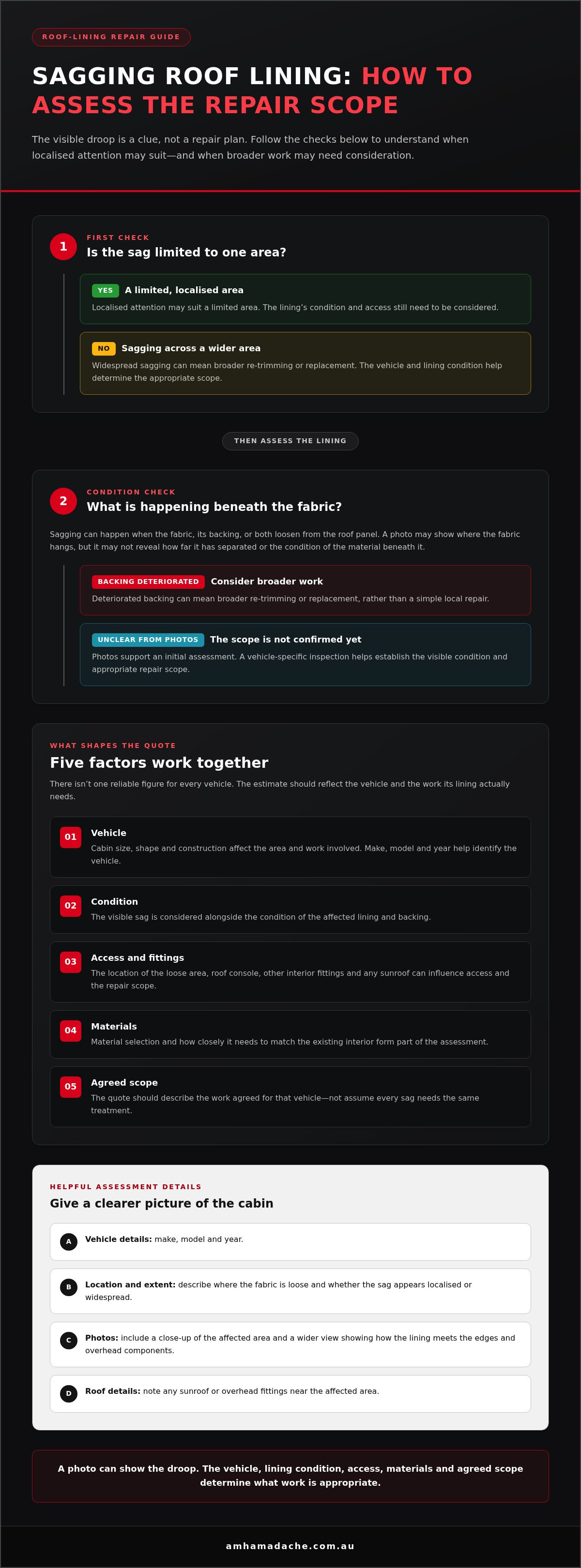
Two sagging linings can require different work even when the symptoms look similar. The estimate is shaped by five connected factors:
- Vehicle: The cabin’s size, shape and construction help determine the area and work involved.
- Condition: The visible sag is considered alongside the condition of the affected lining.
- Access: The position of the loose area and nearby fittings can influence the work required to reach it.
- Materials: Material selection and how closely it needs to match the existing interior form part of the assessment.
- Agreed scope: The quote should reflect the repair work agreed for the vehicle, rather than assume every sag calls for the same treatment.
A localised issue and a larger, more complex affected area are different jobs. First establish what needs attention, then set a scope that suits the vehicle and its condition.
Vehicle design, access and fittings
Cabin shape and access to the roof panel can affect how the work is approached. A roof console, interior fittings or sunroof may sit beside or within the affected area, influencing access and the repair scope. Their presence doesn’t automatically mean a particular feature will increase the cost. Its position and the way the lining is arranged in that vehicle matter.
Condition, materials and repair scope
The size and condition of the affected area help determine what work is appropriate. A loose edge is a visible symptom, not a repair plan by itself. Material choice and the need to match the existing lining can also inform the assessment. The agreed scope should describe the work proposed for that vehicle, based on its condition.
These factors work together. A compact area may still need careful access around fittings, while a larger sag in a more open section may involve a different scope. Vehicle construction, condition and material requirements should be considered as a whole, not treated as separate additions to a standard job.
For a tailored assessment in the Northern Beaches, share your vehicle details and describe the affected area. A & M Hamadache’s headlining repair assessment takes the vehicle and visible condition into account to help define the work.
Repair or Replace the Headlining? Compare the Options Before You Decide
A quick surface fix can seem like the simplest answer, especially if only one section is visibly drooping. But the fabric’s appearance doesn’t reveal everything about its condition. Localised attention, broader re-trimming or replacement may each be appropriate in different circumstances. The suitable option depends on inspection and the condition of the headlining, not on the visible symptom alone.
Use this comparison to understand the scope each approach may involve. The lining’s condition and the vehicle’s layout determine which approach is appropriate.
| Option | Scope and when it may be considered | Disruption and finish considerations |
|---|---|---|
| Localised attention | Assessment focuses on a limited affected area, such as a loose section or edge. | Work may be confined to a smaller part of the lining, but the visible join and surrounding material can affect the finish. |
| Broader re-trimming | A larger section of fabric is addressed when sagging or condition extends beyond one small spot. | The scope may involve more of the cabin lining. Material matching and how the repaired area sits with the rest of the interior matter to the overall appearance. |
| Replacement | Considered where inspection indicates that a repair to the existing lining isn’t suitable for its condition or the required scope. | This involves more extensive work than attention to one area. The vehicle’s layout, fittings and access inform the work and the expected finish. |
When a local repair may be considered
A limited affected area can prompt an assessment of a more localised approach. That doesn’t mean adhesive or a DIY patch will provide a lasting result: the condition of the lining and its backing influence whether local attention is suitable. A & M Hamadache can assess the affected section and determine whether the work can reasonably remain local or needs a broader scope.
When broader re-trimming may be more suitable
Widespread sagging may call for work across a larger section rather than attention to one visible spot. The assessment considers the extent and condition of the material, access around cabin fittings and the finish you’re seeking. A broader scope can address more of the lining, but no single method suits every vehicle. The recommendation should follow inspection.
The repair sagging car roof lining cost is tied to the work agreed, so understand what a quote includes. Ask for the scope to identify the affected area and any broader work, and to explain how material choice and access have been considered. This makes it easier to compare the proposed approach with the condition you’ve noticed, rather than assuming the quickest-looking fix is suitable.
How to Get a Clear Roof-Lining Repair Estimate in the Northern Beaches
A little preparation can make an initial roof-lining assessment more useful. Give A & M Hamadache the key vehicle details, describe where the fabric is sagging and include clear photos. This frames the enquiry around your car and the visible condition, rather than a general description of a roof-lining problem.
Use this simple sequence when preparing your enquiry:
- Identify the vehicle. Include its make, model and year so the assessment has the right context.
- Describe the affected area. Note where the fabric droops or has come loose, and whether it appears localised or extends across a wider section.
- Mention cabin features. Include any roof console, interior fittings or sunroof near the affected lining.
- Add photos from several angles. Show a close view of the sag and a wider view of the roof area and surrounding cabin.
- Clarify the proposed scope. Before proceeding, make sure you understand which area and work the estimate covers.
What details and photos help with an initial assessment?
Take photos in good light, including one that shows the loose fabric clearly and another that places it in context. If the lining sags in more than one spot, photograph each area. Pair the images with the make, model and year, plus a short description of the issue and nearby fittings. Photos support an initial assessment, but an in-person inspection may clarify details that images can’t show.
How to compare estimates on a like-for-like basis
A headline figure alone doesn’t tell you whether two estimates cover the same work. Compare the affected area, proposed repair scope, material considerations and finishing details. A tailored assessment should relate these points to your vehicle and the lining’s visible condition, so you can understand what the proposed work addresses.
A clear written scope records what has been allowed for before work proceeds. Check that it distinguishes a localised area from any broader work, and describes the material and finishing expectations. If an inspection identifies details that weren’t visible in your photos, the scope can explain how the proposed work relates to those findings. This helps avoid misunderstandings about what the estimate covers.
For a more useful discussion of repair sagging car roof lining cost, provide the vehicle details and images together rather than sending a close-up without context. A & M Hamadache is a family-owned automotive business serving the Northern Beaches with headlining and trim repairs. Enquire about a tailored headlining assessment with your vehicle details and a description of the affected area.
Book a Sagging Car Roof Lining Repair with A & M Hamadache
A sagging headlining can affect the appearance and comfort of your vehicle’s interior. A & M Hamadache is a family-owned automotive business serving customers across the Northern Beaches. Headlining repairs sit alongside trim repair and broader vehicle restoration work, so the assessment can consider the lining as part of the cabin, not just as an isolated cosmetic flaw.
The right next step is a vehicle-specific assessment. The repair sagging car roof lining cost depends on the car, the visible condition and the work required, so a tailored quote is more useful than a generic figure. Sharing clear details helps establish what needs attention and what repair scope is appropriate for your vehicle.
Why experience matters when restoring an interior
Interior repair calls for care with the materials, surrounding trim and cabin finish. A considered assessment looks at the affected lining and how it relates to the rest of the interior before defining the scope. A & M Hamadache’s automotive restoration work includes headlining and trim repairs, supporting a practical approach to the vehicle’s interior rather than a quick cosmetic fix.
Two vehicles with similar-looking sags may not need the same work. The aim is to understand the vehicle and visible issue, then determine an appropriate repair scope. This keeps the discussion grounded in the condition of your own headlining, without assuming a single method will suit every car.
Arrange an assessment for your vehicle
Northern Beaches drivers can make an enquiry by sharing the details that help describe the job. Include:
- The vehicle’s make, model and year.
- Where the lining is sagging and how extensive the affected area appears.
- Whether a sunroof, roof console or other fittings are near the loose fabric.
- Clear photos showing the affected area and a wider view of the cabin.
These details provide a helpful starting point. Photographs show the visible issue, while a vehicle-specific assessment can clarify details that aren’t apparent in images alone. The proposed scope and quote should reflect the vehicle’s condition and the work agreed, so you understand what the repair involves before proceeding.
If you’re unsure how to describe the fault, start with what you can see: where the fabric hangs, whether the loose area is spreading and what fittings sit nearby. A & M Hamadache can use that information to assess the headlining repair needed for your vehicle. There’s no need to guess whether a small-looking sag calls for a small repair. Describe the symptoms and let the vehicle’s condition inform the next step.
For a local assessment, enquire about a headlining repair with your vehicle details and a description of the affected lining.
Set the Direction for Your Interior Repair
A sagging headlining is a practical prompt to give your cabin some attention. Rather than deciding on a repair method before the vehicle is assessed, consider what you’d like the finished interior to look and feel like. That gives the conversation a useful starting point and keeps the proposed work focused on your priorities.
The repair sagging car roof lining cost is most useful when it relates to a clearly understood scope for your vehicle. Use the assessment to discuss the result you’re looking for, any concerns about the affected area and the work proposed. A considered decision can help you avoid choosing a quick fix simply because it seems straightforward.
When you’re ready, share your vehicle details and describe the lining issue with A & M Hamadache. Arrange a headlining repair enquiry and start a conversation about a suitable way forward. A vehicle-specific assessment can clarify the next step for your interior repair.
Frequently Asked Questions
How much does it cost to repair a sagging car roof lining in Australia?
There isn’t one figure that suits every vehicle, so the repair sagging car roof lining cost is best assessed against your car and the work required. A small localised issue and a lining that needs broader attention can involve different scopes. For a useful estimate, provide the vehicle’s make, model and year, explain what you can see, and have the proposed work clearly described before deciding how to proceed.
What factors affect the cost of car roof lining repair?
The main influences are the vehicle’s cabin design, how much lining is affected, access around roof fittings, material requirements and the agreed work scope. A loose section near an overhead console, for example, may need a different approach from a sag in an open area. The estimate should relate to the actual vehicle and visible condition, rather than treating every drooping lining as the same job.
Is it better to repair or replace a sagging headliner?
Neither option is automatically better; the lining’s condition and extent of sagging guide the decision. If the problem is limited, a specialist may assess whether localised attention is appropriate. More widespread sagging or deteriorated material may call for broader work or replacement. Consider the proposed finish as well as the immediate fault, since a quick-looking repair may not address the wider condition.
Can a sagging car roof lining be repaired without removing it?
Sometimes a limited repair may be possible without removing the whole lining, but it depends on the fault, material condition and access needed. If the backing has deteriorated or the affected area is extensive, working only from the visible surface may not suit the job. Avoid assuming that extra adhesive or a patch will provide a durable result. An inspection can clarify the appropriate access and repair scope.
How long does car roof lining repair take?
Timing depends on the vehicle and agreed scope. As a general guide, professional fabric-only replacement typically takes one business day, while replacement of both fabric and board can take one to two business days. A panoramic sunroof may add half a day. These are guide times for replacement work, not a promise for every repair. The vehicle’s fittings and the work required can affect the schedule.
Can I drive with a sagging car roof lining?
Use care if the loose fabric is near the driver’s line of sight, hangs down towards the driver, or could interfere with visibility or access to controls. In those circumstances, avoid driving until the obstruction is dealt with. If the sag is away from the driver, arrange an assessment and keep an eye on whether it shifts or spreads. Don’t pull forcefully on the lining, as this may worsen the damage.
Does a sunroof affect the cost of roof lining repair?
A sunroof can influence the work because the lining and surrounding areas may need to be considered together, particularly where access is restricted or the sag is close to the opening. Its presence doesn’t automatically mean the repair will cost more; the vehicle layout and proposed scope matter. Include the sunroof in your enquiry and show its position in relation to the affected lining in your photos.
How do I get an estimate for car roof lining repair in the Northern Beaches?
For an assessment in the Northern Beaches, provide your vehicle’s make, model and year, describe where the lining is loose, and note any nearby fittings or sunroof. Include clear photos from close up and farther back so the area can be seen in context. A & M Hamadache can tailor the assessment to the vehicle and visible issue; an in-person inspection may clarify details photos can’t show.


