
What if the best preparation for a buyer’s inspection isn’t fixing every mark, but making the car’s condition clear and easy to assess? If you’re getting car ready for sale inspection, it’s natural to wonder which flaws buyers will notice first and whether cleaning or repairs are worth the effort. A tidy, cared-for vehicle makes a good impression, but covering up wear can undermine trust.
You don’t need to spend money on every blemish. A practical approach helps you prioritise presentation tasks, identify issues that may need mechanical attention, and be upfront about existing wear. It’s also important to distinguish a buyer’s inspection from a formal safety check: in NSW, an eSafety check, often called a pink slip, is a basic safety assessment, not a comprehensive report on a vehicle’s mechanical condition.
This checklist explains what to clean, what to inspect, when professional detailing or repairs may help, and what those services can’t establish about roadworthiness. You’ll be better prepared to present your car honestly and decide where your time and money are best spent.
Key Takeaways
- For getting car ready for sale inspection, start with clear visibility, a tidy cabin and removing personal belongings before tackling minor cosmetic details.
- Use a chronological checklist to prepare the exterior, interior, boot, documents and final walk-around without overlooking small presentation details.
- Decide whether paint or trim wear is best left as-is or addressed with a targeted repair, and be open about existing faults.
- Match the task to the right kind of help: detailing improves presentation, while mechanical concerns need mechanical attention.
- A & M Hamadache Car Detailing’s Full Detail Package, paint correction and trim repairs can support vehicle presentation on the Northern Beaches. The family-owned business was established in 1995.
What does getting your car ready for a sale inspection actually involve?
A sale inspection gives a buyer the opportunity to look over a vehicle, ask questions and consider the information available about its condition. It may involve a walk-around and short drive, or the buyer may arrange a more detailed pre-purchase inspection. Its purpose is to help them decide whether the car suits them, not to give it an official pass or fail.
Getting car ready for sale inspection means making the vehicle straightforward to assess: present it cleanly, organise relevant records and be open about known faults or damage. A spotless finish can make care easier to see, but it can’t establish what’s happening inside the engine, transmission or other mechanical systems. For a general overview of the different purposes and types of checks, see Vehicle inspection.
Buyer inspection versus formal roadworthiness check
These checks serve different purposes. A buyer’s inspection helps someone assess a particular vehicle before purchase. An NSW eSafety check, commonly called a pink slip, is a basic safety inspection associated with registration. It isn’t a comprehensive mechanical assessment, and cleaning, polishing or cosmetic repairs don’t satisfy its requirements.
In NSW, most light vehicles more than five years old need an annual eSafety check to renew registration, with the renewal notice stating whether one is required. For a registered vehicle over five years old being sold in NSW, the seller is responsible for providing a current pink slip. It’s valid for six months from the inspection date. Requirements can depend on the vehicle and its registration circumstances, so check current Service NSW guidance before relying on a formal inspection to meet a sale or renewal requirement.
What buyers can assess at a glance
First impressions come from details a buyer can readily see, smell and review. They may notice dust or stains in the cabin, marks on the body, worn trim, cloudy glass, lingering odours or personal belongings left in the boot. If the engine is started, illuminated warning lights may prompt questions. These observations can guide further enquiries, but they don’t prove whether a car is mechanically sound.
Organise available records, such as service documents and information about work already completed. A coherent history can help explain how the vehicle has been maintained. If there are gaps, acknowledge them rather than making assumptions. Describe any known fault, previous damage or feature that doesn’t work as expected plainly. Don’t use fragrance to mask an odour or a fresh finish to draw attention away from a defect.
Honest presentation and clear information help buyers judge a vehicle on what it is, not on what a cosmetic finish might suggest. This gives a buyer useful context and keeps presentation work separate from mechanical assessment and roadworthiness checks.
Which preparation tasks make the biggest difference before a car inspection?
Start with what a buyer will notice and use: clear glass, a presentable cabin and an uncluttered boot. These practical improvements help someone look over the vehicle without distraction. When getting car ready for sale inspection, weigh each task by the effort involved, its likely presentation benefit and what it can’t fix. A wash won’t remove a dent, and a detailed interior won’t resolve a mechanical fault.
Loose rubbish, personal items and anything blocking the driver’s view are straightforward to deal with yourself. Consider professional help when a visible issue is difficult to address safely or effectively at home. The aim isn’t to make every used car look new. It’s to present its actual condition clearly.
DIY preparation or professional detailing?
For a sound starting point, wash and dry the exterior, vacuum the seats and carpets, wipe hard surfaces, clean both sides of the glass, and remove rubbish from the cabin and boot. Allow damp areas to dry, and avoid strong fragrances that could mask an odour. These jobs take care and attention, but little specialist equipment.
Built-up grime, persistent stains or a finish that needs more considered attention may call for professional detailing. A & M Hamadache Car Detailing’s Full Detail Package helps sellers achieve thorough professional presentation; the appropriate work depends on the vehicle’s condition. For context, IAA’s Third-Party Vehicle Inspections for Selling describes inspection areas including the body, interior and under-bonnet area. Good presentation helps these areas be seen, but it isn’t proof of mechanical condition.
When is a repair worth addressing before inspection?
Prioritise faults that affect safe use or basic function, such as a light that doesn’t work or a door that won’t latch properly. Mechanical concerns need mechanical attention; cleaning or polishing won’t resolve them. Cosmetic work is a separate decision. Consider whether a visible defect is distracting, likely to raise questions or simply normal wear that can be accurately described.
Paint correction may improve suitable paintwork concerns, such as some surface defects, but it can’t be assumed to remove deep scratches, dents or damaged paint. For worn or damaged interior trim, trim or headlining repairs may be appropriate. The right choice depends on the type and extent of the wear. Avoid spending on refinements before addressing visibility, cleanliness and functional concerns.
- Do yourself: wash the car, clean the glass, vacuum and clear personal belongings.
- Consider detailing: persistent grime or stains make a thorough presentation difficult.
- Consider targeted repair: a specific paint, trim or headlining issue stands out or affects use.
Choose work for its practical value, not on the assumption it will secure a better offer or sale. If professional presentation suits your needs, explore car detailing on the Northern Beaches alongside the checklist.
Use this practical checklist the day before and during the inspection
A simple sequence makes inspection day easier to manage. The evening before, prepare the car and gather its paperwork. Before the buyer arrives, make a final visual check. During the walk-around, give them room to look and answer questions plainly. After a sale, complete the necessary follow-up rather than leaving the paperwork until it slips your mind.
The evening-before and pre-arrival checks
Use the evening to organise the vehicle and its records, then check everything again in daylight before the appointment. This getting car ready for sale inspection checklist focuses on presentation and useful information, not a substitute mechanical assessment.
- Clear the cabin and boot. Remove rubbish, personal items and anything that prevents the buyer from seeing storage areas. Check door pockets, under the seats and the glovebox for belongings or personal documents.
- Clean the touch points and glass. Wipe accessible surfaces, clean the windows and mirrors, and air the cabin. Avoid adding strong fragrance, which can distract from lingering odours rather than resolve them.
- Make a daylight walk-around. Look over the body, glass and interior for dirt or items that need moving. Check that the tyres look adequately inflated and that exterior lights operate. These are visual checks only; they don’t establish the vehicle’s mechanical condition or replace any required formal inspection.
- Set out relevant records. Gather service history, repair records and registration information so you can find them easily. If a current NSW eSafety check report is relevant to the vehicle’s registration or sale circumstances, keep it accessible with the other paperwork.
During the buyer’s walk-around
Choose a place with good natural light where the buyer can view the vehicle safely and open the doors without obstruction. Let them inspect the cabin, boot and exterior at a comfortable pace. Keep keys and original documents in your possession until needed, and put away paperwork containing personal information that isn’t relevant to the sale.
Be direct if they ask about a mark, odour, warning light or known fault. Point out visible cosmetic damage rather than steering attention away from it, and distinguish what you know from what you haven’t had assessed. If you have a record of previous work, show the relevant document instead of relying on memory. Clear answers are more useful than guesses.
- Presentation checks: clean glass, tidy cabin and boot, clear access to the vehicle, and personal items removed.
- Mechanical or statutory checks: a visual glance at tyres, lights or the dashboard is not a mechanical assessment or a formal NSW inspection.
Use the checklist to present the car; use qualified assessment and current NSW guidance for mechanical or statutory questions. After the sale, submit a Notice of Disposal to Service NSW within 14 days. Service NSW allows sellers to do this online without a fee.
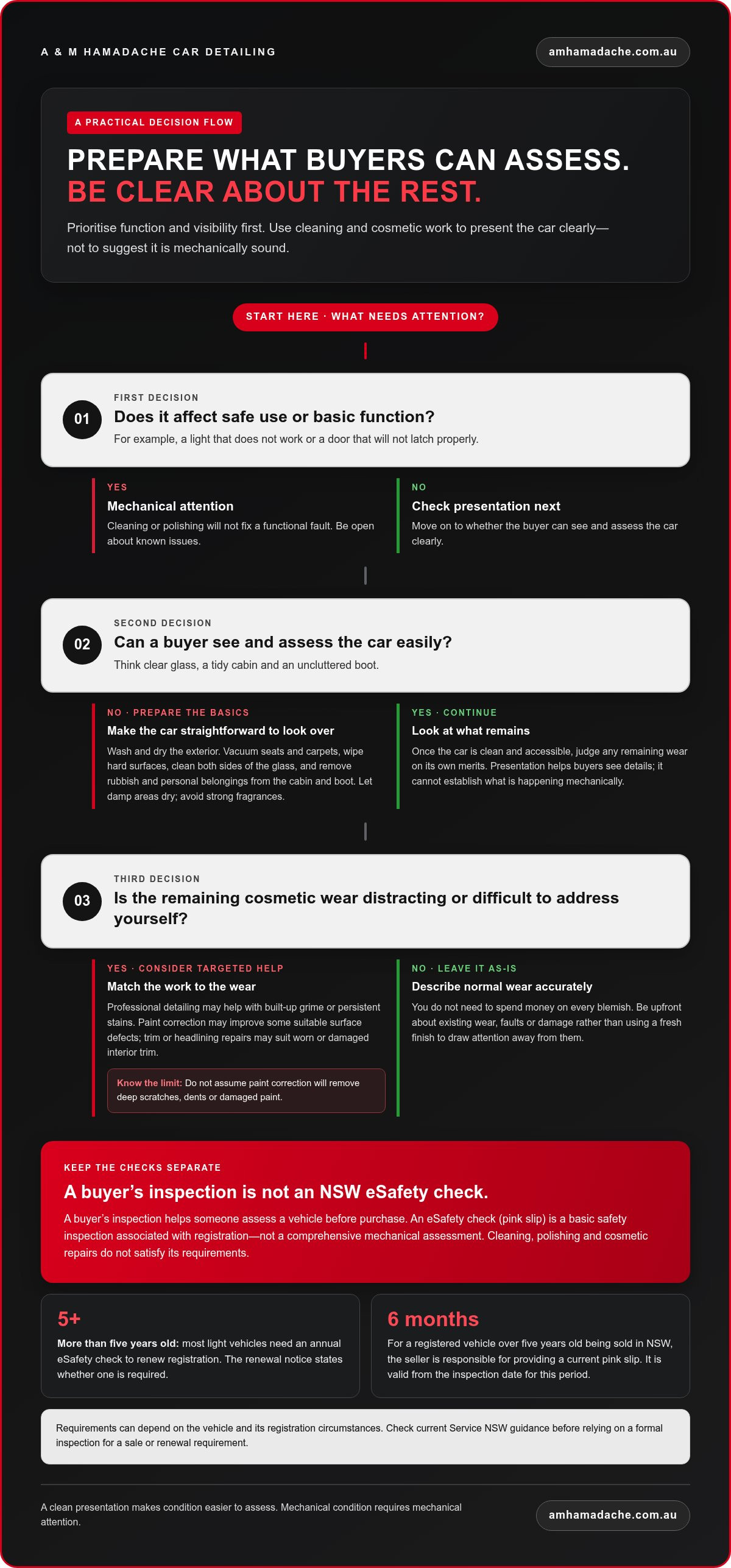
How to handle paint, interior wear and mechanical concerns honestly
Prioritise preparation by separating what a buyer sees from what affects how the car works. Cleaning, paint correction and interior repairs can improve presentation, but they don’t resolve an engine warning light, unusual noise or other functional fault. Be clear about known issues, even if you decide not to repair them before the inspection. A fresh finish should make the vehicle easier to assess, not give a misleading impression of its condition.
What detailing and paint correction can address
Detailing focuses on presentation: removing built-up dirt, refreshing the interior and making the existing finish easier to view. A Full Detail Package can suit a car that needs broader professional presentation work. Paint correction and restoration may be appropriate for paintwork concerns, depending on the surface and the nature of the defect.
Not every scratch or mark can be corrected through polishing. Deep scratches, dents, peeling paint or damage through the paint layer may need a different solution, and correction can’t promise every imperfection will disappear. Before committing to cosmetic work, consider whether the mark is minor, whether it draws attention from the vehicle overall, and whether leaving it visible with an honest explanation is more sensible.
The same judgement applies inside. Minor wear on a frequently used seat or trim piece may simply be part of the car’s history. If damaged trim or a sagging headlining noticeably affects the cabin, targeted trim or headlining repairs may be worth considering. The decision depends on the vehicle’s condition and extent of wear, not on an expectation that every sign of use must be removed.
What needs a mechanical or formal assessment
A warning light, unusual sound, change in steering or braking, or a feature that no longer operates is different from a faded surface or scuffed trim. These concerns relate to function or safety. Describe what you’ve noticed and when it occurs; don’t assume a clean interior or polished exterior answers the buyer’s questions. Mechanical repairs address vehicle function, while detailing remains presentation work.
If you’re unsure whether a concern is cosmetic or mechanical, avoid guessing. Keep relevant repair records available and explain what has and hasn’t been assessed. Don’t clear a warning light simply to make the dashboard look tidy, or use interior fragrance to cover an odour that may need investigating.
For NSW sellers, keep any formal inspection requirement separate from cosmetic preparation. An eSafety check, commonly called a pink slip, is a regulated safety check, not a detailing service or a comprehensive assessment of mechanical condition. Requirements can depend on the vehicle and its registration circumstances, so verify current guidance with Service NSW before relying on a particular inspection to meet an obligation.
- Appearance: clean or improve suitable surfaces, while accepting that some wear will remain.
- Function: describe known faults accurately and treat them as mechanical concerns, not cosmetic defects.
- Formal checks: confirm applicable NSW requirements separately from detailing or repairs.
For tailored help with presentation, paintwork or interior wear, explore car detailing and restoration with A & M Hamadache Car Detailing, a family-owned Northern Beaches business established in 1995.
Prepare your car for sale with tailored detailing on the Northern Beaches
Once you’ve identified what needs attention, choose preparation work that suits the vehicle rather than trying to correct every sign of use. A clean, cared-for presentation can help buyers see the car clearly, but it can’t guarantee an offer or determine what a buyer will decide. A & M Hamadache Car Detailing is a family-owned and operated business serving the Northern Beaches. Established in 1995, it offers detailing and restoration services for different presentation concerns.
Match the service to the condition of your car
If the vehicle needs broad presentation work before it’s listed, the Full Detail Package provides a thorough professional finish. For a specific concern, a targeted approach may be more appropriate than a general clean. Choose according to the condition of the paint, trim and interior, and what you want the buyer to be able to assess.
- Overall presentation: A full detail may suit a car with several areas that need attention, rather than one isolated mark.
- Paintwork: Paint correction and restoration may address suitable surface concerns, but results depend on the paint’s condition and the type of defect.
- Interior wear: Trim or headlining repairs may help address specific visible damage inside the vehicle.
- Vehicle function: Mechanical repairs are separate from detailing and cosmetic restoration. They address functional concerns, not the appearance of the car.
This distinction matters. A polished exterior can’t resolve an unusual noise, a warning light or a component that isn’t working properly. Keep cosmetic improvements focused on appearance, and describe known mechanical issues accurately. Detailing should help present the vehicle honestly, never disguise a fault.
Take the next step before listing
Before settling on a preparation approach, walk around the car and note its main concerns. Is the overall finish dull, or is there one paint defect that stands out? Does the cabin need a thorough clean, or is a damaged trim piece drawing attention? A short, specific list helps separate broad presentation needs from individual repairs and keeps preparation focused.
Consider what a buyer needs to see and understand. Professional detailing can refresh presentation, while paint correction or trim repairs may address particular cosmetic concerns where suitable. None of this replaces mechanical assessment or any formal inspection that applies to the vehicle. If you’re unsure about an issue’s nature, don’t present an appearance-focused service as a repair for it.
A & M Hamadache Car Detailing’s family-owned business has served the Northern Beaches since 1995, offering local presentation and restoration work. The right preparation is the work that suits your car, without promises about the buyer’s decision.
For comprehensive presentation, explore the Full Detail Package as you prepare your car for sale.
Set a clear plan for your car’s next step
Before arranging preparation work, decide what “ready” means for your vehicle. The aim of getting car ready for sale inspection isn’t to erase every sign of use. It’s to make the car straightforward to view and ensure your preparation choices reflect its actual condition. A short, prioritised list can help you avoid spending time on minor appearance details while more important concerns remain unresolved.
Think about the result you want from each task. Is it to improve overall presentation, address a particular cosmetic issue or investigate a functional concern? Keeping those aims separate makes it easier to choose work that suits the car. Professional detailing supports presentation, while mechanical concerns need a different kind of attention. Neither can promise what a buyer will decide.
If a thorough presentation is your next step, explore the Full Detail Package and consider whether it fits your preparation priorities. With a clear plan and an honest view of the vehicle, you can approach the inspection with greater confidence and give buyers a fair opportunity to assess the car.
Frequently Asked Questions
Is it worth detailing an older car before a sale inspection?
It can be worthwhile if dirt, stained upholstery or neglected surfaces make the car harder to assess. For an older vehicle, focus on a clean, presentable finish rather than trying to make normal age-related wear disappear. Compare the work you’re considering with the car’s overall condition and your selling plans. A modest clean may be enough; a more involved detail is a personal choice, not a guarantee of a better offer.
How soon before a buyer inspection should I detail my car?
Arrange detailing with enough time for the vehicle to dry fully and for you to check the result before the buyer arrives. This is especially useful after wet-weather cleaning or work on damp carpets, where residual moisture can leave the cabin smelling musty. If you’re cleaning it yourself, avoid doing everything in a rush just before the appointment. A final check for dust, water marks and new clutter can help.
Can I use household cleaners to prepare my car for inspection?
Use a household cleaner only if its label says it’s suitable for that specific automotive surface. Interior plastics, leather, upholstery and screens can react differently, so a product that works on kitchen benches may leave residue or damage a car’s finish. Test an appropriate cleaner on a small, inconspicuous area first, use a soft cloth and don’t mix products. If you’re unsure, stick to a cleaner made for the material.
Should I remove personal information from the car before a buyer inspects it?
Yes. Check the glovebox, centre console and boot for mail, receipts or documents that show your address, contact details or other personal information. Also remove garage remotes and clear paired phones, saved home addresses and personal contacts from the infotainment system before handing over the car. Keep sale-relevant vehicle paperwork separate and close at hand, so you can show it without leaving unrelated personal records accessible.
Do warning lights matter during a buyer’s inspection?
Yes. A warning light may prompt the buyer to ask what it relates to, so don’t ignore it or reset it simply to make the dashboard look clear. Check the owner’s manual for the symbol and note when it appears, such as at start-up or while driving. If you know the cause or have had it assessed, explain that accurately. Don’t guess if you’re unsure what the warning means.
Does detailing guarantee that my car will sell for more?
No. Detailing can improve how the vehicle is presented, but it can’t guarantee a higher sale price or influence every buyer’s decision. The final outcome depends on factors beyond appearance, including the car’s condition and the buyer’s assessment. For getting car ready for sale inspection, treat detailing as preparation, not a promise: choose work that suits the vehicle and set your expectations accordingly.


