
Does worn cabin trim always need to be replaced? Not necessarily. Scuffs, fading or damage to a dashboard, door trim or other interior detail may be suitable for repair, depending on the component and its condition. Car interior trim restoration Manly starts with assessing the affected area, rather than applying a generic makeover.
Visible wear can take away from the look and feel of your vehicle, especially when it is unclear whether the trim can be restored. The right next step depends on what is damaged, how far the wear extends and whether the component still fits securely. This guide explains how to assess those details, compare repair with replacement and prepare for a focused discussion about your cabin.
A & M Hamadache Car Detailing is a family-owned and operated business serving Manly and the wider Northern Beaches. Its interior trim repair service addresses worn or damaged cabin components, with the approach shaped by the part and its condition.
Key Takeaways
- Interior trim includes visible cabin details such as dashboard and door-panel finishes, which need a different approach from routine cleaning.
- For car interior trim restoration Manly, the affected component, material and extent of wear help shape the repair assessment.
- Repair may be suitable for some worn or damaged trim; replacement is not automatically necessary.
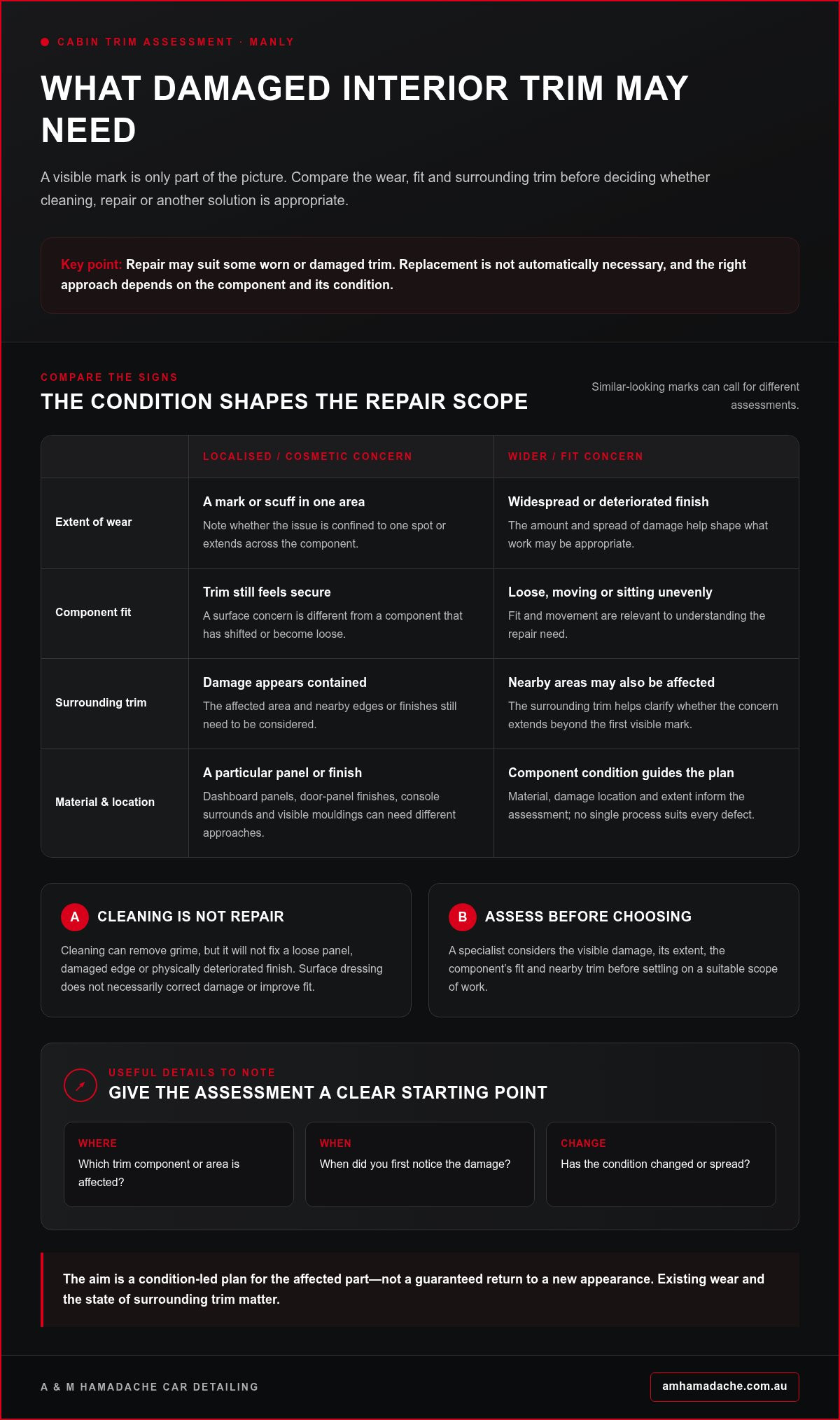
- Note where the damage appears, when you first noticed it and whether it has changed. This gives the assessment a useful starting point.
- A & M Hamadache Car Detailing provides interior trim repairs for Manly and Northern Beaches drivers, as well as headlining repairs.
What does car interior trim restoration in Manly actually address?
Interior trim is the collection of finished surfaces and fittings that shape a vehicle’s cabin. It can include dashboard panels, door-panel finishes, centre console surrounds and visible mouldings. These parts are handled regularly and sit close to everyday activity, so scuffs, worn finishes or changes in fit can become hard to ignore. Car interior trim restoration Manly focuses on the affected component and the work needed to address its wear or damage.
Trim restoration is different from cleaning the whole cabin or applying a surface dressing. Cleaning can remove grime, but it will not fix a loose panel, a damaged edge or a physically deteriorated finish. The suitable approach depends on the trim’s material, condition and the size and location of the damage.
Which cabin trim problems may call for repair?
Everyday use, impact and age can affect both the appearance and fit of interior trim. You might notice scuffs across a door panel, a patchy dashboard finish, a marked console surround or an edge that no longer sits neatly in place. Look at whether the issue is confined to one spot or extends across the component, and whether the part still feels secure. Those observations help describe the problem, but the visible mark alone does not determine what work is suitable.
Some damage may be appropriate for repair, while other conditions may call for a different solution. There is no single process for every component or defect. The trim’s material, how firmly it is fitted and how far the damage extends all influence the restoration approach. An assessment keeps the focus on the part that needs attention rather than assuming every worn surface can be returned to its former condition.
How is trim restoration different from interior detailing?
Interior detailing generally addresses cleanliness and surface care. A general overview of car detailing provides context for this broader vehicle-care category, but cleaning and dressing are not the same as repairing a damaged trim component. If a panel is loose or its finish is physically deteriorated, cleaning alone will not resolve the underlying issue.
The distinction matters when deciding what your vehicle needs. Dust, grime or light surface marks may call for cleaning; a loose section, deeper scuff or failing finish needs closer attention to the component. Surface products can change how trim looks, but they do not necessarily correct damage or improve how a part fits. Applying a product before the condition is understood may also make the original finish harder to assess.
A considered restoration assessment therefore starts with the trim, not a general cabin makeover. It looks at where the issue appears, how the component is holding up and whether the concern is mainly cosmetic or also affects fit. For Manly drivers, this component-focused approach helps distinguish routine cabin care from a repair tailored to the condition of the interior trim.
How a specialist assesses damaged car interior trim
A mark on a cabin panel is the visible symptom, but it may not show the full repair need. An assessment considers where the problem sits, how the affected trim is holding up and whether its fit or surrounding areas are also involved. This helps distinguish a localised finish concern from damage that may affect a larger part of the component.
For car interior trim restoration Manly, the vehicle and the individual part guide the proposed scope. A small scuff and a section that has become loose are different concerns, even if they are close together. The aim is to understand the condition before settling on an approach, rather than treating every defect as though it calls for the same work.
What is checked before a trim repair is planned?
The assessment begins with the affected area and its surrounding trim. The specialist considers the visible damage, how far it extends and whether nearby edges or finishes appear affected. Where relevant, the component’s fit and movement also help build a clearer picture. These observations inform the scope without assuming a repair method before the part has been assessed.
How does the vehicle’s condition shape the repair plan?
Location and extent matter. A mark confined to one area may call for a different approach from widespread deterioration or a section that does not sit firmly in place. The vehicle and component condition shape what work is appropriate, so a tailored plan avoids applying one treatment to unlike problems. The intended improvement should be discussed in relation to the trim’s actual state, without promising a particular finish.
A useful assessment separates three things: what you can see, what the component’s condition suggests and what scope of work may address it. For example, a change in finish is one observation; signs that the trim has shifted or no longer sits as expected are additional considerations. Keeping these factors distinct helps explain why two similar-looking marks might lead to different repair plans.
It also helps set realistic expectations. The purpose is to identify a suitable course of action for the affected part and explain the intended result in practical terms. Existing wear, the extent of deterioration and the condition of surrounding trim all matter. A careful assessment does not treat restoration as a guaranteed return to a new appearance; it makes the proposed work responsive to the vehicle in front of the specialist.
Condition-led assessment matters because the right repair scope depends on the trim itself, not just the mark you first notice.
If damaged cabin trim is affecting your vehicle, A & M Hamadache provides interior trim repair for Manly and Northern Beaches drivers. The repair approach is tailored to the affected component and its condition.
Repair or replace car interior trim? How to understand the difference
A worn or damaged trim piece does not automatically need to be replaced. Repair and replacement are different options, and the appropriate one depends on the component’s condition, the extent of the damage and the finish you are seeking. Looking at those factors first helps avoid treating every mark or defect as a reason to remove an existing part.
The condition of the component should guide the repair decision, not the assumption that every damaged piece must be replaced.
When might repairing trim be a practical option?
Repair may be worth considering when the affected component remains suitable for restoration and the damage is limited enough for a focused approach. Preserving the existing part can retain more of the cabin’s original appearance and character, rather than replacing a complete trim piece for a localised concern. Whether that is appropriate depends on the actual condition, not just how noticeable the damage looks.
A scuff, a worn finish or a section that appears loose can each raise different questions. None automatically confirms that repair is suitable. The component’s condition and the extent of the issue need to be considered together, as does the finish you want to achieve. An assessment can help clarify what restoration may reasonably address and where its limits lie.
When might replacement need to be considered?
If damage is extensive, or the component’s condition makes restoration unsuitable, replacement may need to be considered. That is not an automatic recommendation based on age or appearance alone. The extent and nature of the damage matter, as does whether a proposed repair could meet your expectations for the finished cabin.
It is useful to separate what you would like improved from what the component can reasonably support. A trim piece may have several visible concerns, while its underlying condition influences whether repair is practical. A clear discussion of the assessment helps set expectations without promising a particular result or assuming replacement is the only route.
Repair and replacement can be compared by looking at a few practical considerations:
- Condition: Is the existing piece suitable for restoration?
- Extent: Is the damage localised or spread across the component?
- Desired finish: What improvement are you hoping to see in the cabin?
These points frame the decision around the part itself, rather than a general rule applied to every vehicle. Two trim pieces that appear similarly worn may have different conditions and call for different recommendations. The proposed scope should reflect those differences and make clear what the work is intended to improve.
For car interior trim restoration Manly, a considered repair assessment can help establish whether restoration is practical for the affected component. It may also identify limits where the condition points towards another solution. Either way, the decision starts with the trim in front of the specialist and a realistic understanding of the finish you want.
Preparing for car interior trim restoration in Manly
A little preparation can help keep an assessment focused on the trim that needs attention. Before bringing your vehicle in, note the affected area and what you have observed. You do not need to identify the cause or decide what repair is required. A clear description of what changed gives the specialist a useful starting point for considering the component and its condition.
What information helps explain the trim damage?
Be as specific as you can about where the issue appears, such as a particular section of the dashboard or a door-panel finish. Note when you first noticed it and whether it seems to have changed since then. If several areas are affected, list each one separately so the assessment can consider them individually instead of assuming they share the same cause or need the same work.
- Identify the trim area and describe the visible change.
- Record when you first noticed the issue.
- Note whether it appears stable or has changed over time.
- Point out any concerns with the component’s fit or movement, if relevant.
These notes are not a diagnosis. They distinguish what you have observed from what needs to be assessed. There is no need to apply a dressing or attempt a repair beforehand; the priority is to explain the concern clearly and let the trim’s condition guide the discussion.
What should Manly drivers expect from a tailored assessment?
For car interior trim restoration Manly, the vehicle and affected component shape the conversation about scope and approach. The specialist considers the visible change in context, including the surrounding trim and the condition of the part itself. A localised concern may call for a different scope from damage that extends across a larger area, so the proposed work should relate to the specific vehicle rather than a one-size-fits-all process.
Expect a clear discussion of what the assessment shows, what the proposed work is intended to address and any limits that affect the likely finish. That gives you a practical basis for understanding the next step without assuming a particular repair technique or guaranteed outcome. A & M Hamadache Car Detailing serves Manly and the wider Northern Beaches, with a tailored approach to each trim repair.
If your concern extends beyond one damaged trim component into broader cabin care, it is useful to separate those needs so the trim issue remains clear during the assessment. This keeps the discussion focused on the affected part while any wider interior-care priorities are considered separately.
Make a note of the affected area and what you have noticed, then arrange an interior trim assessment with A & M Hamadache.
Book car interior trim restoration with A & M Hamadache
If worn or damaged cabin trim is distracting every time you get behind the wheel, a focused repair assessment is a practical next step. For Manly and Northern Beaches drivers, the discussion can centre on the affected component, its condition and what you would like improved. That keeps the proposed work connected to your vehicle rather than a general cabin makeover.
Why choose a local, established trim repair service?
A & M Hamadache Car Detailing is a family-owned and operated business serving customers across the Northern Beaches. Its interior trim repair service gives Manly drivers a local option for addressing worn or damaged cabin details. The focus is on the specific vehicle and component, with the repair approach shaped by their condition rather than a standard solution applied to every cabin.
A repair assessment also gives you the opportunity to discuss the difference between the visible concern and the work that may address it. A scuffed finish, a loose section or broader wear can each raise different considerations. The discussion focuses on what is affected and what result you are seeking, then considers a scope that reflects those details. Different trim concerns may need different approaches.
Take the next step for worn or damaged interior trim
Before work proceeds, it is useful to understand the proposed approach. A component-specific assessment helps establish whether restoration may suit the trim’s condition, what the work is intended to improve and any limits that should inform your expectations. This gives you a considered basis for deciding how to proceed, without assuming every defect calls for the same treatment or that a particular finish can be guaranteed.
For car interior trim restoration Manly, make the conversation more focused by identifying the affected part and describing the change you have noticed. It also helps to explain what you would like the cabin to look or feel like afterwards. These details frame the discussion around your priorities while keeping the repair scope responsive to the component itself.
- Identify the trim component you are concerned about.
- Describe the visible wear or damage in straightforward terms.
- Discuss the intended improvement and the proposed repair scope.
With a tailored assessment, the next step can be based on the condition of the trim rather than guesswork. If you are ready to discuss a worn or damaged cabin detail, Arrange a car interior trim restoration assessment with A & M Hamadache.
Take the next step towards a cabin that feels right
A small change in the cabin can become a regular distraction, but deciding what to do does not have to involve guesswork. Consider what you would like to improve: the appearance of one trim piece, how it sits in place or the overall impression it creates inside your vehicle. This gives the conversation a useful starting point and keeps attention on the result that matters to you.
With car interior trim restoration Manly, the next step is a considered look at the affected component and a clear discussion of the approach suited to its condition. Explain what you have noticed and what you hope to achieve, then make an informed decision about proceeding.
Arrange a car interior trim restoration assessment with A & M Hamadache to take a practical first step towards refreshing your vehicle’s cabin.
Frequently Asked Questions
Can damaged car interior trim be repaired rather than replaced?
Yes, some damaged trim may be suitable for repair, but it depends on the part’s condition and the nature of the damage. A localised mark on a dashboard fascia, for example, presents a different assessment from deterioration across a wider area. A specialist can consider the component and intended finish before recommending a practical way forward. Repair suitability and the expected result depend on the individual vehicle.
What parts of a car interior count as trim?
Interior trim generally refers to the finished surfaces and fittings around the cabin, rather than every part inside the vehicle. Examples include dashboard panels, door-panel finishes, centre console surrounds and other visible mouldings. These pieces contribute to the cabin’s appearance and may have different materials or finishes. Identifying the exact part helps distinguish trim concerns from issues involving seating, mechanical controls or other interior components.
How much does car interior trim restoration cost in Manly?
The cost of car interior trim restoration in Manly depends on the affected component, its condition and the extent of the work needed. A concern limited to one small section may have a different scope from damage affecting several parts. An assessment helps establish what work is appropriate before a cost can be considered. A useful estimate should relate to the specific vehicle and proposed repair, rather than a generic figure.
How long does car interior trim repair take?
Repair time varies with the component, the condition of the trim and the scope of work. A focused repair and a job involving more extensive damage may require different amounts of attention, so a general timeframe would not reliably represent every vehicle. The assessment provides an opportunity to discuss the proposed work and its expected timing in context. Avoid using the vehicle’s cabin until any agreed repair work is complete.
Can scuffed or loose dashboard and door trim be restored?
Possibly, but scuffs and loose sections need individual assessment. A surface mark may be limited to the finish, while movement in a panel can raise a separate question about its fit or condition. The location and extent of the concern help determine whether restoration is suitable and what improvement may be realistic. Avoid trying to force a loose section back into place, as this may make the condition harder to assess.
Does car interior trim restoration include headlining repairs?
Not automatically. Trim restoration focuses on the affected cabin trim component, while the headlining is a separate interior area with its own repair needs. A & M Hamadache Car Detailing also provides headlining repairs, so the two concerns can be described separately. If both areas need attention, note them individually so each can be considered according to its condition and appropriate scope.
What should I do before having my car trim assessed?
Make the affected area easy to identify and describe what you have noticed in plain terms. If practical, remove personal items that block access to the dashboard, console or door panel, but do not dismantle trim or apply a product to the damaged spot beforehand. Note when the change first appeared and whether it has altered since. These details help keep the assessment focused on the component and its condition.


