
How often should I detail my car? The answer depends less on the calendar than on where and how you drive. A quick wash removes surface dirt, but it may not tackle built-up grime, neglected interior surfaces or paintwork that needs specialist care.
It’s reasonable to want your car well cared for without booking unnecessary work. A vehicle parked near the coast may be exposed to salt and sea air, while daily driving, children, pets and regular trips can quickly add to wear inside and out. Set a routine around those conditions and the car’s current state.
This guide will help you choose a practical detailing schedule, recognise when a wash is no longer enough, and understand how protective treatments fit into ongoing care. It also explains when a Full Detail Package may be useful and why paint correction is a targeted response to suitable paint concerns, not a routine step.
Key Takeaways
- There’s no single answer to “how often should I detail my car”; base your routine on the vehicle’s condition, use and exposure.
- Frequent driving, outdoor parking, family use and Northern Beaches conditions can all affect how quickly dirt builds up.
- Use a practical schedule as a guide, then adjust it when seasonal changes, travel or parking habits affect your car.
- Persistent grime, embedded dirt and cabin areas that routine cleaning misses can signal it’s time for professional attention.
- When regular washing no longer meets your car’s needs, a Full Detail Package can provide more thorough care.
How often should I detail my car? Start with what “detailing” means
There’s no fixed interval that suits every vehicle. How often should I detail my car? Base the decision on its condition, how it’s used, what it’s exposed to and how consistently you maintain it between professional visits. A car that stays clean with routine care may need less attention than one carrying children, pets or work gear every day.
A professional detail is more thorough than a routine wash. A wash mainly removes everyday surface dirt, while detailing can address more involved needs inside and out, with the work tailored to the vehicle’s condition and the result you want. The scope varies, so “detail” doesn’t automatically mean every possible cleaning or restoration process is included.
A routine wash clears everyday dirt from the surface; professional detailing gives the vehicle more thorough, condition-led care inside, outside or both. The Car detailing overview describes the range of processes associated with interior and exterior care, which helps explain why the term can cover different levels of work.
What counts as a car detail, rather than a wash?
Think of a wash as regular upkeep and a detail as a deeper response to what the car needs. Interior work may focus on seats, carpets, mats, trim or hard-to-reach spaces where dust and debris collect. Exterior care may involve more thorough cleaning of the paintwork, wheels and other surfaces. These are examples, not a promise that every package includes identical tasks. A Full Detail Package is an option when routine cleaning no longer addresses the vehicle’s needs.
Paint correction is different again. It’s a specialist service for suitable paint concerns, such as visible swirl marks or defects, rather than a standard step in every detail. Whether it’s appropriate depends on the paintwork’s condition and the result you want.
Why there is no single detailing interval for every car
Picture two vehicles: one is a garaged weekend car used for occasional outings; the other is a daily-driven family vehicle parked outdoors and regularly carrying passengers. The second may accumulate crumbs, marks and general grime faster, while the first may stay presentable for longer. Their professional detailing needs won’t necessarily fall on the same calendar schedule.
Maintenance habits matter, too. Regularly washing away surface dirt, clearing rubbish and dealing with fresh spills can help keep a vehicle in better condition between professional visits. If those jobs are delayed, dirt can build up until routine cleaning is no longer enough. Check the cabin and exterior periodically, then arrange professional care when the vehicle needs a more thorough clean. This helps avoid both neglect and detailing by habit alone.
What changes how often your car needs detailing in Australia?
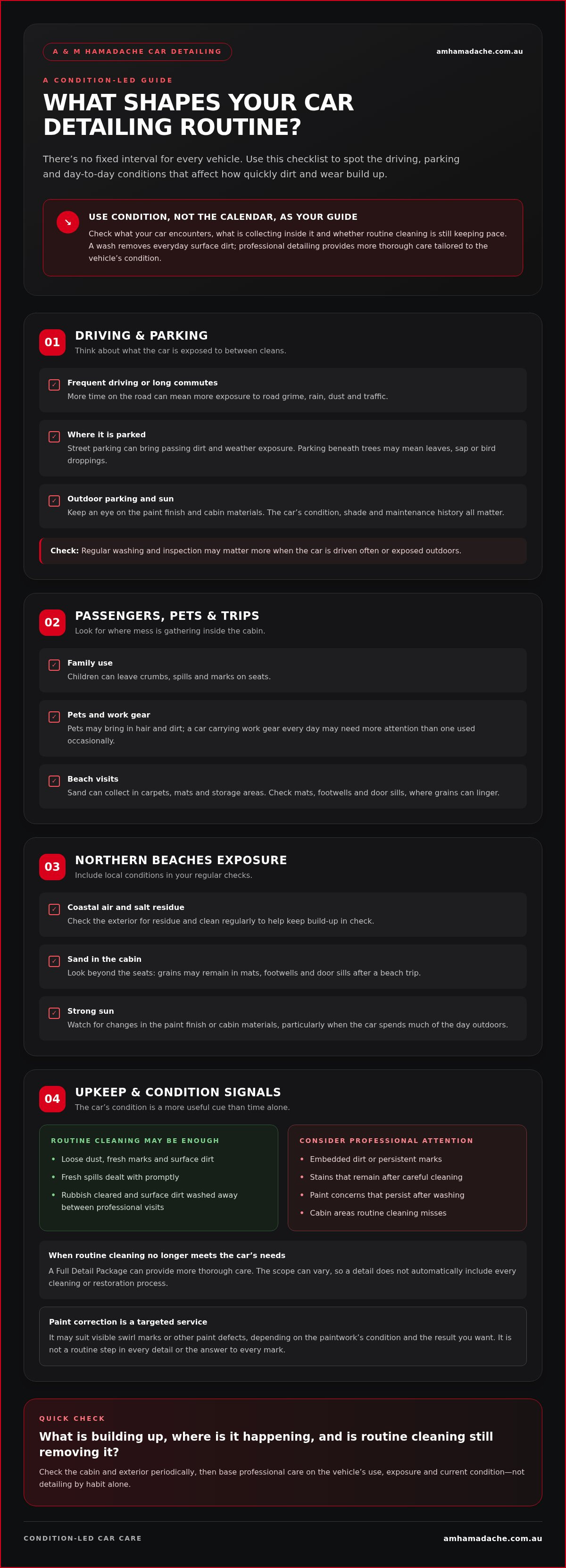
Two cars can be washed on the same day and still need professional attention at different times. One may cover long distances, sit outdoors and carry passengers daily; another may be driven occasionally and kept under cover. To decide how often should I detail my car, look beyond the odometer. Consider what the vehicle encounters, what collects inside it and how well routine care keeps pace.
Your detailing schedule is shaped by driving frequency, parking, passengers, pets, local exposure and the care you give the car between professional visits. These factors affect different parts of the vehicle, so a dusty cabin and persistent exterior residue don’t necessarily call for the same response.
How driving and parking habits affect detailing frequency
A high-kilometre commute means more time exposed to road grime, rain, dust and traffic, while an occasional weekend car may stay cleaner between outings. Street parking can expose a vehicle to passing dirt and weather; parking beneath trees may mean more leaves, sap or bird droppings to remove. These conditions don’t automatically require a full detail, but they can make regular washing and inspection more important.
Family and leisure use also changes the workload. Children can leave crumbs, spills and marks on seats; pets may bring in hair and dirt; beach trips can track sand into carpets, mats and storage areas. Pay attention to where mess is gathering. If a routine vacuum and wipe-down no longer remove embedded dirt or persistent marks, that’s a more useful signal than the number of weeks since the last detail.
What Northern Beaches conditions can mean for upkeep
On the Northern Beaches, coastal air, sand and strong sun are practical factors to include in your routine. Salt residue and sand may collect on the exterior or make their way into the cabin, so regular cleaning can help keep build-up in check. After beach visits, check mats, footwells and door sills, where grains can linger even when the seats look tidy.
Sun exposure is another reason to keep an eye on paint and interior surfaces, particularly if the car spends much of the day parked outdoors. Look for changes in the finish or cabin materials rather than assuming every vehicle is affected in the same way. The car’s condition, shade and maintenance history all matter.
Separate what you can see from what needs closer attention. Loose dust, fresh marks and surface dirt may respond to routine cleaning. Embedded grime, stains that remain after careful cleaning, or paint concerns that persist after washing may call for professional attention. Paint correction is a specialist response to suitable paint concerns, not a routine answer to every mark. A Northern Beaches car detail can be tailored to the vehicle’s condition when home upkeep no longer addresses what you’re seeing.
A practical car detailing schedule: match the timing to condition
A timetable is useful as a prompt, not a rule. For a typical Australian driver, a professional detail every three to six months is a broad starting point, but your car may need attention sooner or later depending on its use and condition. Keep routine washing and interior upkeep separate from a professional full detail: regular cleaning manages day-to-day dirt, while a full detail addresses needs that have built up beyond your usual care.
How to use a condition-based detailing timetable
Use the guide below to decide when to inspect and what to do next. The three-to-six-month range is indicative guidance for everyday use, not a fixed booking interval. At each wash, check the cabin and exterior. If routine cleaning still leaves grime, stains or neglected areas, bring forward a professional detail. If the car remains in good condition, continue your usual maintenance and reassess later.
| Vehicle use | Indicative approach | Practical next step |
|---|---|---|
| Light use, mostly garaged | Let condition lead rather than setting a regular full-detail date. | Maintain the exterior and cabin as needed; consider a professional detail when routine cleaning no longer restores the finish or interior. |
| Everyday driving | Use three to six months as a broad guide for a professional detail, then adjust to the vehicle’s condition. | Wash routinely and check for interior build-up, persistent marks or dirt that ordinary upkeep doesn’t shift. |
| High exposure or heavy use | Inspect more often and don’t wait for a calendar milestone if grime or mess is accumulating. | Keep up routine cleaning, then arrange professional care when the cabin or exterior needs more thorough attention. |
The categories are starting points, not grades of care. A garaged car can still need a detail after a long trip or a period of neglect. A high-use vehicle may stay in good order with consistent owner maintenance. Let what you see guide the next step instead of booking simply because a set number of weeks has passed.
Does ceramic coating change how often a car needs detailing?
A ceramic coating doesn’t remove the need to wash and inspect your car. Dust, road grime and interior mess still need attention, and a coating isn’t a promise that the vehicle will stay mark-free or maintenance-free. Gtechniq ceramic coating is a protection option, but continue to judge detailing needs by the car’s actual condition. Don’t assume a coating sets one universal maintenance interval.
Use the timetable as a check-in point. If regular washing and cabin upkeep are working, continue your routine; if they’re no longer enough, a Full Detail Package can address broader cleaning needs. The right timing responds to real build-up without turning detailing into an unnecessary calendar task.
Signs your car may be due for a professional detail
A car doesn’t need to look neglected before a professional detail is worthwhile. The clearest signal is often that routine washing and quick cabin cleaning no longer address what you can see or feel. Use this short inspection to decide whether the vehicle needs more thorough care or a normal clean will do.
- Check the cabin. Look at carpets, mats, seat seams, door pockets and the space around the centre console. Ground-in dirt, crumbs or marks that remain after routine vacuuming and wiping suggest the interior may need closer attention. Lingering odours can also prompt you to look for trapped spills or debris, though an odour alone doesn’t identify its cause.
- Assess the paint after washing. If grime or surface contamination remains, or the paint still looks uneven once clean and dry, note where the issue appears and how extensive it is. Ordinary dirt may need a more thorough clean; visible swirl marks or paint defects may call for specialist assessment rather than another wash.
- Inspect regularly touched areas. Check the steering wheel, door handles, switches, armrests and child-seat areas for persistent residue or build-up. These spots can become noticeably dirty with everyday use, even if the rest of the vehicle looks presentable.
Interior signs that routine cleaning is no longer enough
Children, pets and frequent passengers can add crumbs, hair, spills and marks to the cabin. If dirt is lodged in seams or carpet, or a quick vacuum leaves the interior feeling unclean, a professional detail may be more useful than repeating the same surface clean. Treat odours and stains as cleaning prompts, not as diagnoses of a mechanical or health issue.
Exterior signs that may call for specialist attention
Persistent contamination and a finish that looks dull or uneven after washing deserve a closer look. Swirl marks and paint defects differ from loose dirt, and more frequent washing won’t correct them. Avoid aggressive home polishing: unsuitable products or technique can worsen paint concerns. Paint correction is a specialist response for suitable paintwork, not a routine part of every detail.
A professional detail is more useful than another routine wash when grime remains after ordinary cleaning, or the cabin and paint need attention beyond surface upkeep. If these signs describe your vehicle, arrange a professional car detail tailored to its condition.
Make a detailing routine that protects your car, and book a full detail when needed
A reliable routine doesn’t need to be complicated. Wash the car regularly, inspect its condition, then arrange professional care when ordinary upkeep is no longer enough. The right cadence can shift with the season, a change in parking, a long trip or a new pattern of use. Review the vehicle itself rather than treating a date on the calendar as a fixed booking rule.
A straightforward routine between professional details
Keep a simple cycle: clean, check, then decide. Choose washing and cabin upkeep that suit how often you drive and what the car is exposed to. For example, a vehicle used for beach trips may need sand cleared from its mats and footwells more often than a car used for occasional errands. Use suitable car-care products and clean materials, and follow product directions rather than relying on abrasive scrubbing.
- Wash routinely. Remove everyday dirt before it has time to build up, paying attention to areas where grime gathers, such as wheels, lower panels and door sills.
- Deal with visible contaminants promptly. Bird droppings and similar deposits are best removed with a safe method and suitable cleaning products. Avoid scraping or rubbing them while dry, which may mark the surface.
- Inspect the cabin and exterior. Check carpets, seats, trim and frequently touched areas, then look over the paint in good light. Note any dirt or marks that remain after routine cleaning.
Repeat the check after a dusty drive, beach outing or period of heavy use. A change in season or parking can also alter what the car collects, so adjust your routine as conditions change.
When a professional full detail is the sensible next step
A professional full detail is worth considering when the interior and exterior need broader attention than your regular wash and cabin clean can provide. Persistent grime, built-up cabin dirt or areas that remain difficult to clean are useful signs. If the concern is a paint defect rather than dirt, paint correction may be a specialist option for suitable paintwork, not an automatic part of every detail.
A & M Hamadache Car Detailing is family-owned and operated by the Hamadache family, and has been established since 1995. Its Full Detail Package provides a professional option for more comprehensive care when routine upkeep no longer meets the vehicle’s needs. The right time to book depends on the condition you’ve observed, not simply how long it’s been.
If your car needs more than routine cleaning, explore the Full Detail Package as a considered next step.
Make your next detailing decision with confidence
Give yourself a clear reference point for future care. After your next clean, note any areas you want to keep an eye on, such as a mark on the paint, a patch of ground-in dirt or a surface that needs extra attention. A quick note on your phone can help you see whether routine upkeep is working or the same concerns keep returning.
That makes the question “how often should I detail my car” easier to answer over time. Rather than booking by habit, you’ll have a record of what’s changing and can choose professional care when it will make a practical difference. If the vehicle needs a more thorough clean, explore A & M Hamadache’s Full Detail Package and choose a next step that suits its condition.
Steady, considered care is easier to maintain than chasing a perfect finish. Start with what your car needs now, then adjust as those needs change.
Frequently Asked Questions
Is detailing the same as washing your car?
No. A wash is usually a regular cleaning task, while a detail involves more thorough care tailored to the vehicle’s needs. For example, a wash may not address dirt tucked into seat seams or persistent residue on interior trim. The work depends on the vehicle’s condition, so consider whether a wash or a Full Detail Package better suits the areas that need attention.
Can I detail my car too often?
It’s possible to overdo intensive paint work, particularly if polishing is repeated without a suitable reason. Routine washing and interior upkeep are different from machine polishing or paint correction, which should be chosen to address specific paint concerns. If your car is already clean and its finish is in good condition, another full detail may not add much. Focus on what needs attention rather than booking simply to follow a rigid calendar.
How often should I detail a car with ceramic coating?
If you’re wondering how often should I detail my car after ceramic coating, the coating alone doesn’t set a professional detailing schedule. Keep washing and inspecting the vehicle, and follow the aftercare guidance provided for the coating applied. Gtechniq ceramic coating is a protection option, but it doesn’t eliminate routine upkeep. Arrange a professional detail when the car’s actual interior or exterior condition calls for more comprehensive care.
Should I detail my car after a beach trip?
Not automatically. After a Northern Beaches outing, remove loose sand from the cabin and check the floor mats, footwells and boot. Wash off visible salt or grime using suitable car-cleaning methods, taking care not to rub dry sand across the paint. If the car is otherwise in good condition, routine cleaning may be enough. Consider a professional detail if sand or other build-up remains in areas you can’t clean effectively.
Does rain mean my car needs detailing?
No. Rain by itself isn’t a reason to book a detail. Once the vehicle is dry, check whether it has visible residue, water marks or road grime that a normal wash can remove. If the car looks clean and the cabin is tidy, continue your usual care. After driving on wet, dirty roads, a wash may be useful, but a more comprehensive detail depends on the condition of the whole vehicle.
How often should I detail a car with children or pets?
Let the cabin’s condition guide you rather than setting a special interval just because children or pets travel in the car. A small rubbish container and washable seat or boot covers can make everyday mess easier to manage. Clear crumbs and loose hair regularly, and attend to fresh spills promptly using suitable products. If dirt is embedded in upholstery or carpets, or ordinary cleaning leaves the cabin noticeably grubby, consider professional attention.
Is paint correction part of every car detail?
No. Paint correction is a specialist process for suitable paint concerns, such as swirl marks or other visible defects, and isn’t automatically included in every detail. A clean car can still have paint defects, while surface dirt can make paint look dull without needing correction. Avoid trying to polish out every mark at home; an assessment can help distinguish a defect from contamination and guide the appropriate care.


