
What if the right answer to electronic vs chemical rustproofing isn’t choosing one system over the other? If conflicting reviews have left you unsure whether electronic protection works, or you’re concerned about a messy chemical application, the key question is whether the approach suits your vehicle’s age, use and exposure to salt air. For Northern Beaches drivers, those factors matter more than broad claims about any one system.
That matters whether your 4WD tackles beach trips or your car spends its days near the coast, where salt-laden air can contribute to corrosion over time. A & M Hamadache Car Detailing provides chemical and electronic rustproofing for local vehicles. This guide explains how the systems differ, what each approach can and can’t do, and why electronic rustproofing remains a subject of debate. You’ll also learn how to weigh up your vehicle’s condition, driving habits and salt exposure, including when combining methods may be worth considering.
Key Takeaways
- Learn how coastal conditions can affect exposed steel and why prevention is easier to plan before corrosion takes hold.
- See how chemical rustproofing uses underbody coatings and cavity treatments to protect different parts of your vehicle.
- Understand the theory behind electronic rustproofing, including how capacitive coupling differs from impressed-current systems.
- Use the electronic vs chemical rustproofing comparison to weigh each approach against your vehicle’s routine and beach use.
- Explore how a layered approach may suit some Northern Beaches vehicles exposed to salt air.
Rustproofing in Sydney: Why Your Vehicle is Under Constant Attack
Rust forms when steel reacts with oxygen and moisture, creating iron oxide. Rustproofing helps protect vehicle components, particularly underneath the body, where water, dirt and salt can linger. Treatments vary, but the principle is to protect vulnerable metal before corrosion takes hold. The Rustproofing overview explains common approaches, including waxes and sealants.
For a Sydney vehicle, the risk isn’t limited to driving through seawater. Salt carried from the Tasman Sea can travel inland and settle on a vehicle alongside everyday road grime. Combined with humidity, it can keep metal damp and encourage corrosion in places that are difficult to see or clean. Factory protection helps, but seams, joints and exposed underbody areas may remain vulnerable as a vehicle ages or protective layers are damaged.
The Northern Beaches Micro-climate
Brookvale, Manly and Dee Why are close to coastal salt mist. Fine salt particles can settle in wheel arches, door sills and internal chassis rails, where they’re difficult to spot and may remain after visible surfaces look clean. Repeated exposure, especially with beach use, makes careful underbody attention worthwhile.
These hidden areas matter because corrosion can progress out of sight. A vehicle driven on the beach may collect salt and sand underneath, while a daily commuter parked near the coast can encounter salt-laden air without leaving sealed roads. The exposure differs, but both vehicles benefit from protection suited to their use and condition.
The Financial Impact of Corrosion
Structural rust is more than a cosmetic concern. In NSW, rust affecting a structural member can cause a vehicle to fail a safety inspection, creating a pink slip problem and potentially requiring repair before registration renewal. On a 4WD, visible “beach rust” can also raise questions about hidden damage and repair needs. That uncertainty may weaken buyer confidence and reduce resale value.
Prevention is a practical part of long-term ownership. A considered rustproofing plan can help protect the chassis and the value you’ve invested in your vehicle, particularly if it regularly encounters coastal conditions. The right approach starts with the vehicle’s condition, where it’s driven and how much salt exposure it faces. A & M Hamadache Car Detailing provides both chemical and electronic rustproofing for Northern Beaches vehicles.
Chemical Rustproofing: The Time-Tested Physical Barrier
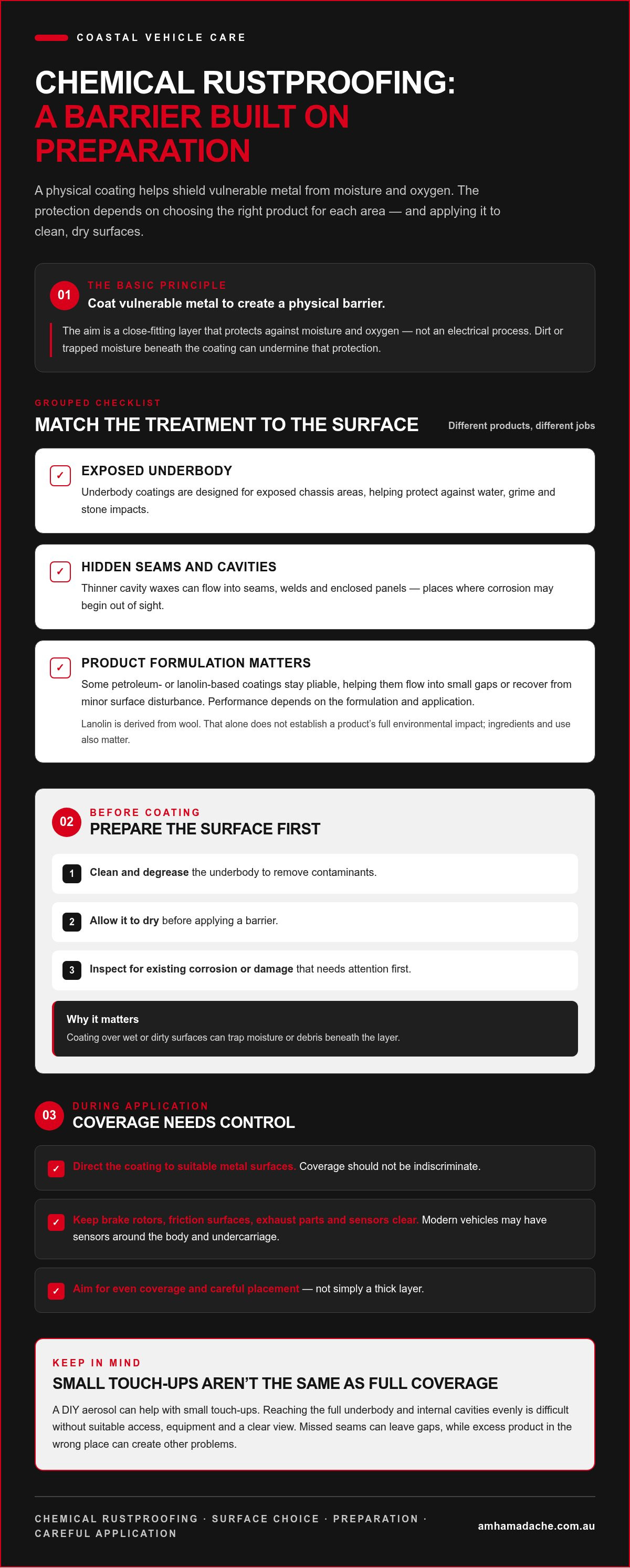
Chemical rustproofing protects metal by applying a coating that forms a barrier against moisture and oxygen. The aim is a close-fitting layer over vulnerable surfaces, rather than relying on an electrical process. Different products suit different parts of a vehicle, and preparation matters: applying a coating over dirt or trapped moisture can undermine the protection it’s meant to provide.
Underbody Coatings vs Cavity Wax
Underbody coatings are designed to protect exposed chassis areas from water, grime and stone impacts. Cavity waxes are thinner and can flow into seams, welds and enclosed panels where corrosion may begin unseen. Some petroleum- or lanolin-based coatings stay pliable, helping them flow into small gaps or recover from minor surface disturbance. Performance depends on the formulation and application.
Lanolin is derived from wool and may appeal to owners seeking a bio-based coating. That alone doesn’t establish a product’s full environmental impact, which depends on its ingredients and use. Chemical barriers also differ from cathodic protection, a separate corrosion-control method described by the Association for Materials Protection and Performance.
Preparation and Careful Application
Before coating, the underbody needs a thorough clean and degrease, followed by time to dry. This removes contaminants and helps reveal existing corrosion or damaged areas that need attention first. Applying a barrier over wet or dirty surfaces can trap moisture or debris beneath the coating, creating the conditions the treatment is intended to guard against.
Application also calls for precision around components that must remain clear. Brake rotors and friction surfaces, exhaust parts and sensors should not be coated indiscriminately. Modern vehicles can have sensors around the body and undercarriage, so treatment needs to be directed to suitable metal surfaces without obscuring sensitive components or interfering with their function.
A DIY aerosol can be useful for small touch-ups, but reaching the full underbody and internal cavities evenly is difficult without access, suitable equipment and a clear view of the surfaces. Missed seams leave gaps; excess product in the wrong place can create other problems. Professional application focuses on coverage and control, not simply laying down a thick layer.
For coastal vehicles, the electronic vs chemical rustproofing decision should account for coverage, vehicle condition and use. A & M Hamadache Car Detailing provides chemical rustproofing in the Northern Beaches area. Explore chemical rustproofing services as part of a considered plan for your vehicle.
Electronic Rustproofing: The Science of Capacitive Coupling
Electronic rustproofing takes a different approach from a physical coating. Rather than covering the metal, a control unit sends electrical pulses to coupler pads attached to the vehicle body. Its proponents say this creates a changing electrical field that helps inhibit corrosion across connected metalwork. The theory is often described as interfering with the conditions that allow iron and oxygen to react, but its effectiveness on cars remains debated.
How Capacitive Coupling Works on Land
In capacitive coupling, the pads and the vehicle’s painted bodywork are intended to act as parts of an electrical coupling system. A microprocessor controls the signal, which is claimed to influence charge movement at the metal surface. Capacitive coupling is intended to create an electrostatic charge that inhibits oxidation.
This differs from impressed-current cathodic protection, commonly associated with submerged or buried structures. That method uses an electrical current and may involve sacrificial anodes. Electronic vehicle systems generally don’t rely on a car being immersed in water or on an anode dissolving to protect it. The distinction matters, but it doesn’t by itself settle whether a particular electronic system protects a vehicle effectively.
Because the system doesn’t rely on spraying each panel, proponents describe it as offering broad-body protection, including upper pillars and roof areas that are difficult to treat with underbody coatings. Actual coverage depends on the unit’s design, pad placement and installation. It shouldn’t be taken as a substitute for addressing existing rust, damaged paint or areas that need a physical barrier.
Installation, Practical Benefits and Limits
Correct installation matters: pads need suitable placement and connection, and the unit must be fitted according to its design. Poor installation can compromise its intended operation. However, workmanship alone can’t resolve the wider debate about how well capacitive systems prevent corrosion on cars. Treat claims as descriptions of the system’s intended mechanism, not a guarantee of results. A & M Hamadache Car Detailing provides electronic rustproofing alongside chemical systems.
For drivers concerned about mess, electronic units add no coating to the chassis, so there’s no rustproofing odour or wet application to drip. The electrical hardware also adds no meaningful coating weight. Some units may be transferable to another vehicle, depending on the unit’s design and correct reinstallation; it isn’t an automatic feature of every system.
In the electronic vs chemical rustproofing discussion, electronic protection may appeal to owners seeking a clean, less visible treatment. Still, consider the vehicle’s condition and exposure rather than treating the technology as a guaranteed shield against coastal corrosion.
Electronic vs Chemical Rustproofing: Side-by-Side Comparison
The practical difference is straightforward: chemical rustproofing places a physical barrier on selected metal surfaces, while electronic rustproofing uses a fitted unit intended to influence corrosion through an electrical signal. Compare more than the purchase cost. Consider how the vehicle is used, what maintenance it needs and whether each system’s limitations suit your expectations.
- Upfront and ongoing care: Chemical treatments may need inspection or reapplication as coatings wear, become damaged or no longer provide even coverage. Electronic systems avoid coating upkeep, but the unit and its connections still warrant periodic checks. The exact schedule depends on the treatment and vehicle.
- Cleanliness and appearance: Electronic protection adds no coating to the underbody. Chemical products can leave a visible layer or residue, though careful application keeps treatment focused on appropriate areas.
- Protection approach: A chemical barrier directly covers treated metal. An electronic system doesn’t physically seal a surface, and its effectiveness on cars remains debated.
Which System Suits Your Driving Style?
A 4WD regularly used on beaches or salt-water crossings faces direct exposure. A physical barrier on suitable underbody areas may be worth considering, alongside thorough cleaning after trips. A daily commuter near the coast has a different pattern of exposure, with salt-laden air and road moisture rather than regular immersion. For a luxury sedan owner who wants to avoid a coated underbody, an electronic system may better suit the preference for a clean finish, while its performance limitations should still be understood.
Living within 500 metres of the ocean can be a useful prompt to take salt exposure seriously, not a scientific boundary where corrosion risk suddenly changes. Distance, shelter, parking conditions and driving habits all matter. Base the choice on actual exposure and the vehicle’s condition, rather than distance alone.
Maintenance, Warranty and Exterior Care
Check what any rustproofing warranty covers, how long it applies, and whether inspections, upkeep or exclusions affect coverage. A “no rust-through” promise may sound clear, but the written terms determine what it means in practice. Have the vehicle’s underbody and, for an electronic unit, its pads and connections inspected as part of sensible ongoing care. The interval should reflect the system and use, rather than assuming every vehicle requires the same annual service.
Gtechniq ceramic coating can complement rustproofing by helping protect exterior paint, but it isn’t a substitute for chassis or cavity protection. Each treatment has a different job. For a tailored comparison of electronic vs chemical rustproofing for your vehicle, explore rustproofing options.
The Ultimate Strategy: Why A & M Hamadache Recommends Dual Protection
For some Northern Beaches vehicles, the choice doesn’t have to be either electronic or chemical. A “belt and braces” approach combines a chemical barrier on suitable metal surfaces with an electronic system intended to provide broader body coverage. Each method works differently, so using both adds layers of protection rather than making one method do every job. It may be worth considering for vehicles exposed to coastal air, frequent beach trips or demanding 4WD use.
That doesn’t mean every vehicle needs the same treatment. A newer car used mainly for local commuting has different requirements from an older 4WD that regularly tackles beach conditions. Age, existing corrosion, underbody condition and how the vehicle is driven all inform a sensible plan. A & M Hamadache Car Detailing provides both approaches for Northern Beaches owners weighing the electronic vs chemical rustproofing options against real-world use.
The Hamadache Difference in Brookvale
Good protection starts with attention to the vehicle, not simply the product. Surfaces need appropriate preparation, and the underbody should be assessed for existing damage or signs of corrosion before treatment. Hidden rust can be difficult to spot from above; identifying concerns early helps owners understand whether protection alone is suitable or existing damage needs attention first. A family-owned and operated business, A & M Hamadache Car Detailing provides vehicle care for Northern Beaches drivers.
The Northern Beaches environment isn’t uniform. A car parked near the coast in Manly or Dee Why may face a different pattern of exposure from one kept further inland, while beach use adds another set of demands. A considered plan accounts for those differences and the vehicle’s condition, rather than treating rustproofing as a one-size-fits-all package.
Planning Your Next Step
An underbody inspection is a practical starting point if you’re unsure what your vehicle needs. It can help clarify its current condition and whether electronic protection, chemical rustproofing or a combination suits its exposure and condition. Consider the vehicle’s age, how it’s used and the kind of protection you’re seeking. That gives you a clearer basis for a long-term maintenance decision.
For coastal drivers looking to protect a valued vehicle, thoughtful preparation and a suitable combination of methods can offer added reassurance. Explore rustproofing services from A & M Hamadache Car Detailing.
Choose Protection That Fits Your Driving
The choice between electronic vs chemical rustproofing comes down to your vehicle’s condition, how you drive and its exposure to coastal salt. Chemical treatments form a physical barrier on treated surfaces; electronic systems take a different approach, and their effectiveness on cars remains debated. For some Northern Beaches vehicles, combining both methods may provide a considered, layered strategy.
Either way, preparation and regular attention matter. A careful assessment can help identify existing concerns and match protection to your vehicle, whether it’s a daily commuter or a beach-going 4WD. Exterior care has its own role too: Gtechniq ceramic coatings protect paintwork, while paint correction and restoration support broader vehicle preservation.
A & M Hamadache Car Detailing is a family-owned and operated business serving Northern Beaches drivers, with chemical and electronic rustproofing, Gtechniq ceramic coating and paint correction. Book a rustproofing inspection with A & M Hamadache to discuss protection suited to your vehicle and coastal driving.
Frequently Asked Questions
Does electronic rustproofing actually work on cars?
Electronic rustproofing is designed to help inhibit corrosion through an electrical signal, but its effectiveness on cars remains debated. It isn’t the same as impressed-current protection used on submerged structures, and understanding that distinction doesn’t prove how well a unit performs on a vehicle. Installation and correct pad placement matter, but electronic protection shouldn’t be treated as a guaranteed shield or a replacement for inspecting corrosion and maintaining the vehicle.
How often do I need to re-apply chemical rustproofing?
There isn’t one reapplication interval that suits every chemical rustproofing product or vehicle. Coating type, preparation, driving conditions and exposure to beach sand, water and road debris all affect how it wears. Have treated areas inspected periodically, particularly after demanding beach use or if the coating appears damaged or patchy. Follow the care guidance for the specific treatment, and arrange reapplication if inspection shows the barrier needs attention.
Will rustproofing void my new car warranty?
Rustproofing doesn’t automatically mean your new-car warranty is void, but the effect can depend on the vehicle maker’s warranty terms, the treatment and how it’s applied. Before proceeding, read the corrosion and modification sections of your warranty information and keep records of the work. A coating applied incorrectly or to unsuitable components could create problems. For a new vehicle, make an informed decision based on its warranty conditions and the proposed treatment.
Can I install an electronic rust unit myself?
Some electronic units may be supplied with installation instructions, but correct positioning, connection and operation are important. DIY installation can be difficult if you’re unfamiliar with vehicle electrical systems or unsure where pads should sit. Incorrect fitting may affect the system’s intended operation. Professional installation provides a more controlled fit, while regular checks can help identify loose connections or pads that are no longer properly attached.
Is chemical rustproofing safe for electric vehicles (EVs)?
Chemical rustproofing can be considered for an EV, but its suitability depends on the product, vehicle design and application. EV underbodies may include high-voltage components, wiring and sensors that must not be coated indiscriminately. The treatment needs to be selected and applied with those components in mind, keeping products away from areas where they could interfere with function or servicing. A careful vehicle-specific assessment is essential before applying any underbody coating.
How much does professional rustproofing cost in Sydney?
Professional rustproofing costs vary with the vehicle’s size and condition, the protection system selected and the work required to prepare and treat it. Existing corrosion or areas needing additional attention can also affect the scope. To understand the work involved, consider the vehicle’s condition, the treatment selected and the surfaces that need protection before choosing an approach.
What is the best rustproofing for a 4WD used on the beach?
For a beach-driven 4WD, the right choice depends on its condition and how often it encounters sand, salt water and coastal air. Chemical rustproofing provides a physical barrier on suitable surfaces, while electronic rustproofing uses a different approach whose effectiveness on cars remains debated. Some owners consider both as layered protection. Whichever approach you choose, inspect the underbody and clean away salt and sand after beach trips as part of ongoing care.
Can you rustproof a car that already has some rust?
Yes, a car with some rust may still be suitable for rustproofing, but the existing corrosion should be assessed first. A protective coating won’t repair weakened metal, and applying it over corrosion, dirt or trapped moisture can conceal the condition rather than resolve it. Surface rust and structural damage require different attention. A professional inspection can identify affected areas and help determine whether treatment is appropriate after any necessary repair or preparation.


