
What if a newer screen or better sound leaves you struggling to use the controls your car already has? That’s a practical concern when planning car entertainment system installation. Modern upgrades may add features such as smartphone integration and larger touchscreens, but the right option depends on how the equipment will work with your vehicle’s existing electronics.
You may be weighing a complete system against a targeted upgrade, or wondering whether factory features can be retained. This guide covers in-car entertainment options in 2026 and what to check before choosing an installation approach. You’ll learn how head units, speakers and other components fit into a system, and what to ask about compatibility, steering wheel controls, cameras and vehicle settings.
A & M Hamadache Car Detailing is a family-owned automotive business established in 1995, providing audiovisual installation in the Northern Beaches. Use this guide to prepare questions for a local installer and discuss an option suited to your vehicle and how you use it.
Key Takeaways
- Separate screen, audio, smartphone connectivity and vehicle controls when deciding what you want to improve.
- Compare a complete upgrade with targeted changes by considering your needs, vehicle fit and integration requirements.
- Before arranging car entertainment system installation, note your vehicle details, current equipment and the issue you want to address.
- Ask an installer how proposed changes may affect factory features such as steering wheel controls, cameras and vehicle settings.
- Discuss how you use your vehicle with a Northern Beaches specialist to help identify an approach suited to both the car and your priorities.
Car entertainment system installation in 2026: what is changing?
Drivers often consider an upgrade for practical reasons: a system that’s awkward to use, limited phone connectivity, or a cabin that feels behind the times. But an entertainment system is more than the screen in the dashboard. It can include the head unit, speakers, amplifiers, microphones, smartphone connections and the controls that link these components to the vehicle.
That wider view helps you match the upgrade to the problem. A new display may make connected features easier to access, while different speakers may be worth considering if sound clarity is the priority. A more extensive system change can involve several components working together. For an introduction to how these elements fit within In-Vehicle Infotainment (IVI), consider how entertainment, information and connectivity have become more closely linked inside the car.
From standalone devices to connected in-car experiences
Drivers often want familiar phone-based functions in the car, including navigation, calls and audio apps. Apple CarPlay and Android Auto are common examples to investigate, but availability and supported functions depend on the vehicle and installed equipment. Connections may be wired or wireless, so check the vehicle handbook and the equipment manufacturer’s current Australian documentation rather than assuming a particular feature is supported.
Other options to explore include larger touchscreens, sound processing that can be adjusted for the vehicle cabin, and audio systems designed for balanced listening rather than volume alone. These are features to assess, not guarantees of what a new vehicle or retrofit will offer. Before choosing equipment, confirm that the function is available locally, works with your phone and can be integrated with your car.
Why vehicle integration matters as technology changes
Entertainment equipment may connect with factory displays, steering wheel controls, cameras or other vehicle electronics. The exact relationship varies by vehicle, and an upgrade may require compatible wiring or an integration module. Some original functions may not carry over with every replacement, and a feature available in a newer model may not be practical to add to an older one.
Check compatibility before comparing features: first establish what your vehicle can support, then choose equipment that fits. This is a useful starting point for car entertainment system installation, especially if you want to retain familiar controls or other factory functions. Ask an installer to check your vehicle’s make, model, year and existing equipment against current manufacturer information, and to explain any limitations before work proceeds.
How modern entertainment systems connect with a vehicle
An upgrade has to work with more than the dashboard opening. Integration is how new equipment communicates with the parts already in the car, and whether the original features you rely on still operate as intended. Screens, audio components, phone connections and vehicle controls each have different compatibility requirements, so consider them separately when discussing options.
Factory systems, aftermarket equipment and compatibility
Some upgrades retain the factory display and add or replace another component. Others replace part of the original system, such as the head unit. A broader change may involve several pieces of equipment. The right fit depends on your vehicle and the selected components, not simply on whether a product is labelled “universal”.
Before discussing options, note what’s already fitted and what you want to keep. Does the car have a factory display, steering wheel audio controls, a reversing camera or other functions linked to the original system? An installer can check whether the proposed equipment and any required interface parts suit your vehicle. Some cars use a communication network, such as CAN bus, to pass information between electronic modules. In practice, a change to one component may affect how it interacts with others, so fitment and retained features need to be checked for the specific car.
Connectivity, controls and everyday usability
For phone integration, confirm that the system supports the functions you want and whether it connects by cable, wirelessly or both. Don’t assume a phone-compatible head unit will offer the same connection method or features in every vehicle. Check the equipment documentation and ask which functions will be available with your car and phone.
Consider the controls as carefully as the feature list. A clear interface and familiar buttons can make everyday operation more straightforward, while an unfamiliar layout may take time to get used to. Ask which factory controls will remain functional and how the new system operates. Follow road rules and your vehicle’s guidance, and avoid handling a mobile device while driving.
It’s also reasonable to ask what components are being used and whether their specifications are suitable for automotive conditions. The Automotive Electronics Council provides information on automotive-grade electronic components. An installer can clarify which parts are relevant to the proposed setup and what documentation is available.
Before confirming car entertainment system installation, ask for a clear explanation of what will be retained, replaced or added, and any limitations specific to your vehicle. If you’re in the Northern Beaches, you can learn more about A & M Hamadache’s audiovisual installation and discuss your vehicle and intended use.
Choosing between a complete system upgrade and targeted changes
Should you change one part of the system or rethink the whole setup? Start with what isn’t working, what you want to improve and how the proposed equipment fits your vehicle. A targeted change may address a specific frustration while leaving suitable factory equipment in place. A broader replacement may be worth discussing if several parts of the existing setup fall short, but it can involve more compatibility checks.
Modern vehicles rely on interconnected automotive electronic systems, so the scope of an upgrade can affect how components work together. Use the table below as a starting point for discussion, not as a substitute for checking your specific vehicle and equipment.
| Approach | Suitable use case | Compatibility checks | Questions for an installer |
|---|---|---|---|
| Targeted change | You want to improve one function while keeping suitable parts of the existing system. | Check whether the selected component works with the factory equipment and retains the functions you use. | Can this change address my concern without replacing other components? What factory features will remain? |
| Broader system replacement | The existing setup falls short across several areas, or its components may not work well together. | Check fit, wiring, vehicle controls, displays and any linked features that may be affected. | Which parts will be replaced or retained? How will the change affect original controls and functions? |
When a targeted upgrade may make more sense
If most of the system works for you but one function is frustrating, ask whether a focused change is practical. You might want to improve phone connectivity or address an audio issue, subject to compatibility with the vehicle and equipment. Keeping factory components that still meet your needs can avoid replacing parts unnecessarily. Describe the problem first, rather than arriving with a specific component already chosen.
When to discuss a broader system replacement
A wider replacement is worth discussing if several parts of the setup no longer meet your needs, or if a proposed change depends on updating other components. That doesn’t make a full replacement the automatic choice. Ask the installer to explain what will be retained, what will change and whether factory controls or other linked functions could be affected. The right scope for car entertainment system installation depends on an assessment of your vehicle and priorities.
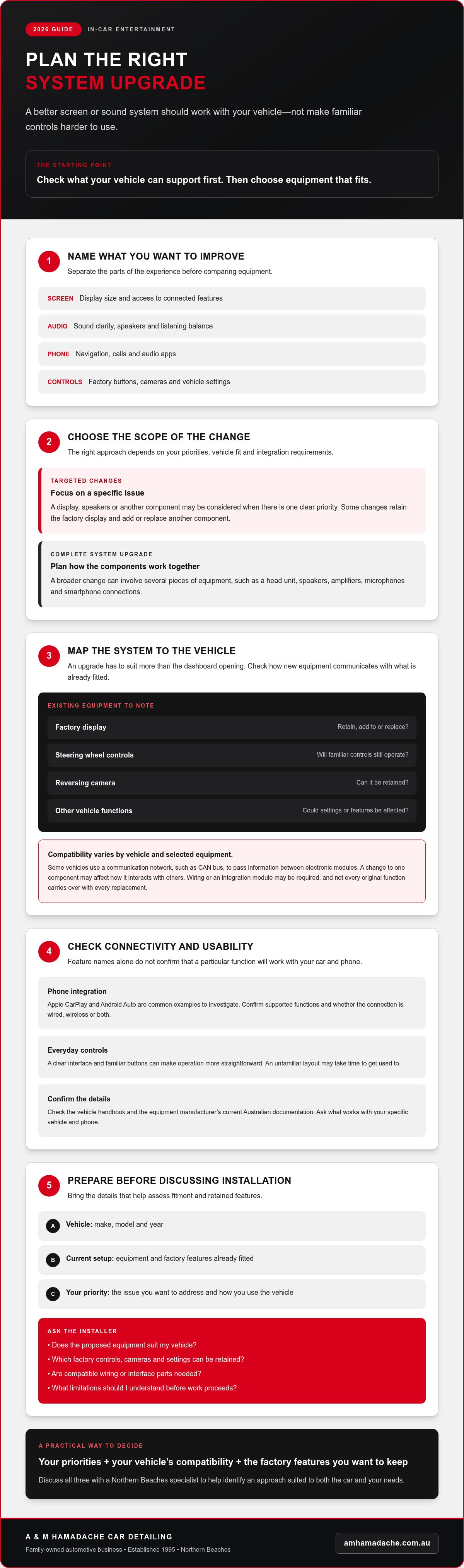
Before deciding, list the functions you want to keep, the problem you’re trying to solve and the features you’d like to add. This gives an installer a clearer basis for comparing a focused change with a broader approach.
What to check before arranging installation on the Northern Beaches
A little preparation can make your discussion with an installer more useful. Start with your vehicle’s make, model and year. Then note what you want the system to do, such as improve phone connectivity or address an audio issue. Finally, ask how those aims fit the car’s current equipment and which original functions may be affected.
Bring the vehicle handbook or details of any factory-fitted system if you have them. Describe what’s currently installed, what works well and what doesn’t. Mention known modifications or electrical and electronic concerns too. These details help an installer assess the proposed change for your vehicle instead of relying on a general fitment description.
Questions to ask an automotive audiovisual installer
Before agreeing to car entertainment system installation, get clear answers about fit, function and scope. Ask:
- Which components are suitable for the exact make, model and year of my vehicle?
- Which factory functions, such as the display, steering wheel controls or camera, are expected to remain available?
- What equipment, fitting work and any additional parts are included in the proposed scope?
- Will you demonstrate the finished system and explain its everyday controls?
- Is any follow-up required, and what should I do if a function doesn’t operate as expected?
Ask the installer to explain anything that’s uncertain before work begins. Compatibility can depend on the specific vehicle and equipment, so don’t assume that a component listed for a similar model will retain the same functions in yours.
Making the installation brief clear
Prioritise the changes that would make a real difference to daily use. A short list, ordered from essential to optional, helps keep the discussion focused and makes it easier to compare a targeted change with a broader upgrade. You don’t need to request every available feature.
Before confirming the work, ask for the agreed scope in clear terms: what will be fitted, what will be retained, which factory controls or functions may change, and whether any follow-up is expected. If the explanation is unclear, ask for clarification first.
For drivers in the Northern Beaches, A & M Hamadache provides automotive audiovisual installation. To discuss your vehicle and intended use, contact A & M Hamadache.
Planning car entertainment system installation with a local specialist
The most suitable upgrade isn’t necessarily the one with the longest feature list. It’s the one that fits your vehicle, works with the functions you want to retain and supports how you use the car. A clear conversation before work begins helps establish what may be compatible, what the proposed installation involves and which details still need checking.
A & M Hamadache Car Detailing provides audiovisual installation as part of its broader automotive work in the Northern Beaches. The family-owned and operated business was established in 1995. Equipment and installation options can depend on your vehicle and requirements, so confirm these details directly rather than assuming a particular feature or component can be fitted.
What to expect from an initial installation discussion
Be ready to describe your vehicle’s make, model and year, the equipment currently fitted and what you’d like to improve. That might be a particular frustration with the existing system or a function you’d like to explore. Sharing your priorities and the features you want to keep gives the installer useful context for discussing possible approaches.
Ask which options are available for your vehicle and how compatibility will be assessed. Confirm what the proposed work includes, which factory functions are expected to remain and whether any changes or limitations need to be considered. If an answer is unclear, ask for a plain-language explanation before deciding how to proceed.
A practical next step for Northern Beaches drivers
Before contacting a local specialist, jot down your vehicle details, current setup and a short list of desired improvements. Separate essential functions from optional ones. This keeps the conversation focused and gives you a useful basis for asking whether a targeted change or a broader system update is worth assessing.
There’s no need to settle on equipment before discussing fit and intended use. Ask whether your vehicle and preferred upgrade can be assessed, and confirm the installation options directly with the business. For a discussion about your requirements, discuss your car entertainment installation with A & M Hamadache.
Make your next upgrade work with your vehicle
The most useful entertainment upgrade isn’t necessarily a complete replacement. Start with what you want to improve, then check how the options suit your vehicle and which factory functions you want to retain. A focused change may be enough, while broader work calls for a careful assessment of compatibility and scope.
That’s the practical principle behind car entertainment system installation: match the technology to both the car and the way you use it. Bring your vehicle details, describe the current setup and be clear about your priorities. Ask what options are available and what functions may be affected before deciding how to proceed.
For drivers in the Northern Beaches, A & M Hamadache is a family-owned and operated automotive business established in 1995, with audiovisual installation among its services. To discuss your vehicle and requirements, discuss your car entertainment installation. A clear conversation is a good first step towards an upgrade that suits your car and everyday driving.
Frequently Asked Questions
What does car entertainment system installation include?
Car entertainment system installation can involve fitting or changing equipment for in-car audio, displays or phone connectivity. The work depends on the chosen upgrade and vehicle. It may focus on one component or involve several parts of the system, along with checking how they interact with existing controls and functions. Ask the installer to explain what’s included and which vehicle features may be affected.
Can an aftermarket entertainment system work with my car’s factory controls?
It may be possible, depending on your vehicle and the equipment selected. Some installations can retain factory controls, while others may change how a feature works or whether it remains available. Tell the installer which controls and functions matter to you, such as steering wheel audio controls or a factory display. Ask them to check compatibility for your exact vehicle and explain any limitations before you proceed.
Are modern car entertainment systems compatible with every vehicle?
No. Fitment and feature compatibility vary by make, model, year, existing equipment and the system being considered. A component that suits one vehicle may not fit another or retain the same factory functions. Provide your vehicle details and ask which options can be assessed for it. Confirm any limitations, required interface components and possible effects on original displays or controls before choosing equipment.
What should I ask before booking a car entertainment system installation?
Ask which equipment suits your exact vehicle, what the installation includes and which factory functions are expected to remain available. Clarify any changes to controls, displays or other linked features, and ask how the finished system will be demonstrated. Share known modifications or existing electronic concerns. Before confirming, make sure you understand the agreed scope and whether any follow-up is required.
Can I upgrade part of my car entertainment system instead of replacing it all?
Yes, a targeted change may be worth considering if you’re happy with most of the setup and want to improve one particular function. For example, ask whether a connectivity or audio concern can be addressed while retaining suitable factory equipment. Whether that’s practical depends on compatibility and how the existing components work together. Describe the issue first, then compare focused and broader options with an installer.
How do Apple CarPlay and Android Auto fit into an entertainment system upgrade?
Apple CarPlay and Android Auto can connect a compatible phone with a vehicle’s display or entertainment system, subject to the equipment available. Support, functions and connection methods vary by vehicle and system, so don’t assume either feature will work in every car or in the same way. Check the vehicle and equipment documentation, and ask the installer to verify compatibility with your vehicle and phone before selecting an upgrade.
Where can I discuss car entertainment system installation on the Northern Beaches?
A & M Hamadache Car Detailing serves the Northern Beaches and provides automotive audiovisual installation. The family-owned and operated business was established in 1995. To discuss whether your vehicle and preferred upgrade can be assessed, share its make, model, year, current setup and the improvement you’re seeking. Confirm available installation options directly with the business, as suitable equipment and scope depend on the vehicle.


