
What if the rust you can see is only the easiest part to inspect? If you're searching for how to check for rust underneath a car, you're right to be cautious: key areas can be hidden from view, and a quick look can’t distinguish surface corrosion from weakened metal. A clear view matters, but safety comes first. Never crawl beneath a car supported only by a jack.
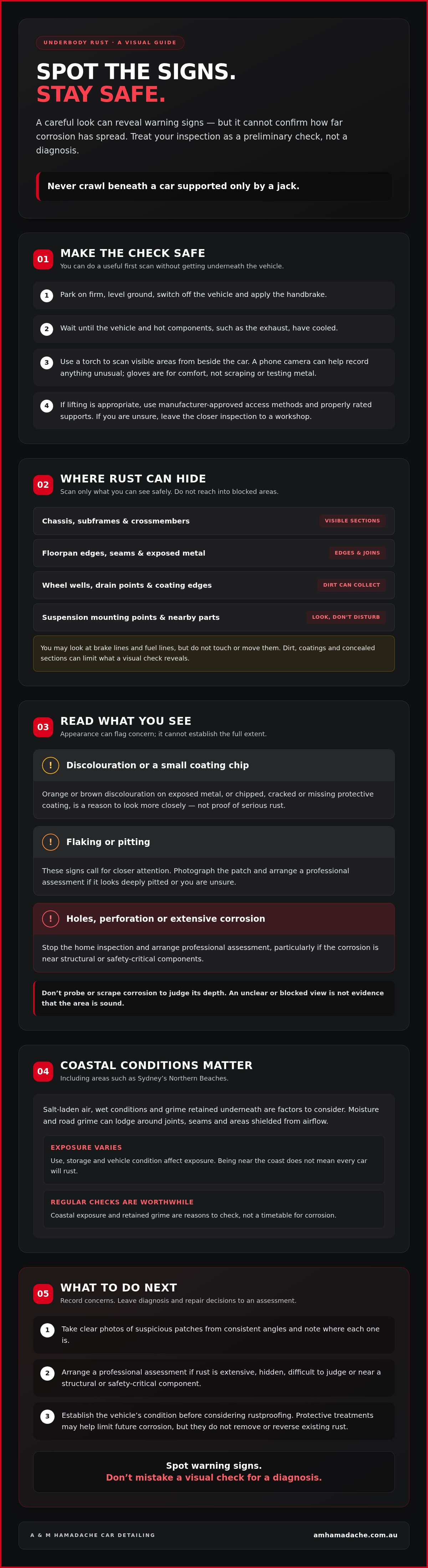
A careful visual check can help you spot warning signs, but it can’t confirm how far corrosion has spread. This guide explains how to inspect safely from accessible positions, where rust commonly hides, and what bubbling, flaking, pitting or holes may indicate. You’ll also learn when to stop and arrange a professional assessment, particularly if corrosion is extensive or near structural or other safety critical components.
Treat your inspection as a preliminary check, not a repair decision. Rustproofing may help protect a vehicle in future, but it doesn’t remove or reverse existing corrosion. Have the vehicle’s condition assessed before considering protection.
Key Takeaways
- Learn how to check for rust underneath a car safely, starting with a level surface, good lighting and a cool vehicle. Never crawl beneath a car supported only by a jack.
- Inspect accessible areas such as wheel wells, seams and panels, while remembering that a visual check can’t confirm hidden corrosion.
- Light discolouration may be a clue, but flaking, pitting or holes call for closer attention rather than a quick DIY conclusion.
- In coastal areas like the Northern Beaches, salt laden air and retained grime make regular checks worthwhile, though exposure varies from vehicle to vehicle.
- Photograph concerning areas and arrange a professional assessment if rust is extensive, hidden or near structural or safety critical components.
How to Check for Rust Underneath a Car: Know Where to Look
Underbody rust is corrosion affecting visible components, seams or panels on the underside of a vehicle. A preliminary look can reveal discolouration, flaking or damaged protective coating, but it can’t show what’s happening beneath a coating or inside enclosed sections. As you learn how to check for rust underneath a car, keep the goal in mind: spot concerns, not diagnose hidden damage.
A visual check can identify warning signs, but a professional assessment is needed to determine their extent and significance. This is especially important around structural areas, where corrosion can be difficult to judge from a limited view.
Which parts underneath a car should you check?
From a safe position, look over accessible sections of the chassis, subframes and crossmembers, as well as the edges of the floorpan. Pay attention to seams, exposed metal edges and drain points, where dirt and moisture can collect. Check around suspension mounting points and note the condition of nearby components. You can look at brake lines and fuel lines, but don’t touch or move them. If an area is blocked from view, don’t reach into it or put yourself beneath an unsupported vehicle to get a closer look.
Look for places where the protective coating appears chipped, cracked or missing, and for orange or brown discolouration on exposed metal. Dirt can obscure the surface, so an unclear view isn’t evidence that the area is sound.
Why can rust form underneath a car?
Moisture and road grime can stay lodged against the underbody, especially around joints, seams and areas shielded from airflow. If a protective coating is damaged, metal may be more exposed to conditions that encourage corrosion. A small chip or scraped patch is a reason to look more closely, not proof that serious rust has developed.
Coastal salt exposure makes regular checks worthwhile, but it doesn’t mean every car near the coast will rust. In Sydney’s Northern Beaches, a vehicle’s exposure depends on how it’s used, where it’s stored and its condition. Salt laden air, wet conditions and grime trapped underneath are factors to consider, not a timetable for corrosion.
Protective treatments are intended to help limit future corrosion, not remove existing rust. If you’re considering one, establish the vehicle’s condition first. This overview of rustproofing methods provides general background on prevention approaches. If corrosion is hidden, extensive or close to a safety critical component, arrange a professional assessment rather than relying on appearance alone.
How to Check for Rust Underneath a Car Safely at Home
A useful home check doesn’t require you to get under the vehicle. Scan visible areas from beside it, using a torch and phone camera to record anything unusual. If access is awkward or you’re unsure how to support the car safely, leave the closer inspection to a workshop.
Prepare for a safe visual inspection
Before looking underneath, take these steps:
- Park on firm, level ground, switch off the vehicle and apply the handbrake.
- Wait until the vehicle and hot components, such as the exhaust, have cooled.
- Gather a torch, phone camera and gloves. Wear gloves for comfort, but don’t use them to scrape or test the metal.
- Look from outside the vehicle. If lifting is appropriate and you know how to set it up, use only manufacturer approved access methods and properly rated supports.
Never crawl beneath a car supported only by a jack. A jack can shift or fail, and the space underneath a vehicle isn’t worth risking your safety. If you can’t view an area without putting your body beneath the car, don’t reach for it. Arrange a workshop assessment instead.
Follow a simple underside inspection sequence
Work steadily around the vehicle. Shine the torch beneath accessible edges and scan visible chassis sections, floorpan edges and wheel wells. A broader guide to inspecting your car for rust also highlights areas such as the frame and wheel wells. Your view at home will be limited, so note what you can see without trying to inspect concealed sections.
- Start at one corner and move around the car in the same direction, checking visible areas as you go.
- Take clear photos of suspicious patches from consistent angles. You can compare them later or show them to a mechanic.
- Record where each patch is, such as near a wheel well or along a floorpan edge.
- Stop if you can’t see safely, or if a patch looks deeply pitted, perforated or close to a structural or safety critical component.
Don’t probe or scrape corrosion to judge its depth. Avoid removing protective coatings, shields or components during a basic check. The aim is to document visible clues, not disturb the vehicle or make a diagnosis from limited access.
If you’ve found an area you can’t assess safely, a professional can advise on what further attention it may need. You can also learn about A & M Hamadache’s automotive services.
Surface Rust or Serious Corrosion? How to Read What You See
Colour and texture offer clues, but they can’t tell you how much metal remains or whether a component is sound. As you learn how to check for rust underneath a car, use what you see to decide on the next step, not as a definitive diagnosis. A visual inspection alone can’t establish structural condition or roadworthiness.
Use this guide to identify what deserves closer attention. It can’t confirm that a part is safe.
| What you can see | Possible concern | Recommended next step |
|---|---|---|
| Light, fairly even orange or brown discolouration on exposed metal | It may be superficial, but appearance alone can’t confirm the depth or condition beneath it. | Photograph it and note its location. Don’t assume the component is sound. |
| Rough patches, flaking or layers of scale | Corrosion may extend beyond a surface mark, and the underlying metal may be affected. | Arrange an assessment, particularly if it’s on a structural area. |
| Swelling or spreading rust along a seam | Corrosion may be developing between joined panels or beneath a coating. | Record the area and have it checked rather than covering or disturbing it. |
| Holes, perforation or metal that looks soft or broken down | Metal may have been lost, but a photograph can’t confirm the extent. | Seek prompt advice from a qualified mechanic. |
What can surface rust look like?
Rust that looks superficial may appear as a thin, even discolouration on exposed metal. That description is only a visual clue, not a diagnosis. Consider rust on an exhaust component in context: an exhaust is different from a chassis section or suspension mounting point, where corrosion could have more serious implications. Photograph changes from a consistent angle, and don’t sand, scrape or coat a suspected patch before it has been assessed.
Which rust warning signs need prompt assessment?
Layered flakes, holes, swelling seams or areas that look deeply pitted warrant closer attention. Take particular care with corrosion near suspension mounts, chassis attachment points, brake lines or fuel lines. Don’t touch or probe these parts to test their condition. If you’re uncertain, or rust appears close to a structural or safety critical area, ask a qualified mechanic to assess it.
Don’t judge severity by colour alone. A clean looking section may hide corrosion beneath a coating, while a visible mark doesn’t automatically prove structural damage. Only a suitable inspection can determine the condition of the affected component and whether further action is needed.
Checking for Underbody Rust in Coastal Areas Like the Northern Beaches
Living near the coast doesn’t mean your car will automatically develop rust. Exposure varies with how and where you drive, where the vehicle is stored and whether dirt and moisture tend to remain underneath. Still, in coastal parts of Sydney, including the Northern Beaches, salt laden air and wet conditions are good reasons to include underbody checks in your vehicle care routine.
How can coastal conditions affect an underbody check?
Salt and moisture can contribute to corrosion where metal is exposed or a protective surface has been damaged. Grime caught around seams, edges or other hard to see areas may also hold moisture against the underbody. A car kept in a sheltered spot and one regularly used near the beach may have different exposure, so local conditions alone can’t tell you whether rust is present.
After a beach trip or wet weather driving, consider whether mud, sand or grime may have collected underneath. If you clean the underbody, follow the vehicle manufacturer’s guidance and avoid disturbing coatings or components. Rinsing may remove surface dirt, but it won’t confirm that hidden areas are corrosion free or deal with rust that’s already there.
When should you check again?
Make a visual underbody check part of routine vehicle care, and take another look after driving that may leave dirt or moisture beneath the car. You don’t need to set an arbitrary schedule based on living near the coast. Consider your vehicle’s use, storage and visible condition instead. If you’re learning how to check for rust underneath a car, consistent photographs can help you notice changes more reliably than memory alone.
- Photograph visible areas from similar angles so you can compare them later.
- Note any new discolouration, flaking or change around a seam.
- Arrange a professional assessment if a patch changes, hidden corrosion is a concern, or rust is near a structural or safety critical component.
Cleaning and regular checks support good maintenance, but neither establishes the condition of concealed metal. If you’re considering protection for the future, have existing corrosion assessed first. Chemical and electronic rustproofing are protective services, not ways to remove or reverse rust.
For information about chemical and electronic rustproofing, speak with A & M Hamadache after the vehicle’s condition has been assessed.
What to Do After Finding Rust Underneath Your Car
Finding a rusty patch can be unsettling, but a visible mark alone doesn’t tell you how far corrosion extends. Keep the next steps simple: record what you can see, leave the area undisturbed and arrange an assessment if the signs are concerning or unclear.
- Document the area. Take clear photos from a safe position and note where the patch is, such as beside a floorpan seam or near a wheel.
- Don’t disturb it. Avoid scraping, sanding, probing or covering the rust. Removing material or applying a coating could obscure useful evidence.
- Decide whether to seek advice. If you see holes, heavy scaling, swelling seams or corrosion near a structural or safety critical component, contact a qualified mechanic.
When should a mechanic inspect underbody rust?
Arrange an assessment if you can’t judge the depth, the metal appears perforated or layered flakes are present. Corrosion near suspension mounts, chassis attachment points, brake lines or fuel lines also deserves professional attention. Stop your DIY check if you can’t access the area safely or aren’t sure what you’re looking at. A photograph can help explain your concern, but it can’t establish the full extent of corrosion, diagnose roadworthiness or determine the required repair.
Until the area has been assessed, don’t assume that a surface treatment will address the problem. The condition of the affected metal needs to be understood first. A mechanic can inspect the vehicle directly and advise on appropriate next steps.
Can rustproofing help after an inspection?
Rustproofing is a protective measure to consider for the vehicle’s future, not a way to remove, repair or reverse existing corrosion. Have visible or suspected rust assessed first and follow advice about the findings. Once the vehicle’s condition is understood, you can consider whether a protection service suits your needs.
A & M Hamadache offers chemical and electronic rustproofing. These are different service options, and neither should be treated as a substitute for assessing existing corrosion. Ask what’s appropriate for your vehicle and its condition rather than relying on a treatment to resolve an unidentified issue.
If you’re considering protection after the vehicle’s condition has been assessed, explore A & M Hamadache’s rustproofing services.
Make Your Next Step a Safe, Informed One
A careful visual check can help you spot where rust may be developing, but it can’t confirm hidden damage or establish whether a component is sound. Use what you’ve learned about how to check for rust underneath a car to inspect only what’s safely visible, note changes and seek a professional assessment if corrosion is extensive, unclear or near safety critical parts.
Rustproofing is a possible future protection measure, not a repair for existing rust. Have the vehicle’s condition assessed first, then consider whether a suitable option fits its needs. A & M Hamadache is a family owned and operated automotive business established in 1995, offering chemical and electronic rustproofing to vehicle owners in the Northern Beaches.
Ask A & M Hamadache about chemical and electronic rustproofing after your vehicle’s condition has been assessed. A measured inspection now can help you make a more confident decision about what comes next.
Frequently Asked Questions
How can I check for rust underneath a car without a hoist?
You can check visible areas from beside the car using a torch, without putting your body underneath it. Park on firm, level ground, switch off the vehicle and let hot components cool. Scan accessible areas from the edges and photograph anything concerning. This is a useful preliminary check, not a way to confirm hidden corrosion. If you can’t see an area safely, arrange a workshop assessment instead.
Is surface rust underneath a car serious?
Not necessarily, but a surface mark alone can’t confirm how deep corrosion goes or whether the metal is sound. Light, even discolouration may be a clue, while flaking, scaling, swelling seams or holes deserve closer attention. Location matters too: rust near a chassis section or suspension mounting point is more concerning than a mark on a non structural part. Ask a qualified mechanic to assess uncertain or safety critical areas.
Where does rust usually start underneath a car?
Rust can appear where moisture and grime collect or where a protective coating is damaged. Check accessible chassis sections, subframes, crossmembers, floorpan edges, seams, drain points and wheel wells. Look around suspension mounting points, but don’t touch brake or fuel lines. Exposure and vehicle condition vary, so these are useful places to inspect rather than a guarantee that rust will be present.
Can I crawl under my car to look for rust?
Never crawl under a car supported only by a jack. A jack can shift or fail, creating a serious risk of injury. For a preliminary check, use a torch from outside the vehicle and inspect only what you can see safely. If closer access is needed, use only manufacturer approved methods and properly rated supports if you’re competent to set them up. Otherwise, leave the inspection to a workshop.
Does coastal air cause rust underneath a car?
Salt laden air and moisture can contribute to corrosion where metal is exposed or protective coatings are compromised, but coastal location doesn’t mean every car will rust. Around the Northern Beaches, exposure can vary with driving habits, storage and cleaning. After beach trips or wet weather use, consider whether grime or moisture remains underneath and check safely. Rinsing can remove dirt, but it won’t identify or resolve existing corrosion.
What should I do if I find a hole or flaking rust underneath my car?
Photograph the area from a safe position, note where it is and don’t scrape, probe or cover it. Holes, heavy flakes or corrosion near suspension mounts, chassis attachment points, brake lines or fuel lines should be assessed by a qualified mechanic. Stop your own inspection if access is unsafe or the affected area is unclear. A photo can help explain the concern, but can’t establish the full extent or roadworthiness.
Can rustproofing remove rust that is already underneath my car?
No. Rustproofing is a protective service, not a way to remove, repair or reverse existing corrosion. Have the vehicle’s condition assessed first, and follow professional advice about any existing rust. Once that’s understood, you can consider future protection. A & M Hamadache Car Detailing, a family owned Northern Beaches business established in 1995, offers chemical and electronic rustproofing. These options shouldn’t be treated as a substitute for assessing corrosion.


