
A glossy dressing can make faded trim look darker quickly, but the effect may be temporary and can leave streaks or wash away. When restoring faded black plastic trim on car surfaces, first work out whether the plastic is dirty, faded or physically damaged. That simple check helps you choose a suitable treatment and avoid making an uneven finish harder to fix.
Dull bumpers, mirror housings and window surrounds can make a well-cared-for vehicle look older. Sunlight and weather can fade exterior plastic, but the right treatment depends on the trim’s condition. Cleaning, cosmetic restoration and repair are different jobs. Applying a product before preparing the surface can leave patches, residue or product transfer onto nearby paint and glass.
This guide explains why black trim fades, how to assess it and how to restore it carefully. You’ll also learn how to maintain the finish and when DIY treatment may not be suitable. A & M Hamadache Car Detailing serves the Northern Beaches with professional detailing and trim repair for vehicles that need more than routine cleaning.
Key Takeaways
- Check whether trim is dirty, faded or physically damaged before choosing a treatment.
- Know the difference between cleaning, temporary dressing and products intended to restore trim colour.
- When restoring faded black plastic trim on car surfaces, prepare the area and apply product carefully to help prevent streaks and transfer onto paint or glass.
- Set realistic expectations: results vary with the plastic’s condition and previous treatments, and topical restoration is not necessarily permanent.
- DIY care may suit intact, faded trim. Cracked, brittle or unevenly repaired plastic may need professional attention.
Why does black plastic trim fade, and what should you check first?
Black trim can look grey, patchy or dry even after the rest of the car has been washed. Sunlight and ongoing exposure to the weather can gradually change the appearance of exterior plastic. Road grime and residue from old dressing can also make it look dull or uneven. The difference is especially noticeable against clean paintwork, where faded trim can make an otherwise cared-for car seem older.
Restoring trim means improving its appearance, not necessarily reversing every kind of material damage. Some exterior components are made from polypropylene; its properties of polypropylene help explain why plastic parts can behave differently from painted panels. The material, its exposure and its current condition all affect how it responds to treatment. When restoring faded black plastic trim on car surfaces, start by diagnosing the problem rather than choosing a product straight away.
Is it fading, dirt or surface residue?
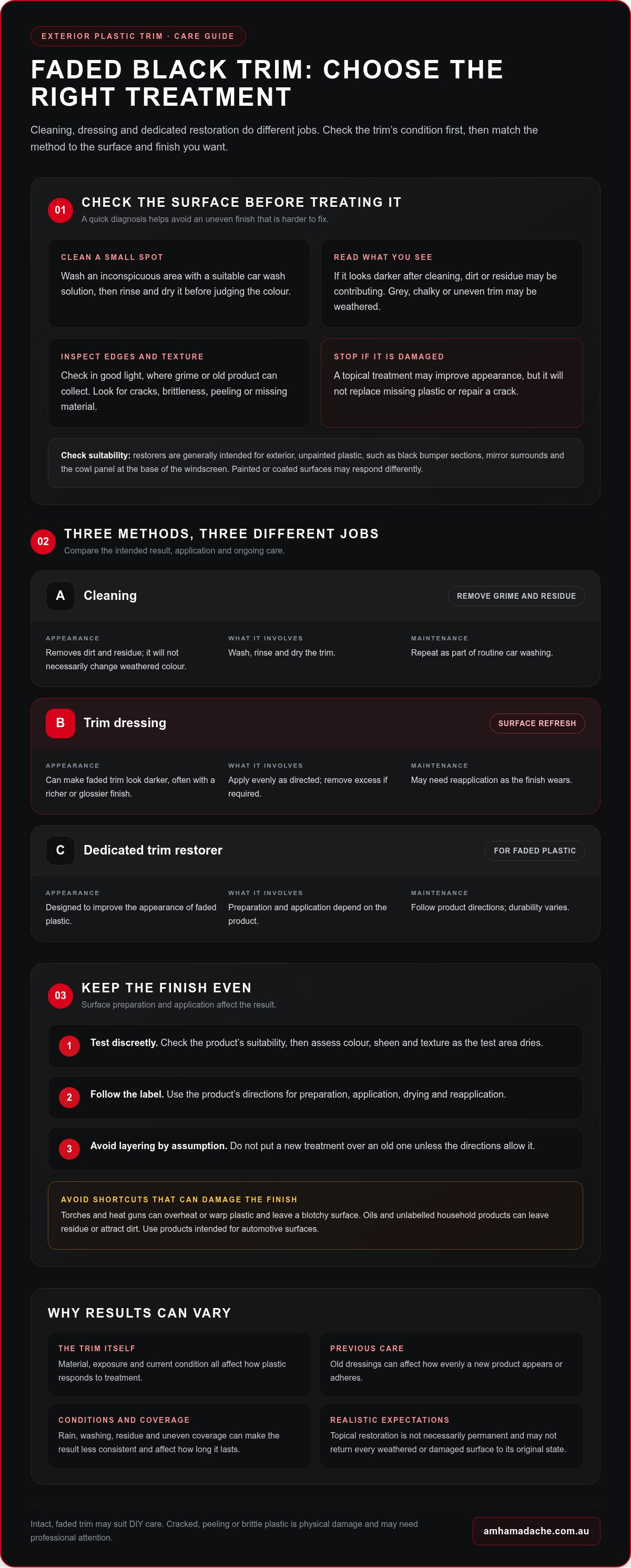
Wash a small, inconspicuous area with a suitable car wash solution, then rinse and dry it before judging the colour. If the trim looks darker after cleaning, dirt or residue may have caused some of the dullness. If it remains grey, chalky or uneven, weathering is more likely. Check the surface in good light, including the edges and textured sections where grime or product can collect.
Look for cracks, brittleness, peeling or missing material before using a restorer. These point to physical damage, not just a change in colour. A topical treatment may improve the appearance, but it won’t replace missing plastic or repair a crack. If the surface is breaking down, stop before applying more product.
Which plastic parts can be treated?
Trim restorers are generally intended for exterior, unpainted plastic, such as black bumper sections, mirror surrounds and the cowl panel at the base of the windscreen. Don’t assume that every dark-looking part is bare plastic. Painted or coated surfaces may respond differently, and previous dressings can affect how evenly a new product appears or adheres.
Before treating a larger area, test the chosen product on a discreet spot and follow its label. Check that the surface is suitable, then assess the colour, sheen and texture as the test area dries. If you’re unsure whether a part is painted, coated or damaged, identify it before proceeding. For cracked, peeling or brittle trim, A & M Hamadache Car Detailing provides professional trim repair.
What happens to faded car trim, and which restoration methods differ?
Exterior plastic can lose its deep, dark appearance after prolonged exposure to sunlight and weather. A treatment may improve its colour and finish, but results depend on the material’s condition and previous care. Don’t assume that any method will return every faded, damaged or heavily weathered surface to its original state.
Choose an approach based on the problem you want to address. Cleaning removes grime and residue. Dressing refreshes the surface temporarily. A dedicated trim restorer is formulated to improve the appearance of faded trim. The most suitable option depends on the surface and how much ongoing upkeep you’re prepared to do.
| Method | Appearance | Effort | Maintenance |
|---|---|---|---|
| Cleaning | Removes dirt and residue; won’t necessarily change weathered colour | Wash, rinse and dry the trim | Repeat as part of routine car washing |
| Trim dressing | Refreshes the surface, often with a richer or glossier look | Apply evenly as directed, then remove excess if required | May need reapplication as the finish wears |
| Dedicated trim restorer | Designed to improve the appearance of faded plastic | Preparation and application depend on the product | Follow product directions; durability varies |
Trim dressing or a dedicated restorer: what is the difference?
A dressing is a surface treatment intended to refresh or change appearance. It may make faded trim look darker, but it isn’t the same as a product specifically formulated to restore plastic colour. Dedicated restorers also differ in ingredients, application and performance, so read the label instead of assuming they all work alike. Consumer Reports tests provide another reference for comparing trim-care products.
Preparation and application both affect the finish. Rain, washing, residue and uneven coverage can make the result less consistent and may affect how long it lasts. Follow the product’s instructions for preparing the surface, applying the treatment, drying and reapplication. Avoid putting a new treatment over an old one unless the directions allow it.
Why avoid heat and household shortcuts?
Heat-based shortcuts, including torches and heat guns, can overheat or warp plastic and leave a blotchy, uneven surface. They risk damaging the trim rather than restoring it reliably. Oils and unlabelled household products can leave residue or attract dirt, making the surface look patchier over time. Use products intended for automotive surfaces, and remove old residue only with a method permitted by the product directions.
Trim care contributes to a vehicle’s overall appearance. If a DIY application leaves an uneven finish, professional trim repair from A & M Hamadache Car Detailing can address the problem. The right method for restoring faded black plastic trim on car surfaces depends on the material and finish, not on a quick shortcut.
How do you restore faded black plastic trim on a car safely?
A careful process helps prevent patchy coverage and product transfer onto surrounding surfaces. Before restoring faded black plastic trim on car surfaces, confirm the plastic is suitable for the treatment and check for cracks or peeling. Work patiently, following the product instructions at each stage.
Product directions take precedence. Preparation, applicators, safety precautions, curing and washing restrictions vary between products. Follow the label for the product you’re using rather than relying on a general method or another product’s timings.
Prepare the trim and surrounding area
Choose a dry, well-ventilated place out of direct sun. Allow enough time to finish without dust, wind or rain interfering, and make sure the trim isn’t hot to the touch. Protect adjacent paint and glass from accidental contact. Take care around tyres too, as transferred product can leave an unwanted surface film.
Use cleaning and preparation methods that suit both the trim and the chosen treatment. Don’t assume a particular solvent or cleaner is suitable for every type of plastic. Check the product label for cleaning guidance and avoid abrasive tools that could mark the surface.
- Clean. Wash the trim using a suitable car-cleaning method to remove loose dirt and road grime. Rinse thoroughly so cleaning residue doesn’t interfere with the treatment.
- Dry. Use a clean microfibre cloth, taking care around textured sections and edges. Keep grit out of the cloth and away from the plastic to reduce the risk of scratching.
- Test. Apply the product to a small, discreet section using the method on its label. Let the test area settle as directed, then check the colour and sheen before treating more visible trim.
- Apply sparingly. Use the specified applicator, or another one only if the product instructions permit it. Work in small sections and apply a light, even layer. More product won’t necessarily improve the finish and can make consistent coverage harder to achieve.
- Remove excess and allow to cure. Wipe away residue only as directed, using a clean cloth where instructed. Leave the treated trim undisturbed for the stated curing period, and avoid washing or exposing it to conditions the label says to avoid.
Inspect the finish once it has settled. If it looks streaky, don’t immediately add another coat. Check the instructions for the recommended response. Extra product or an incompatible treatment can make an uneven finish harder to correct. Clean preparation, controlled application and patience give you a sound basis for maintaining the result.
How can you judge the result and keep restored trim looking even?
Wait for the time specified on the label before assessing the finish. Colour and sheen can differ between plastic parts, while previous treatments and weathering can affect how evenly the trim responds. Compare treated areas with nearby trim in consistent light, preferably in the shade. Changing sunlight can make the same surface look darker or lighter from one moment to the next.
A good cosmetic result should look consistent across the treated section, without shiny patches, streaks or visible residue. Check the edges and textured areas closely, as product can collect there. Inspect nearby paint, glass and tyres for accidental transfer too. A topical treatment can improve appearance, but don’t assume it is permanent unless the product has substantiated evidence for that claim. Deep cracks, peeling or missing material are physical damage and may not respond to a cosmetic restorer.
What should a good result look like?
Once the product has settled as directed, use this quick check:
- Evenness: Is the colour and sheen reasonably consistent across the trim?
- Residue: Can you see streaks, tacky-looking spots or product build-up around the edges?
- Transfer: Has any treatment marked nearby paint, glass or tyres?
- Comparison: Does the finish look balanced beside untreated trim when viewed in the same light?
If you spot excess product or transfer, follow the product directions for addressing it. Avoid adding another layer straight away, as this can make unevenness more noticeable.
How do you reduce repeat fading and staining?
Keep exterior trim clean with gentle washing, and remove road grime rather than letting it build up. Use a suitable car-cleaning method and avoid harsh scrubbing that could mark the surface. Inspect exposed areas, including bumper trim and mirror surrounds, periodically for new dullness, staining or changes in texture.
After treatment, follow the maker’s guidance on curing, washing and reapplication. Don’t assume a particular product will last for a fixed period. Sun exposure, weather, washing frequency and vehicle use can all affect the finish over time. Reapply only when the product label permits it, and don’t combine treatments unless their instructions allow it.
Careful maintenance helps preserve your vehicle’s appearance, but some trim needs more than home care. If the finish remains uneven or the plastic is damaged, professional trim repair from A & M Hamadache Car Detailing is a practical next step for Northern Beaches drivers.
When is professional car trim restoration the better next step?
DIY treatment can be reasonable when the trim is intact and the main issue is fading or dullness. A restorer is a cosmetic treatment, not a repair for broken plastic. If the surface is cracked, brittle, peeling or missing material, stop before applying more product. Repeated attempts may disguise the problem briefly without addressing the damage.
Which trim problems are beyond a simple restorer?
These signs call for a closer assessment:
- Cracks or brittleness: The plastic may be physically weakened rather than simply faded.
- Broken clips or loose trim: The part may need repair or refitting, not a colour treatment.
- Peeling coatings or missing material: A surface restorer cannot replace a coating or plastic that has come away.
- Persistent patchiness: Different materials, previous treatments or inconsistent repairs may cause sections to respond differently.
Appearance products can improve colour, but they shouldn’t be expected to reverse structural damage. A professional assessment can distinguish weathering from damage and help identify an appropriate approach. If a DIY finish remains streaky or uneven after you’ve followed the product directions, adding more layers may worsen the result. Have the trim assessed before trying another treatment.
How can professional detailing support vehicle preservation?
Trim is one part of a vehicle’s overall finish. A detailing approach considers the condition of the plastic, the surrounding surfaces and any previous treatments instead of assuming the same process will suit every component. A & M Hamadache Car Detailing provides professional detailing and trim repair, helping address both the vehicle’s overall appearance and damage that a cosmetic product cannot resolve.
A & M Hamadache Car Detailing is a family-owned automotive care business serving the Northern Beaches. Established in 1995, the business offers detailing and trim repair for vehicle care and restoration. For concerns that go beyond restoring faded black plastic trim on car surfaces, explore A & M Hamadache Car Detailing.
If the trim is intact, a careful, label-led DIY treatment may be enough to refresh its appearance. If it’s damaged or the finish remains inconsistent, professional assessment can help determine whether repair or cosmetic treatment is more appropriate.
Keep your car’s finish looking cared for
Restoring faded black plastic trim on car surfaces starts with checking whether the problem is surface dirt, cosmetic fading or physical damage. Choose a suitable treatment, prepare the trim carefully and follow the product label to help achieve an even finish. Gentle washing and regular inspection can help maintain the result, although no topical treatment should be assumed permanent.
If the trim is cracked, brittle, peeling or still patchy after careful DIY treatment, professional trim repair may be the better next step. A & M Hamadache Car Detailing serves the Northern Beaches with professional detailing and trim repair to help care for your vehicle’s appearance.
Explore professional detailing and trim repair with A & M Hamadache Car Detailing for help with your car’s finish.
Frequently Asked Questions
Can faded black plastic trim be restored at home?
Yes, if the trim is intact and the issue is mainly cosmetic fading. Wash it first to check whether dirt or residue is dulling the surface, then choose a treatment labelled for the type of plastic. Test it on a discreet area and follow the instructions. Home treatment may improve colour, but it won’t repair cracks, brittleness, peeling or missing material.
How do you restore faded black plastic trim on a car?
Start by washing the trim with a suitable car-cleaning method, then rinse and dry it with a clean microfibre cloth. Test the chosen product on an inconspicuous spot. If the finish looks suitable, apply a small amount evenly with an appropriate applicator, remove excess as directed and allow it to cure according to the label. Protect nearby paint, glass and tyres from product transfer.
Will black trim restorer permanently restore faded plastic?
No topical treatment should be assumed to restore faded plastic permanently. Restorers can improve the trim’s appearance, but results vary with the plastic, its condition, previous treatments and exposure to sun and weather. Follow the product’s directions for washing and reapplication, and be cautious of fixed durability claims unless they’re supported by evidence. Cosmetic products can’t replace cracked or missing material.
Is it safe to use a heat gun on faded car trim?
A heat gun isn’t a safe shortcut for restoring faded trim. Excessive heat can warp or otherwise damage the plastic and leave an uneven or blotchy surface. It’s difficult to achieve consistent results across different shapes and textures. Use a product intended for automotive plastic, follow its label and avoid applying treatment to hot trim or working in unsuitable conditions.
Why does black plastic trim turn grey?
Sunlight and prolonged weather exposure can contribute to exterior plastic losing its dark appearance. Dirt, road grime and residue from previous treatments may also make trim look dull, patchy or grey. Wash a small section and let it dry before deciding it’s faded. If a chalky or grey tone remains, weathering may be the cause, although the material’s condition affects how it responds to treatment.
How often should you reapply plastic trim restorer?
Reapply only as often as the specific product’s label permits. There’s no reliable interval that applies to every restorer or vehicle, as exposure, washing and use affect how the finish holds up. Inspect the trim periodically for fading or unevenness, and follow the maker’s guidance on curing and washing. Don’t layer another treatment over the existing finish unless the instructions allow it.
Can trim restorer damage car paint or tyres?
Product transfer can leave unwanted residue or marks on nearby surfaces, including paint, glass and tyres. Apply carefully, protect adjacent areas and wipe away excess as the label directs. If product gets onto another surface, follow its removal instructions rather than using an unapproved cleaner. Northern Beaches drivers with damaged trim or an uneven DIY result can arrange professional trim repair with A & M Hamadache Car Detailing.


