
If you live on the Northern Beaches, is that small black box tucked under your bonnet a genuine shield against the salt air, or just an expensive paperweight? It's a question we hear constantly from locals who've watched their pride and joy slowly succumb to the "coastal tax" of bubbling paint and structural decay. You've likely encountered the heated debates online, where one forum claims electronic rustproofing Sydney is a miracle cure while another dismisses it as modern-day snake oil. It's completely understandable to feel sceptical when your vehicle's longevity and resale value are on the line.
We've put together this guide to cut through the marketing fluff and explain the actual science of capacitive coupling. Our goal is to provide the honest, technical perspective you need to make an informed decision for your 4WD or family car. We'll break down how these systems function in our harsh coastal environment, compare them to traditional chemical barriers, and explain why a meticulous, professional installation is the only way to ensure the technology performs as promised. Whether you're heading off-road or just parking by the surf, you deserve to know exactly what's protecting your metal.
Key Takeaways
- Understand the science of capacitive coupling and why the "snake oil" reputation usually stems from poor-quality units rather than the technology itself.
- Discover why electronic rustproofing Sydney is a strategic investment for coastal drivers looking to maintain resale value without the mess of traditional sprays.
- Debunk common myths regarding battery drainage and paint integrity to gain genuine peace of mind about your vehicle's long-term health.
- Identify the critical installation factors, from precise pad placement to proper earthing, that determine whether a system actually protects your chassis.
- Learn how a bespoke assessment from a specialist with 30 years of experience ensures your rust protection is tailored to your vehicle's specific needs.
What is Electronic Rustproofing and Does it Actually Work?
At its core, electronic rustproofing is a method of using a controlled electrical current to interfere with the chemical process of corrosion. When considering electronic rustproofing Sydney drivers often find themselves caught between aggressive marketing and cynical forum threads. This technology is based on the proven scientific principle of Cathodic Protection, which has been used for decades to protect pipelines, bridges, and ship hulls from degradation. However, the reputation of these systems as "snake oil" in the automotive world isn't entirely without merit. It usually stems from the influx of low-quality, uncertified units or poor DIY installations that fail to establish a proper circuit, leading to disappointing results for the vehicle owner. A professional installation ensures the system is tuned to the specific capacitance of your vehicle's paintwork, which is where many off-the-shelf kits fall short.
There are two primary methods used in the industry. Impressed Current systems are the traditional choice for submerged structures, leading to the common myth that electronic protection only works if your car is underwater. For modern vehicles, we use Capacitive Coupling. This method is specifically designed for surfaces exposed to the atmosphere rather than total immersion. Understanding the nuances of electronic rustproofing Sydney conditions require is the first step toward long-term vehicle preservation. It's physics, not magic, and its success depends entirely on how the system is integrated into your vehicle's specific architecture.
The Science of Capacitive Coupling
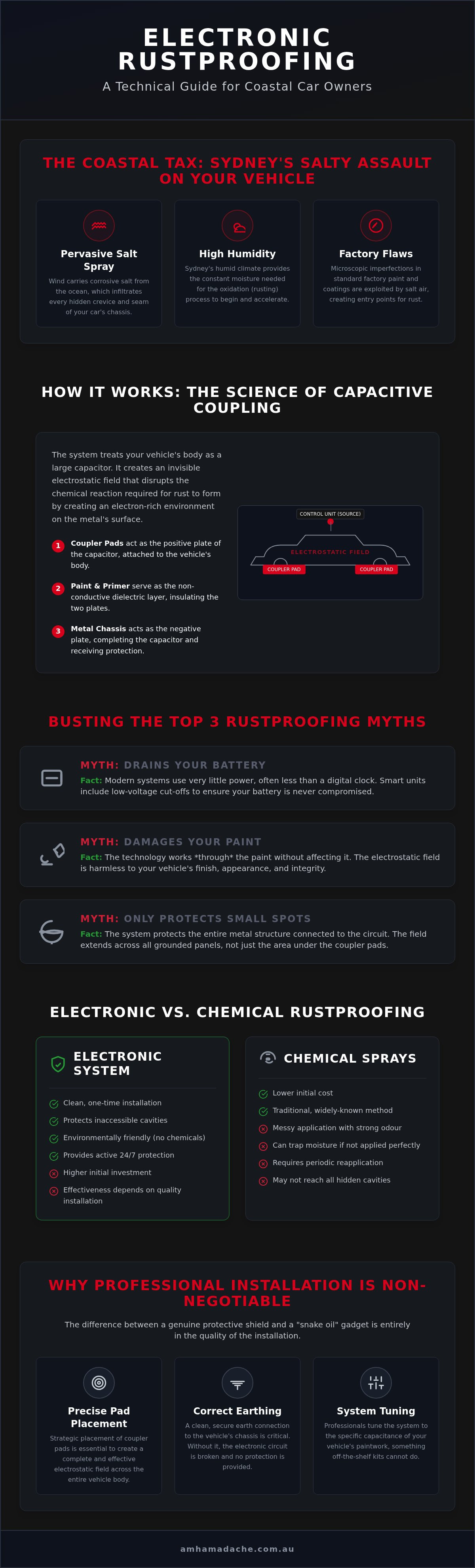
Unlike older methods, a capacitive coupling unit treats your vehicle's body as part of a large capacitor. The protection pads act as one plate, the metal chassis acts as the second, and your car's paint and primer serve as the dielectric layer between them. When the unit is active, it sends a high-frequency charge through the pads, creating an electrostatic field. This field interferes with the ability of oxygen and moisture to react with the steel. By maintaining a constant supply of negative charge, the system creates an electron-rich environment across the metal surface that effectively discourages the electrochemical reaction required for rust to form.
Why Sydney’s Salt Air Demands More Than Standard Protection
Living on the Northern Beaches provides a beautiful lifestyle, but it's incredibly taxing on your vehicle. The salt spray from the Pacific Ocean doesn't just sit on the surface; it's carried by the wind and finds its way into every cavity and crevice of your chassis. Sydney's high humidity levels further complicate the issue by providing the moisture necessary to complete the circuit for oxidation to occur. Standard factory coatings often have microscopic imperfections that salt air exploits with ruthless efficiency. For locals, a "set and forget" mentality can lead to expensive repairs. A bespoke electronic installation provides an active layer of defence that works 24/7, even in the humid, salt-heavy environments that typically accelerate metal fatigue.
Busting the Top 3 Electronic Rustproofing Myths
Scepticism is a natural response to any technology that claims to work invisibly. Much of the doubt surrounding electronic rustproofing Sydney owners feel today stems from a history of substandard products that entered the market decades ago. A landmark case involving FTC Charges Against Rust Evader in the mid-nineties serves as a reminder of why many drivers remain wary. However, the technology has evolved significantly since those early days of basic "black boxes." Modern, certified systems are engineered with precision, yet three persistent myths continue to circulate in local automotive circles.
The first common concern is that these units will drain a vehicle's battery. The second is the strange idea that an electrical charge might somehow dull the paintwork or change its appearance. Finally, many believe the protection is limited to the immediate area around the coupler pads. None of these claims hold up under technical scrutiny when you're dealing with high-quality components and professional installation. If you are questioning whether these systems are right for your specific vehicle, seeking expert advice can help clarify the facts before you invest.
Myth 1: Battery Drainage and Modern Smart Units
Modern electronic units are incredibly efficient, typically drawing between 20 and 50 milliamps of current. To put that in perspective, it's often less power than your car's digital clock or factory alarm system. High-quality systems also include smart voltage sensors. These sensors constantly monitor your battery's health and will automatically shut the rustproofing unit down if the battery voltage drops below a certain threshold, usually around 12.2 volts. This ensures you'll never be left stranded with a car that won't start. Electrical gremlins only tend to appear when units are poorly earthed or wired incorrectly, which is why professional integration is essential for peace of mind.
Regarding paintwork, the electrostatic field created by the system has no physical effect on the gloss or colour of your car. In fact, the paint serves as a vital component of the circuit, acting as the dielectric layer that allows the capacitor to function. It remains entirely untouched and unharmed by the process.
Myth 3: Total Body Protection vs. Localised Action
It's a common misconception that protection stops a few centimetres away from where the pads are glued. Because the entire metal chassis of the vehicle is conductive, the electrostatic charge travels throughout the entire structure. This is particularly beneficial for electronic rustproofing Sydney vehicles because the charge reaches deep into structural joints, door pillars, and hidden sills where traditional sprays might struggle to provide consistent coverage. The coupler pads act as the injection point for the charge, but the metal itself carries the protection to every corner of the vehicle. This total-body interference is what makes the technology so effective for vehicles frequently exposed to the salt-heavy air of the Northern Beaches.
Electronic vs. Chemical Rustproofing: Which is Right for You?
Choosing between a physical barrier and an active electrical system often comes down to how you use your vehicle and where you park it. While chemical treatments provide a traditional, thick coating, The Truth About Electronic Rust Protection is that it offers a cleaner, more modern alternative for those who prefer to avoid the mess of petroleum-based products. When considering electronic rustproofing Sydney drivers should weigh the long-term cost-benefit ratio. Over a five-year ownership period, an electronic unit often proves more economical. It requires no re-application, whereas chemical barriers typically need a professional refresh every two to three years to maintain their integrity, especially if the vehicle is frequently driven on sand or gravel.
For many of our clients in the Northern Beaches, the "gold standard" isn't a choice between one or the other, but rather a hybrid approach. This bespoke strategy involves using a light chemical fogging in high-impact underbody areas combined with a capacitive coupling unit for total-body protection. This ensures you have the physical armour where it's needed most and the active interference everywhere else.
When to Choose Chemical Rustproofing
Chemical sprays remain the heavy hitters for underbody protection on older vehicles. If your car already shows signs of surface oxidation, a heavy-duty bitumen or wax-based sealant is often the superior choice because it physically seals the metal away from oxygen. This is particularly important for vehicles that face direct abrasion from sand and gravel. The physical thickness of the coating can withstand the "sandblasting" effect that occurs on coastal tracks. However, these coatings can become brittle over time. They require regular inspections to ensure no moisture has become trapped beneath the surface, which can actually accelerate decay if left unchecked.
The Case for Electronic Units on New Vehicles
For a brand-new 4WD or luxury SUV, electronic units are frequently the preferred path. They protect the vehicle without the sticky residue that can make mechanical repairs difficult and messy. Modern vehicles are also packed with sensitive parking sensors and complex wiring looms that don't always play well with thick chemical overspray. An electronic system is a strategic investment that maintains the pristine look of your engine bay and chassis. A significant advantage is transferability; many high-quality electronic rustproofing Sydney systems can be professionally uninstalled and moved to your next vehicle, preserving your initial investment long after you've traded in the car.
Installation Secrets: Why Your "Local Legend" Matters
The effectiveness of electronic rustproofing Sydney drivers experience is largely determined before the unit is ever switched on. While DIY kits are readily available online, they often lead to a false sense of security due to poor installation choices. A common blunder is the "slap-it-on" approach, where pads are placed in convenient rather than effective locations. Professional installation ensures that the system is integrated into your vehicle's electrical architecture without causing interference with sensitive modern ECUs. We focus on establishing a "clean" power source and a robust earth connection, which are the two most critical factors for maintaining the electrostatic field required to inhibit corrosion.
Northern Beaches locals face a unique challenge that standard installation manuals often overlook. The combination of high humidity and consistent salt spray creates a micro-climate inside vehicle panels. This salt-heavy air doesn't just sit on the exterior; it drifts into door cavities, sills, and pillar structures. We position our coupler pads based on decades of observing where salt ingress is most aggressive in our local area. By understanding the specific airflow and moisture traps of different chassis designs, we ensure the protection charge is distributed where the risk is highest.
Pad Placement and Surface Preparation
Success begins with meticulous surface preparation. For the capacitive coupling to function, the metal surface must be completely free of factory waxes, oils, and road grime. We use specialised cleaning agents to ensure the metal is surgically clean before the pads are bonded. In our experience, specific 4WD models like LandCruisers and Hiluxes have notorious "hot spots" for rust, particularly around the rear cross members and inner sills. We target these high-risk zones with precision. To ensure the system lasts the life of the vehicle, we use industrial-grade adhesives that are designed to withstand the extreme vibrations and temperature fluctuations common in Australian driving conditions.
Ongoing Maintenance of Your Electronic System
Once your system is installed, it requires very little intervention, but it isn't a "fit and forget" solution. We always instruct our clients to perform a simple monthly check of the LED status light on the control unit; a green light is the heartbeat of your protection. However, it's vital to remember that electronics don't physically repel mud or salt cakes. If salt-laden mud is left to sit in your wheel arches, it can eventually bridge the electrostatic field. This is why we recommend integrating your protection plan with our Full Detail Package. Regular professional cleaning removes the physical contaminants that electronics cannot, allowing the system to work at peak efficiency.
If you want to ensure your vehicle is protected by a specialist who understands the unique demands of the Sydney coastline, contact the team at A & M Hamadache today for a bespoke installation assessment.
Protect Your Investment with A & M Hamadache
Since 1995, the Hamadache family has provided a steady hand and technical expertise to the Northern Beaches motoring community. With over 30 years of experience in automotive care, we understand that your vehicle is more than just a mode of transport; it's a significant financial investment that deserves meticulous preservation. When it comes to electronic rustproofing Sydney, we steer clear of the "one size fits all" mentality. We don't simply slap a generic unit under the bonnet and send you on your way. Instead, we perform a comprehensive assessment of your vehicle's current condition, usage patterns, and storage environment to ensure the solution we provide is truly bespoke.
Our approach to protection is holistic. While an electronic system guards the structural integrity of your chassis, we often recommend pairing it with a Gtechniq ceramic coating to shield your paintwork from environmental fallout and UV damage. This combination provides a genuine "bumper-to-bumper" defence, ensuring the aesthetic beauty of your car matches its mechanical longevity. Whether you're driving a brand-new SUV or a seasoned off-roader, our goal is to provide the peace of mind that comes from knowing every inch of your vehicle is accounted for by specialists who take professional pride in their craft.
The Northern Beaches Specialist Advantage
Our workshop in Brookvale has become a trusted hub for local 4WD clubs and beach-goers who require more than just standard maintenance. Because we offer both chemical and electronic rustproofing Sydney owners can trust us for unbiased advice. We aren't here to push a specific product; we are here to provide the right result for your specific circumstances. This "safe pair of hands" philosophy is rooted in our pride of workmanship and our deep connection to the local area. We've seen firsthand what the salt air can do to an unprotected vehicle, and we take professional satisfaction in preventing that decay before it starts.
Take the Next Step: Professional Assessment
A professional rustproofing consultation at our centre is a thorough and transparent process. We inspect the underbody, check for any existing oxidation, and discuss your specific driving habits, whether that involves daily commutes along the coast or frequent weekend adventures in the dunes. This assessment allows us to tailor the pad placement and system settings to your car's unique architecture. Because we also specialise in mechanical repairs and full detailing, we can address any underlying issues during the same visit, streamlining your vehicle's preservation schedule and ensuring no detail is overlooked.
Are you ready to secure the future value of your vehicle with a specialist who values tradition and precision? We invite you to Book your rustproofing assessment at our Brookvale workshop and experience the difference that 30 years of local expertise can make for your pride and joy.
Secure Your Vehicle’s Future on the Northern Beaches
Protecting your vehicle from the relentless Sydney coastline requires more than just luck. We’ve seen how the right technology, when installed with professional precision, can effectively halt the creep of corrosion. By choosing electronic rustproofing Sydney drivers can move beyond the confusion of conflicting online reviews and invest in a scientifically backed solution that preserves both structural integrity and resale value. The secret always lies in the details, from the quality of the unit to the meticulous preparation of the metal surface.
At A & M Hamadache, our family-owned team has specialised in 4WD preservation since 1995. We bring a unique depth of expertise across detailing, mechanical repairs, and restoration to every project we undertake. We don't believe in generic, one size fits all solutions; we believe in bespoke care that respects the craftsmanship of your vehicle and the specific demands of your lifestyle. It's about providing a safe pair of hands for your most valued assets.
Take the first step toward long-term peace of mind today. Get a Professional Rustproofing Quote for Your Vehicle and let our Brookvale specialists ensure your car remains a reliable asset for years to come. Your pride and joy is in safe hands with us.
Frequently Asked Questions
Does electronic rustproofing really work on cars in Sydney?
Yes, electronic rustproofing is highly effective for Sydney vehicles when using high-quality capacitive coupling technology. By creating an electrostatic field across the metal chassis, it interferes with the oxygen and moisture reaction that causes corrosion. This is particularly valuable for Northern Beaches residents facing constant salt spray. Effectiveness relies heavily on professional installation to ensure the charge reaches every structural joint and hidden cavity of your car.
Will an electronic rust unit void my new car warranty?
No, installing an electronic rustproofing system generally does not void your new car warranty in Australia. Under Australian Consumer Law, manufacturers cannot void a warranty simply because an aftermarket accessory was fitted, provided it was installed correctly and didn't cause a specific fault. At our Brookvale workshop, we ensure every installation is integrated safely into the vehicle's electrical architecture to maintain your factory protections and peace of mind.
How long does an electronic rustproofing unit last?
Most premium electronic rustproofing units are engineered to last the entire lifespan of your vehicle. Many manufacturers offer a 10-year warranty on the hardware itself, reflecting the durability of the solid-state electronics. Unlike chemical barriers that eventually dry out or chip away, the electronic charge remains constant as long as the unit is powered. A significant benefit of these systems is their transferability; if you sell your car, the unit can often be professionally moved to your next vehicle.
Can I install an electronic rust unit myself?
While DIY kits are available, we don't recommend self-installation for several reasons. Correct pad placement is critical for the electrostatic field to distribute evenly across the chassis. Poor earthing or incorrect wiring can lead to electrical interference or even battery drainage. Our team in the Northern Beaches uses specialised cleaning agents and industrial adhesives to ensure the pads remain bonded securely, providing the reliable protection your investment requires.
Is electronic rustproofing better than a chemical spray for a 4WD?
Neither method is strictly superior; they offer different types of protection. Chemical sprays provide a physical barrier against direct abrasion from sand and gravel, which is vital for underbody protection. The electronic rustproofing Sydney drivers often prefer provides a mess-free, "active" interference that reaches into hidden cavities sprays might miss. For many local 4WD owners, we recommend a hybrid approach that combines the strengths of both systems for comprehensive coastal defence.
Do I still need to wash my car if I have electronic rust protection?
Yes, regular maintenance is still a requirement for vehicle preservation. Electronic systems inhibit the chemical reaction of rust, but they cannot physically repel layers of salt-laden mud or coastal grime. If thick contaminants are left in wheel arches or on the chassis, they can eventually bridge the electrostatic field and reduce the system's efficiency. We recommend our Full Detail Package to ensure your vehicle stays clean enough for the technology to work effectively.
What is the cost of electronic rustproofing in Sydney?
The total investment for electronic rustproofing Sydney residents pay depends on several factors, including the vehicle's size and the specific number of coupler pads needed for full coverage. A standard passenger car requires fewer pads than a large 4WD used for beach driving. Rather than providing a generic quote, we perform a bespoke assessment of your vehicle at our Brookvale centre to ensure you receive the most cost-effective and efficient protection plan.
Does the system drain the battery when the car is parked?
No, a professionally installed modern unit will not flatten your battery. These systems typically draw between 20 and 50 milliamps, which is less than most factory alarm systems. High-quality units also include smart voltage sensors that automatically shut the system down if the battery voltage drops below a safe threshold, such as 12.2 volts. This ensures your vehicle will always have sufficient cranking power to start, even after being parked for several days.


