
Have you ever noticed that distinct orange tint creeping along your door edges just months after moving closer to the coast? It's a common frustration for those of us living on the Northern Beaches, where the very salt air that makes our lifestyle so enviable is quietly attacking your vehicle's metalwork. You likely worry about the unseen damage happening to your car's underbody or the inevitable hit your resale value will take when it's time to upgrade. It's a valid concern, as coastal corrosion is relentless once it finds a foothold.
In this guide, you'll learn exactly how to prevent car rust near ocean environments using the professional methods we've perfected since 1995. We'll share the maintenance routines that actually make a difference and explain which professional treatments provide the most reliable protection for your specific needs. From the technical benefits of chemical and electronic rustproofing to the protective shield of Gtechniq ceramic coatings, we'll give you the knowledge needed to keep your car in showroom condition. By the end of this article, you'll have a clear plan to preserve your investment and enjoy the coast with total peace of mind.
Key Takeaways
- Establish a weekly rinsing routine to clear salt crystals from vulnerable trap points before they can bond to your vehicle's metalwork.
- Understand why Gtechniq ceramic coatings provide a more durable sacrificial layer than traditional wax when facing the corrosive salt air of the Northern Beaches.
- Learn the professional secrets of how to prevent car rust near ocean environments while protecting your car's most vulnerable mechanical components.
- Compare chemical and electronic rustproofing to determine which specialised system provides the best long-term defence for your driving habits.
- Recognise how a comprehensive annual detail serves as a strategic investment to preserve your car's resale value and structural integrity.
Understanding the Threat: Why Coastal Salt Air Destroys Modern Cars
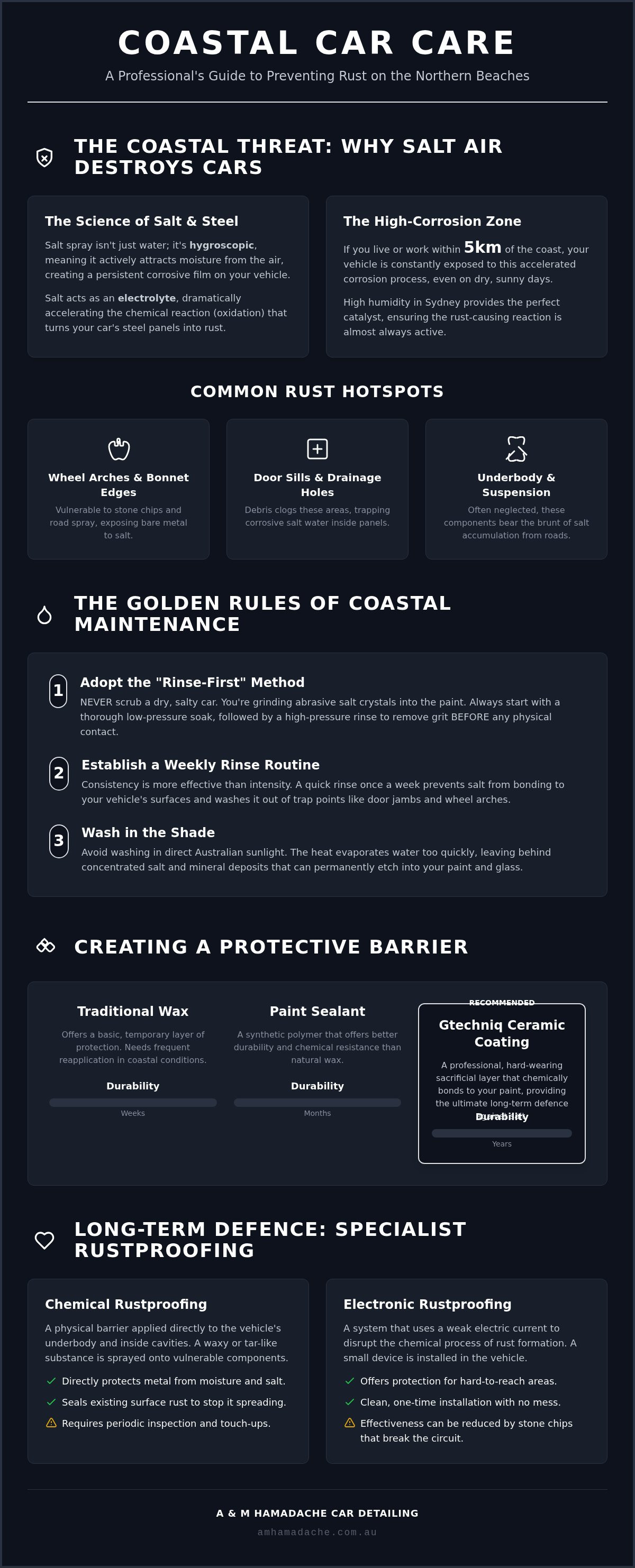
Living on the Northern Beaches means your vehicle is constantly exposed to one of nature's most aggressive corrosive agents. Salt spray isn't merely a fine mist; it is hygroscopic, meaning it actively attracts and retains moisture from the atmosphere. Even on a clear, sunny afternoon, salt crystals resting on your paintwork are drawing in water to create a persistent, brine-like film. This process is why understanding how to prevent car rust near ocean environments is essential for any local owner who values their vehicle's longevity.
While manufacturers have made strides in automotive rustproofing at the factory level, modern vehicle designs often incorporate complex panels and tight tolerances that inadvertently create "trap points." These areas catch salt-laden air but don't allow it to wash away easily, leading to hidden decay. Sydney's high humidity levels provide the perfect catalyst for this oxidation. The moisture in our air ensures that the chemical reaction between iron, oxygen, and salt is almost always active. It's a mistake to think rust is only a concern for older vehicles; even a brand-new car can begin showing signs of surface oxidation within months if left unprotected.
We distinguish between surface rust, which affects the paint and aesthetics, and structural corrosion. While surface rust is an eyesore that tanks resale value, structural corrosion targets the chassis and safety-critical components, potentially making a vehicle unroadworthy. Knowing the difference helps you prioritise your maintenance routine effectively.
The Science of Salt and Steel
Salt acts as an electrolyte, significantly lowering the electrical resistance of water and accelerating the flow of electrons that causes metal to break down. If you live within 5km of the coast, your vehicle sits in a high-corrosion zone where this process happens daily. This isn't just a metal problem. Salt air also leaches plasticisers from rubber seals and plastic trim, causing them to become brittle and crack prematurely. This allows even more moisture to penetrate deep into the vehicle's structure.
Common Rust Hotspots for Coastal Vehicles
To effectively manage how to prevent car rust near ocean conditions, you must know where to look. Corrosion rarely starts in the middle of a flat panel. Instead, it begins in the shadows where moisture lingers. Keep a close eye on these specific areas:
- Door sills and drainage holes: These often become clogged with debris, trapping salt water inside the door cavity.
- Wheel arches and bonnet edges: Constant exposure to road spray and stone chips leaves the metal bare and vulnerable.
- Underbody components: Suspension mounts, brake lines, and exhaust hangers are frequently neglected but bear the brunt of salt accumulation.
The Golden Rules of Coastal Car Maintenance: Washing and Rinsing
How often do you find a fine layer of white grit on your windscreen after a windy day at Manly or Dee Why? This salt crust is the primary driver of corrosion, but simply scrubbing it away can often do more harm than good. When considering how to prevent car rust near ocean environments, your washing technique is just as important as the frequency. Salt crystals are abrasive; if you apply a wash mitt directly to a salty car, you're essentially using sandpaper on your clear coat. This creates micro-scratches that allow salt and moisture to penetrate even deeper into the paint layers.
The "rinse-first" method is non-negotiable for coastal residents. Always start with a thorough, low-pressure soak to loosen the salt, followed by a high-pressure rinse to blast away the grit before any physical contact occurs. It's equally vital to avoid washing your vehicle in direct Australian sunlight. The heat causes water to evaporate rapidly, leaving behind concentrated salt deposits and mineral spots that can etch into the glass and paintwork. Always seek shade and ensure the panels are cool to the touch before you begin.
The Weekly Rinse Routine
Consistency beats intensity. A quick weekly rinse is more effective than a monthly deep clean because it prevents salt from bonding to the surface. Pay special attention to the wheel arches and the undercarriage, as these areas bear the brunt of road spray. Don't forget the hidden "trap points" like door jambs, boot seals, and the fuel filler cap. Salt air settles in these crevices and remains damp long after the rest of the car is dry. After rinsing, always use a clean microfibre drying towel. Leaving the car to air-dry in a coastal breeze only invites more salt to settle on the damp surface, leading to unsightly water spotting.
Choosing the Right Cleaning Products
The products you use will determine the longevity of your car's finish. We always recommend pH-neutral car soaps because they effectively lift grime without stripping away existing protection. Avoid dish soap at all costs. It's designed to cut through grease, which means it will quickly dissolve any protective wax or sealant you've applied. For those living right on the beachfront, specialised salt-neutralising washes can provide an extra layer of security by chemically breaking down the bond between the salt and the metal. If your paint feels rough even after a wash, using a clay bar can help remove embedded salt contaminants and industrial fallout. For those who find it difficult to maintain this rigorous schedule, our Full Detail Package offers a comprehensive reset that removes these deeply embedded contaminants and restores your vehicle's defensive barrier.
Creating a Protective Barrier: Waxing, Sealants, and Ceramic Coatings
While a consistent rinsing routine is your first line of defence, it doesn't stop the chemical interaction between salt air and bare paint. To truly master how to prevent car rust near ocean environments, you need a sacrificial barrier that stands between the elements and your vehicle's finish. Traditional carnauba wax provides a warm, deep glow, but it often fails under the intense UV radiation and heat of a Sydney summer. It lacks the durability required for coastal living, often requiring reapplication every few weeks as the salt air and sun quickly degrade the organic oils.
Ceramic coatings represent the pinnacle of modern paint protection and offer a more permanent solution. These liquid polymers create a semi-permanent bond with the vehicle's factory finish, acting as a hard, glass-like shield. The primary benefit for coastal drivers is the extreme hydrophobic property. When salt spray hits a ceramic-coated surface, it beads into tight droplets and rolls off, taking most of the corrosive minerals with it. Utilising these advanced barriers is a definitive answer for how to prevent car rust near ocean locations where traditional waxes simply evaporate.
The Gtechniq Ceramic Advantage
As Gtechniq accredited installers, we've seen how these professional-grade coatings outperform DIY alternatives. Unlike a standard wax, a Gtechniq ceramic coating creates a molecular bond that won't wash away with detergents or degrade under high temperatures. It provides robust resistance against UV rays, which otherwise oxidise the clear coat and make it more porous to salt. This treatment also shields against chemical etching from bird droppings and industrial fallout, making your weekly maintenance routine much simpler and more effective.
Paint Correction: The Essential First Step
Before applying any long-term protection, the surface must be meticulously prepared. Sealing over existing oxidation or salt contaminants only traps the problem against the metal, which can lead to failure of the coating. This is why professional paint correction sydney is the essential first step in our process. We use multi-stage polishing to remove swirls and surface defects, restoring the showroom shine and ensuring the ceramic coating can bond perfectly to a pristine surface. This level of preparation separates a professional application from a temporary fix, providing the peace of mind that your investment is truly shielded for the long term.
Underbody Care: Protecting the Vulnerable Chassis and Mechanicals
While a pristine exterior is a matter of pride, the true battle against coastal corrosion is fought where you can't see it. The undercarriage is frequently the most neglected part of a vehicle, yet it is the most critical for long-term safety and structural integrity. Because it sits closest to the road surface, it's constantly bombarded by salt-laden spray and moisture that settles into every nook and cranny. Understanding how to prevent car rust near ocean environments requires a shift in focus from just the aesthetics to the heavy-duty components that keep your car on the road.
Mechanical parts like exhaust systems, fuel lines, and suspension mounts are particularly at risk. These components are often made of thicker steel, but once rust takes hold, it can compromise their structural strength. We often see early signs of chassis corrosion in the form of orange "flash rust" on exposed bolts or bubbling under factory coatings. If you enjoy beach driving, the threat is magnified. Saltwater doesn't just sit on the surface; it mixes with sand to create a corrosive paste that clings to the metal, holding moisture against the chassis long after the tide has gone out.
Post-Beach Drive Decontamination
If you've taken your 4WD onto the sand, an immediate and thorough wash is essential. Use a high-pressure wand or an underbody sprinkler to flush out the entire underside of the vehicle. It's vital to pay attention to the chassis rails. These hollow sections can easily fill with sand and salt, which then rots the metal from the inside out. Ensure you spray into every access hole until the water runs completely clear. Removing trapped sand is the only way to ensure salt doesn't remain embedded in the vehicle's framework.
Mechanical Maintenance and Lubrication
Prevention also involves active lubrication. Applying lanolin-based sprays to exposed joints and bolts creates a water-repellent barrier that salt cannot penetrate. It's a simple step that pays dividends in a coastal environment. You should also regularly check that the drainage holes in your chassis and doors remain clear of debris. Clogged drains are a leading cause of internal rust. Given the harsh conditions of the Northern Beaches, we recommend regular mechanical repairs and inspections to identify and treat these issues before they become safety risks. This proactive approach ensures your vehicle remains reliable for years to come.
Long-Term Defence: Specialist Rustproofing Solutions
When you've invested in a quality vehicle, the standard factory protection often isn't enough to withstand the salt-laden winds of the Northern Beaches. For genuine, multi-year security, we look beyond surface sprays and towards professional-grade barriers that physically or chemically stop oxidation. Understanding how to prevent car rust near ocean zones requires a long-term mindset. This involves choosing between, or combining, chemical and electronic systems to create an impenetrable shield around your car's most vulnerable metal components.
Chemical barriers, typically wax or tar-based, work by completely sealing the metal from oxygen and moisture. This is a passive defence that prevents the chemical reaction of rust from ever starting. In contrast, electronic rust protection units use impressed current technology to interfere with the electrical charge of the metal itself. By providing a constant, low-voltage current, these units inhibit the flow of electrons that leads to corrosion. For many local owners, a "belt and braces" approach, using both methods, provides the ultimate peace of mind against the relentless coastal air.
Chemical Rustproofing for 4WDs and Classics
Classic cars and heavy-duty 4WDs have unique structural needs that require a meticulous touch. Our application process for car rustproofing northern beaches involves more than just a surface spray. We use specialised wands to reach deep into internal cavities, such as the insides of chassis rails, door pillars, and sills. These are the hidden areas where salt air becomes trapped and condensation forms. Once applied, these compounds remain flexible, meaning they won't crack or peel as the vehicle flexes during daily driving. While these barriers are highly durable, we recommend periodic inspections to ensure the seal remains intact after off-road adventures or heavy underbody cleaning.
Electronic Rust Protection: Is it Worth It?
We often get asked if electronic units are a gimmick, but the science behind them is well-established in the shipping and pipeline industries. By upping the electrical potential of the vehicle's body, the unit makes it much harder for oxygen to bond with the iron in the steel. These units are ideal for new vehicles or cars parked in high-exposure areas like beachfront driveways. The primary advantage is that they provide 24/7 active protection, even in the tightest crevices where chemical sprays might struggle to reach. It's a "set and forget" solution that adds a strategic layer of value to your vehicle, ensuring its structural integrity remains uncompromised for years to come.
Securing Your Vehicle's Future on the Coast
Preserving a car in a coastal environment is a continuous commitment rather than a one-off task. By combining a disciplined weekly rinsing routine with professional-grade barriers like Gtechniq ceramic coatings, you can effectively halt the corrosive effects of the Northern Beaches salt air. We've explored the importance of addressing hidden trap points in the chassis and the strategic value of both chemical and electronic rustproofing systems. Mastering how to prevent car rust near ocean conditions ensures your investment retains its structural integrity and resale value for years to come.
As a family-owned business operating since 1995, we take deep professional pride in being the Northern Beaches coastal car specialists. Our team of Gtechniq Accredited Detailers is here to provide the meticulous care your vehicle deserves. Protect your vehicle from coastal corrosion with our specialist rustproofing and detailing packages. We look forward to helping you enjoy our beautiful coastline with the peace of mind that your car is truly protected.
Frequently Asked Questions
How often should I wash my car if I live near the beach in Sydney?
You should aim to rinse your vehicle at least once a week if you live or work within 5km of the Northern Beaches. Salt air is a constant presence in our local area, and a quick high-pressure rinse prevents salt crystals from bonding to the paintwork or settling in door sills. For a deeper clean, a full wash with pH-neutral soap every fortnight is ideal. This consistent routine is a fundamental part of how to prevent car rust near ocean environments.
Does a car cover prevent rust or make it worse?
Car covers can often make rust worse if they aren't made from high-quality, breathable fabrics. In the humid Sydney climate, a non-breathable cover traps moisture and salt spray against the paintwork, creating a greenhouse effect that accelerates corrosion. If you don't have access to a garage, it's usually better to leave the car uncovered and stick to a regular rinsing schedule rather than risk trapping damp salt air against the metal.
Is ceramic coating better than wax for salt air protection?
Ceramic coating is significantly more effective than traditional wax for long-term coastal protection. While wax provides a temporary barrier that can melt in the intense Sydney heat, Gtechniq ceramic coatings create a semi-permanent molecular bond with your paint. This hard shield is highly hydrophobic, causing salt water to bead and roll off before it can cause damage. It also offers superior resistance to UV rays, making it a much more durable investment for local drivers.
Can I install an electronic rustproofing unit myself?
While DIY kits are available, professional installation is strongly recommended to ensure the unit functions correctly and safely. Proper placement of the capacitive couplers and ensuring a clean, effective circuit is vital for the system to successfully inhibit corrosion. Our specialists have the technical expertise to integrate these units without interfering with your vehicle's existing electrical systems, providing the 24/7 active protection you need for high-exposure coastal areas like beachfront driveways.
Will beach driving once a year ruin my car?
A single trip to the beach won't ruin your car if you perform an immediate and thorough decontamination. The danger lies in salt-laden sand becoming trapped in the chassis rails and suspension mounts where it remains damp. If left uncleaned, this mixture holds moisture against the metal and starts the oxidation process. We recommend a professional underbody flush after any beach excursion. This is a vital step in how to prevent car rust near ocean areas after a weekend away.
How much does professional rustproofing cost in the Northern Beaches?
The cost of professional rustproofing on the Northern Beaches varies depending on the size of your vehicle and the specific system you choose. We offer both chemical and electronic rustproofing solutions tailored to your driving habits and exposure levels. Because every vehicle has different needs, we recommend a physical inspection. This allows us to evaluate your car's current condition and discuss the most effective protective measures for your specific situation without relying on generic estimates.
What are the first signs of salt damage on a vehicle?
The first signs of salt damage often appear as a fine, orange tint on the leading edges of the bonnet or around the wheel arches. You might also notice small bubbles forming under the paintwork, which indicates that corrosion has already started beneath the surface. Another early warning sign is a white, powdery residue on engine components or exposed bolts. This suggests that salt air is actively reacting with the metalwork and requires immediate professional attention.
Does rustproofing void my new car warranty?
Professional rustproofing typically does not void a new car warranty. Many owners choose aftermarket protection because it provides a more comprehensive barrier than factory coatings alone. Our chemical and electronic rustproofing systems are designed to work alongside your vehicle's existing features without compromising its integrity. However, it's always a good idea to check your specific manufacturer's terms and conditions. This ensures that any third-party installations meet their requirements while providing the peace of mind you need.


