
Did you know the ACCC recently initiated legal action against a manufacturer because their utes were allegedly showing signs of corrosion within just five years of purchase? It is a discouraging sight to crawl under a relatively new 4WD and spot those first flakes of orange on the chassis, especially when you've invested heavily in a vehicle built for the Australian coast. At A & M Hamadache, we have spent over thirty years seeing exactly what salt air does to unprotected steel. Investing in professional underbody rust proofing is not just about maintenance, it is a strategic step to ensure your vehicle survives the unique challenges of the Northern Beaches.
We understand the confusion that often surrounds electronic versus chemical options and the valid fear of poor applications. You deserve a clear, honest assessment of what actually works for our local conditions. This guide will show you how to protect your chassis from coastal corrosion and help you choose the right system for your specific driving environment. We will also provide a practical guide for inspecting your own vehicle, providing peace of mind that your investment is in a safe pair of hands.
Key Takeaways
- Understand why the salt-laden air of the Northern Beaches acts as a silent killer for your vehicle's chassis and structural integrity.
- Learn to distinguish between chemical barriers and electronic systems to find the most effective armour for your specific driving habits.
- Master a simple visual health check using just a torch, mirror, and gloves to spot early signs of corrosion before they become structural.
- Discover why professional underbody rust proofing provides a more meticulous and durable shield than any DIY "rattle can" alternative.
- Gain a clear maintenance schedule for post-beach driving to ensure your protective coating remains effective for years to come.
The Coastal Threat: Why Underbody Rust Proofing is Essential in Australia
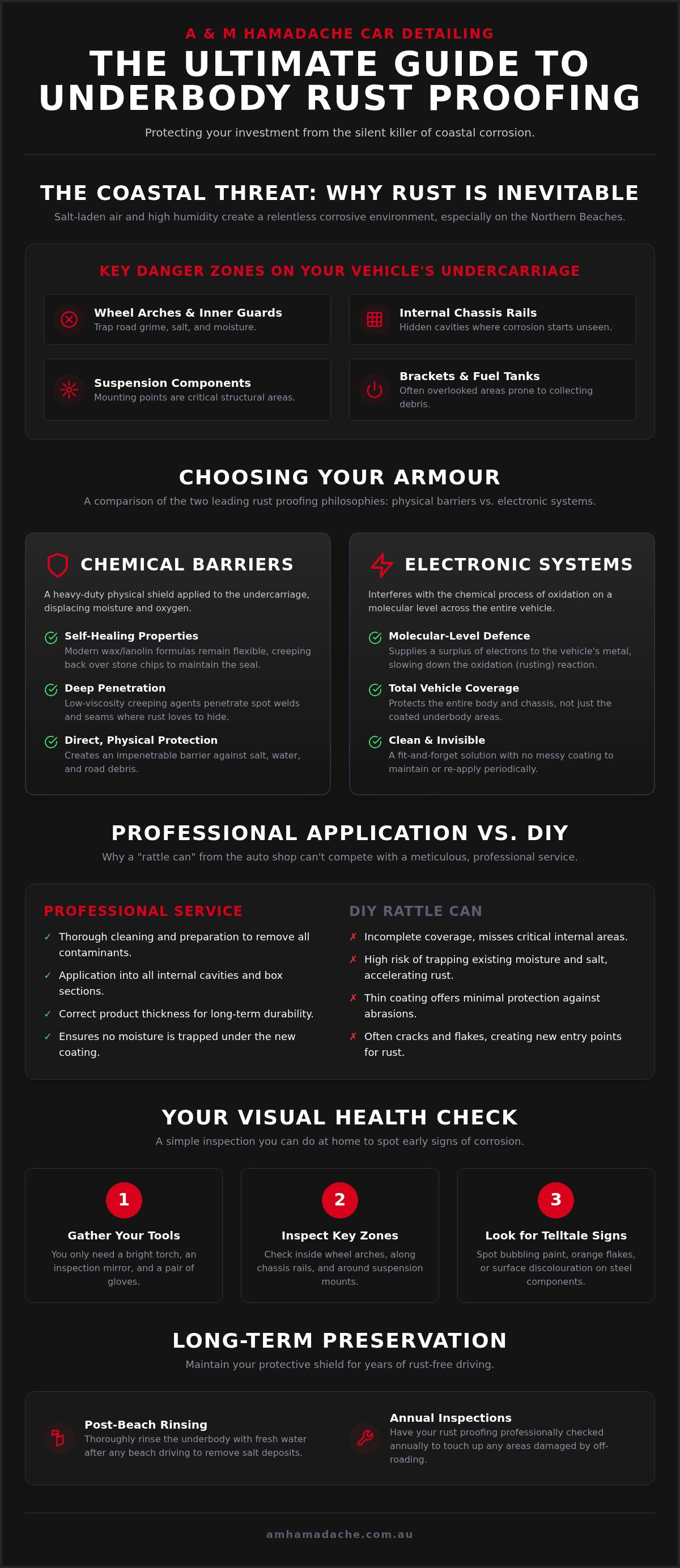
Rust is often called the silent killer for a reason. By the time you see bubbling paint on your door sills, the internal structure of your chassis might already be compromised. For those of us living on the Northern Beaches, the threat isn't just from the occasional beach run; it's the very air we breathe. Salt-laden air and high humidity create a relentless corrosive environment that works 24/7 on your vehicle's undercarriage. Professional underbody rust proofing is the only way to break this cycle of decay.
Many owners believe their modern vehicle is immune because of factory galvanisation. While manufacturers have improved protection, these coatings are often thin and designed for temperate climates, not the abrasive conditions of Australian 4WDing or salt-heavy coastal suburbs. Once sand or gravel chips that factory layer, the bare steel underneath is exposed.
We often see the worst damage in areas that go unnoticed during a quick driveway wash. Without professional rustproofing, these spots collect moisture and salt, allowing corrosion to take hold away from prying eyes. Key danger zones include:
- Wheel arches and inner guard liners.
- The internal cavities of boxed chassis rails.
- Suspension components and mounting points.
- Fuel tanks and brake line brackets.
The Impact of Salt Spray and Humidity
Sodium chloride is particularly aggressive. It acts as an electrolyte that accelerates the oxidation process, turning your steel chassis back into iron oxide. You might think a quick hose down after a weekend at the beach solves the problem, but high-pressure water often pushes salt crystals deeper into tight crevices and box sections. In Sydney, our high humidity then traps this moisture against the metal, creating a perfect breeding ground for rust even when the car looks dry on the outside.
Resale Value and Structural Integrity
Ignoring the underbody doesn't just hurt the car; it hurts your wallet. Significant chassis corrosion is a common reason for a failed pink slip or registration inspection in New South Wales, potentially taking your vehicle off the road entirely. When it's time to sell, a savvy buyer or dealer will always look underneath. Visible rust can slash thousands off your resale price or make a vehicle completely unsellable. Investing in quality underbody rust proofing early in a vehicle's life is a strategic move that pays dividends at the point of sale. Crevice corrosion is the primary threat to boxed chassis sections where stagnant moisture and debris accumulate in narrow gaps.
Choosing Your Armour: Chemical vs Electronic Rust Proofing Systems
Deciding how to defend your vehicle involves choosing between two distinct philosophies: physical barriers and technical interference. While both aim to stop the orange plague of corrosion, they work in fundamentally different ways. At A & M Hamadache, we have spent decades refining our approach to both systems, ensuring every vehicle receives a bespoke solution rather than a generic application.
How Chemical Barriers Work
Chemical rustproofing involves applying a heavy-duty physical shield to the undercarriage and internal cavities. Historically, this meant thick, bitumen-based coatings that could eventually crack and trap moisture. Modern professional systems have evolved into sophisticated wax or lanolin-based sealants. These modern formulas are superior because they possess "self-healing" properties; if a stone chip strikes the coating, the product remains flexible enough to creep back over the exposed area.
A critical component of a professional application is the use of creeping agents. These low-viscosity oils are designed to penetrate deep into spot welds and tight folds where traditional sprays cannot reach. By displacing oxygen and moisture in these hidden gaps, the chemical barrier prevents rust from starting in the very places it loves to hide. It is a meticulous process that requires a specialist's eye to ensure no crevice is left vulnerable.
The Science of Electronic Protection
Electronic rustproofing takes a different path by interfering with the chemical process of oxidation on a molecular level. These units use either capacitive coupling or impressed current methods to introduce a slight surplus of electrons to the vehicle's metalwork. Since rust is essentially the loss of electrons from iron, providing a constant supply of them slows down the reaction significantly. It is a clean, invisible form of protection that covers the entire body, including the roof and pillars.
These systems are particularly effective for vehicles that frequently visit boat ramps or tackle deep water crossings. However, the quality of the installation is the deciding factor. A poorly grounded unit or a cheap, "plug-and-play" box will offer little more than a blinking light. A professional installation ensures the current is distributed effectively across the chassis, providing genuine peace of mind for the long term.
For serious 4WD enthusiasts, a hybrid approach is often considered the gold standard. By combining a robust chemical barrier on the undercarriage with an electronic unit for the upper body, you create a multi-layered defence. If you are unsure which system suits your driving habits, discussing your needs with a specialist in chemical and electronic rustproofing can provide the clarity you need. While chemical systems require periodic inspections to touch up high-impact areas, electronic units are largely "set and forget," provided you maintain your vehicle's battery health.
How to Inspect Your Vehicle’s Underbody for Corrosion
Taking the time to personally examine your vehicle's undercarriage is the first step in long-term preservation. While we always recommend a professional assessment, being able to identify early warning signs empowers you as an owner. To do this safely, ensure the vehicle is on level ground with the handbrake firmly engaged. If you use a jack, always employ sturdy jack stands; never rely on a hydraulic jack alone while you are underneath.
You will need a few essential tools for a thorough visual health check:
- A bright LED torch: Essential for illuminating the dark recesses of the chassis.
- A small telescopic mirror: This allows you to see the top of chassis rails and hidden brackets.
- Sturdy gloves: These protect your hands from sharp metal edges and road grime.
It is important to distinguish between "surface bloom" and "scale." Surface bloom is a light, orange-tinted dusting that hasn't yet pitted the metal. It is common and usually easily managed. Scale, however, is a significant red flag. It looks like thick, flaky layers of metal peeling away, indicating that the corrosion has moved deep into the steel's structure and is beginning to compromise its integrity.
Step-by-Step Chassis Inspection
Start by cleaning the underbody thoroughly. Use a high-pressure hose to remove all caked-on mud and road salt, as these can easily hide structural defects. Once the metal is dry, follow this methodical sequence:
- Check boxed sections: Shine your torch into the holes of the chassis rails. Look for internal debris or signs of rust creeping from the inside out.
- Inspect the spare tyre carrier: This area often traps moisture and salt spray, making it a prime spot for early corrosion.
- Examine fuel tank straps: These thin metal bands are often the first components to fail, yet they are vital for safety.
- Probe for "crunchy" textures: Use a gloved finger to press against suspicious areas. If the metal feels soft or makes a crunching sound, it indicates internal rot that requires immediate professional attention.
Identifying Red Flags
Bubbling paint is one of the most deceptive signs you will encounter. It suggests that rust is already active underneath the surface, pushing the paint away as the metal expands during oxidation. If you spot this on your chassis or sills, the damage is likely worse than it appears. Similarly, blocked drainage holes are a major cause of internal rot. Manufacturers include these to allow condensation to escape; when they are clogged with mud, the chassis becomes a bathtub for salt water. Keeping these clear is a simple but vital part of maintaining your underbody rust proofing strategy. If your inspection reveals trap points where mud and salt have accumulated, it is time to consider a more permanent defensive solution.
The Professional Application Process: What to Expect
Achieving a durable finish requires far more than simply spraying a product onto a chassis. The true value of professional underbody rust proofing lies in the hours of meticulous preparation that occur before the first drop of sealant is applied. While DIY kits might seem tempting, they often lack the specialised equipment needed to reach internal cavities or the high-pressure cleaning power required to remove deeply embedded salts. A professional application outlasts a DIY job because of the bond strength and product thickness. Consumer-grade sprays are often thinned down to work in standard aerosol cans, whereas professional-grade products are applied with pneumatic equipment that allows for a much higher solid content. This creates a thicker, more resilient barrier that won't simply wash away during your next beach trip.
Masking is another area where professionals excel. We take the time to protect sensitive components like the exhaust system, brake rotors, and electrical sensors. Applying a heavy-duty coating to a heat-sensitive part or a delicate sensor can lead to mechanical failures or unpleasant smells as the product heats up. A professional application respects the engineering of your vehicle while providing the protection it needs.
Decontamination and Preparation
The process begins with a comprehensive decontamination. We use high-pressure degreasing to strip away road grime, oils, and the salt crystals that are a staple of Northern Beaches driving. If there is pre-existing surface rust, we employ mechanical removal methods to ensure the metal is sound. Perhaps the most overlooked step is the "drying out" phase. Sealing moisture beneath a protective layer is a recipe for internal rot, so we ensure the chassis is bone-dry before proceeding with the application.
Precision Coating and Cavity Injection
Once the vehicle is prepared, we use specialised wands to inject waxes and creeping agents into the internal chassis rails. These areas are the most vulnerable because they are invisible to the naked eye. We also focus heavily on "splash zones," which are the areas behind the wheels that take the brunt of road debris and water. Every application concludes with a rigorous quality control check to ensure even coverage across every bolt and bracket.
Modern chemical barriers require specific drying and curing times to reach their full protective potential. Depending on the humidity and temperature in Sydney, this typically takes between 24 and 48 hours. If you want to ensure your vehicle is treated with this level of precision, you can book a professional rust proofing consultation to discuss a bespoke plan for your 4WD.
Long-Term Preservation: Maintenance Tips for Your Protected Vehicle
Securing your vehicle with professional underbody rust proofing is a significant investment in its longevity, but the work doesn't end when you leave the workshop. We view vehicle protection as a long-term partnership between our specialists and you as the owner. While the initial application provides the heavy-duty armour your chassis needs, your ongoing care ensures that this shield remains impenetrable against the relentless salt and grit of the Northern Beaches environment.
The Australian coast is one of the harshest environments in the world for motor vehicles. Even with the best protection, the sheer volume of salt spray means that a consistent maintenance routine is essential. By following a few simple steps, you can ensure your protective coatings perform exactly as intended, preserving both the structural integrity and the resale value of your 4WD or passenger car.
After-Care for Coastal Drivers
After a weekend trip to the beach or a drive through salt-heavy air, a thorough rinse is your first line of defence. However, the technique you use is vital. We recommend a low-pressure wash for the undercarriage rather than a high-pressure blast. Using a high-pressure wand too close to a fresh coating can inadvertently scour the surface or push abrasive sand into the protective wax. A simple garden hose or a low-pressure sprinkler left under the vehicle for fifteen minutes is often much more effective at dissolving salt crystals without compromising the barrier.
If you have an electronic rust proofing unit installed, get into the habit of checking the status light every time you check your oil or wash the car. It is a small task that ensures the system is actively protecting your upper body panels. For the chemical side of your protection, we suggest a professional "refresh" of the cavity wax every twelve to twenty-four months. This allows us to inspect the "splash zones" and touch up any areas that may have been sandblasted by gravel during off-road excursions.
The Hamadache Commitment
At A & M Hamadache, we have been a proud part of the Brookvale community since 1995. As a family-owned and operated business, we take immense pride in being the "safe pair of hands" for local vehicle owners. We don't believe in a one-size-fits-all approach; instead, we offer bespoke solutions that reflect the specific way you use your vehicle. Whether you are a daily commuter or a serious off-roader, our goal is to provide the peace of mind that comes from meticulous workmanship.
We invite you to bring your vehicle into our Brookvale workshop for a professional assessment. If your car is looking a bit tired after a season of coastal driving, our Full Detail Package provides a complete rejuvenation that combines aesthetic restoration with functional protection. Let us help you ensure that your investment remains in peak condition, regardless of what the Australian elements throw at it.
Securing Your Vehicle’s Future on the Coast
Protecting your chassis from the relentless salt spray of the Northern Beaches requires more than just a quick hose down. A successful strategy involves understanding the specific threats to your vehicle and choosing a professional application that reaches the hidden crevices where rust begins. Whether you opt for a heavy-duty chemical barrier, an electronic system, or a bespoke combination of both, the goal is long-term structural integrity and the preservation of your vehicle's value.
At A & M Hamadache, we have been Northern Beaches local specialists since 1995. As a family-owned business in Brookvale, we pride ourselves on being a safe pair of hands for your vehicle. We focus on bespoke chemical and electronic solutions rather than a one-size-fits-all approach. If you are ready to ensure your investment survives the local environment, Book Your Professional Underbody Inspection at A & M Hamadache. Professional underbody rust proofing is a strategic investment in peace of mind. We look forward to helping you keep your vehicle on the road for many more kilometres.
Frequently Asked Questions
Is underbody rust proofing necessary for new cars in Australia?
Yes, professional underbody rust proofing is highly recommended for new vehicles, particularly if you live in coastal areas like the Northern Beaches. While manufacturers provide basic factory protection, it is rarely sufficient for the high salt concentrations and humidity found in Sydney. Factory coatings often miss the internal box sections and chassis rails where condensation traps salt air. Treating a new car ensures you are sealing pristine metal before any oxidation can begin.
How long does a professional chemical rust proofing treatment last?
A high-quality chemical treatment typically lasts between five and ten years, though this depends heavily on your driving habits. If you frequently tackle beach tracks or boat ramps, the abrasive nature of sand and salt will wear down the barrier faster. We suggest an annual inspection to touch up high-impact zones like wheel arches. Modern wax and lanolin-based systems remain flexible, ensuring the protective layer doesn't crack or peel as the chassis flexes.
Can I apply rust proofing over existing rust?
You should never apply a sealant directly over heavy, flaking rust as this traps moisture and accelerates structural decay. For vehicles with existing surface corrosion, we perform mechanical removal to ensure a clean, stable surface before application. If the rust is purely cosmetic "surface bloom," certain penetrating oils can be used to neutralise it. However, structural "scale" must be professionally addressed to ensure the new coating bonds effectively to the steel's surface.
Does electronic rust protection actually work for 4WDs?
Electronic systems are effective at slowing the oxidation process by interfering with the flow of electrons on a molecular level. They are particularly valuable for protecting the upper body panels and internal pillars that chemical sprays cannot reach. For 4WD owners who frequent the coast, these units provide an invisible layer of defence. The effectiveness relies entirely on a professional installation that ensures the current is distributed correctly across the entire chassis and body.
Will underbody rust proofing void my new car warranty?
No, a professionally applied treatment will not void your new car warranty. In fact, most manufacturers encourage additional protection to preserve the vehicle's structural integrity. Australian consumer law ensures that as long as the service is performed by a qualified specialist and doesn't damage the vehicle's existing systems, your warranty remains intact. We take care to mask off all sensitive sensors and mechanical components to ensure your vehicle's factory standards are fully maintained.
How much does professional underbody rust proofing cost in Sydney?
The cost of a professional application varies based on the size of your vehicle and its current condition. A brand-new compact SUV requires less preparation than a pre-owned 4WD that has already seen years of beach use. Factors that influence the final investment include the choice between chemical or electronic systems, the amount of decontamination required, and whether you opt for a hybrid approach. We provide bespoke quotes after a physical inspection.
What is the best time of year to get my car rust proofed?
While we perform treatments year-round, many Northern Beaches locals prefer to book their service in the cooler months before the summer beach season begins. Getting the work done before you start frequenting coastal tracks ensures your chassis is fully shielded against the increased salt exposure of the warmer months. Spring is also an ideal time for an annual inspection, allowing us to clear out any mud or salt trapped during winter's wet weather.
How long do I need to leave my car at the shop for the treatment?
A professional application is a methodical process that typically takes between two and three days. This timeframe is essential to allow for thorough high-pressure cleaning, a complete drying phase, and the necessary curing time for the chemical barriers. We don't believe in rushing the process, as sealing a damp chassis can cause more harm than good. This deliberate pace ensures every internal cavity and splash zone is meticulously covered before you return to the road.


