
A leaking or stuck sunroof may not need replacing. The cause could be a blocked drain, a worn seal, an electrical component or a moving part, and the right fix depends on an assessment. If you’re looking into sunroof repair Northern Beaches, it can be difficult to tell whether the problem is mechanical, electrical or already affecting the vehicle’s interior.
Unusual noises, slow movement, water marks or a sunroof that won’t close are all reasons to stop repeatedly operating it until the cause is checked. A repair may involve the sunroof mechanism, while a damp or sagging roof lining may need separate attention. Knowing the difference helps you describe the symptoms and ask useful questions before work begins.
This guide covers common warning signs, what a technician may inspect and the repair options to discuss with a local repairer. A & M Hamadache Car Detailing is a family-owned and operated business established in 1995, with sunroof repairs offered alongside trim and headlining repairs. The aim is to help you understand what may be happening and seek an individual assessment, rather than assume the whole unit needs replacing.
Key Takeaways
- Water ingress, wind noise or sticking movement are reasons to arrange an assessment, but symptoms alone don’t confirm the cause.
- Sunroof faults may involve drainage, seals or operating components, so diagnosis should guide the repair choice.
- For sunroof repair Northern Beaches, ask what the inspection covers and how any additional work will be discussed and approved.
- Compare adjustment or cleaning, component repair and replacement against the assessment findings, rather than assuming the whole unit needs replacing.
- Note when the problem occurs, clear personal items from the affected cabin area and ask about the repairer’s experience with sunroof faults.
Sunroof Repair Northern Beaches: Signs Your Vehicle Needs an Assessment
Water entering the cabin, wind noise around the roof, sticking movement or unusual operation can all signal that a sunroof needs attention. The symptom is a useful starting point, not a diagnosis. A leak might relate to drainage, a seal or another part of the assembly, while slow movement could have a different cause. An assessment helps identify what’s happening before repair options are considered.
Which sunroof symptoms should prompt an inspection?
Look for damp patches, a musty smell or a stain on the roof lining, particularly after rain or washing the vehicle. A visible stain shows where moisture has appeared inside, but it doesn’t necessarily reveal where water entered or how it travelled. Rattling, wind noise, uneven movement and a panel that won’t close fully also warrant inspection. Sunroof designs and components vary; this overview of sunroof types and components provides useful background, but it can’t identify a fault in a particular vehicle.
If the panel won’t close, don’t force it or keep operating the switch. Arrange professional attention promptly, as an open or improperly seated panel can leave the cabin exposed to weather and may affect secure closure. If water is entering, avoid disturbing the roof lining or nearby components yourself. Note where and when you see moisture, and seek advice rather than waiting for a stain to spread.
What details should you record before contacting a repairer?
A clear description can help a repairer understand the issue and explain what an assessment may involve. Before arranging sunroof repair Northern Beaches, gather a few details:
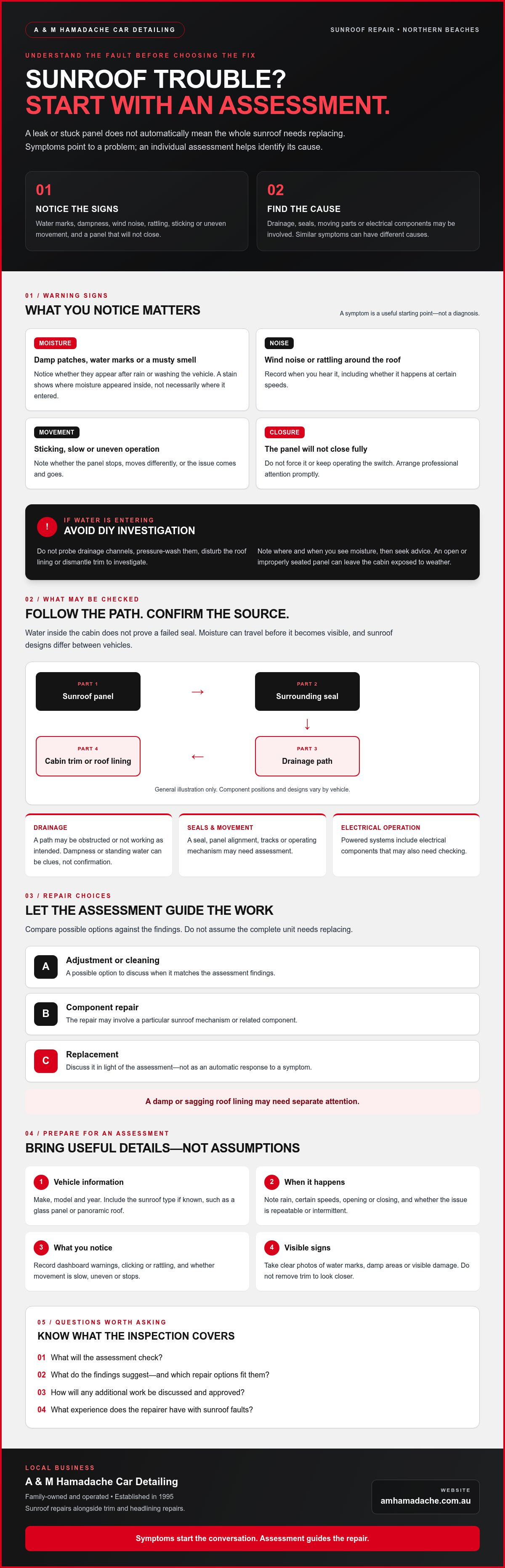
- Vehicle information: Make, model and year. Include the sunroof type if you know it, such as a glass panel or panoramic roof.
- When it happens: Note whether the issue occurs during rain, at certain speeds, or while opening or closing the sunroof. Mention whether it’s repeatable or intermittent.
- What you notice: Record any dashboard warnings, clicking, rattling or other unusual sounds, and whether the panel moves slowly, unevenly or stops.
- Visible signs: Take clear photos of water marks, damp areas or visible damage. Don’t remove trim or dismantle components to get a closer look.
These observations help you describe the fault without assuming its cause. If the problem changes, update your notes. An individual assessment is still needed to determine the appropriate next step.
How Sunroof Faults Develop: Drainage, Seals and Operating Components
Sunroof repair starts with diagnosis: identifying a failed component or related issue, then deciding what work may address it. Water inside the cabin doesn’t automatically mean the sunroof seal has failed. Moisture can appear some distance from where it enters, so a roof-lining stain is evidence of water ingress, not proof of its source.
Sunroof assemblies differ between vehicles. Some have drainage paths around the opening, seals between surfaces, and tracks or mechanisms that guide the panel. Powered systems also have electrical components. A fault in one area may produce signs that resemble a problem elsewhere. An assessment should establish how the vehicle’s particular system is designed before repair options are recommended.
Simple component guide: Sunroof panel → surrounding seal → drainage path → cabin trim or roof lining.
This is a general illustration only. Component positions and designs vary by vehicle.
Could blocked drainage be causing a sunroof leak?
Drainage paths may carry water away from the sunroof opening and out of the vehicle. If a path is obstructed or not working as intended, standing water near the opening or dampness inside the cabin may be clues worth reporting. They don’t confirm a blockage: water can travel before it becomes visible, and other parts of the assembly may also need checking.
Avoid probing drainage channels, pressure-washing them or dismantling trim to investigate. These steps could disturb components or make it harder to identify the original issue. Describe where and when you notice moisture, then let a repairer assess the system.
How do seals and moving components affect sunroof operation?
A worn or displaced seal may contribute to wind noise or water entry, but those signs can have other explanations. A repairer may also assess the panel’s alignment, tracks and operating mechanism, as well as electrical operation if the sunroof is powered. Slow or uneven movement, for example, doesn’t by itself identify which part is at fault.
Because systems vary, ask the repairer to confirm which design your vehicle has and explain what the inspection finds. A & M Hamadache Car Detailing lists sunroof repairs alongside trim and headlining repairs. If you’re considering sunroof repair Northern Beaches, discuss your vehicle and symptoms so the relevant assessment process and scope can be clarified before booking.
Sunroof Repair Options Compared: Adjustment, Component Repair or Replacement
A sunroof fault doesn’t automatically mean the whole unit needs replacing. The suitable option depends on what an inspection confirms, whether the affected part remains serviceable, and whether parts are available for that vehicle. A careful diagnosis can distinguish a focused repair from damage that calls for a component to be replaced.
| Option | Assessment finding that may support it | What to clarify |
|---|---|---|
| Adjustment or cleaning | The relevant parts appear serviceable, but an alignment, operation or drainage concern needs attention. | What was checked, and what adjustment or cleaning is proposed? |
| Component repair | A particular part or mechanism has a fault that appears repairable without replacing the full assembly. | Which component is affected, and how will the proposed work address it? |
| Replacement if required | Inspection identifies a damaged or unserviceable component, and replacement is considered appropriate for the vehicle. | Is the recommendation for one component or a broader assembly, and are suitable parts available? |
When might a repair or adjustment be considered?
If inspection indicates that the relevant component is still serviceable, a repairer may consider work focused on the identified fault. Depending on the system and findings, this could involve alignment or attention to an operating or drainage concern. These are possibilities, not a diagnosis. Ask what was inspected, what evidence supports the proposed work and how it is intended to address the fault before authorising it.
When could component replacement be necessary?
Replacement may be appropriate if inspection confirms that a component is damaged or no longer serviceable. Before approving broader work, ask the repairer to name the affected part and explain why repair isn’t considered suitable. Vehicle design and parts availability can influence the options, so the recommendation should relate to your specific sunroof rather than assume every system can be repaired in the same way.
Also distinguish a sunroof component from the surrounding headlining or trim. A damaged or stained roof lining is an interior issue; repairing it doesn’t necessarily resolve the source of a sunroof fault. A business offering both services, such as A & M Hamadache Car Detailing, can consider the related work, but the assessment should make clear what each recommended repair addresses.
When comparing sunroof repair Northern Beaches options, the useful question isn’t simply whether repair or replacement costs less. It’s whether the proposed work matches the confirmed fault, the vehicle’s design and the parts available. Ask for the findings and options to be explained before deciding how to proceed.
Preparing for Sunroof Repair on the Northern Beaches
A little preparation can make an assessment more useful and help you understand the recommendation before work begins. For sunroof repair Northern Beaches, gather your vehicle details and a brief account of the issue, then confirm the repairer’s assessment process and what they need from you.
- Record the basics: Note the vehicle’s make, model and year, along with when the issue began and what you’ve observed.
- Share relevant history: Mention previous sunroof or headlining repairs, recurring leaks, or known electrical issues if they apply.
- Prepare the cabin: Remove personal items and keep the affected roof-lining and surrounding cabin area accessible for inspection.
- Confirm arrangements: Ask where the vehicle needs to be taken, whether an appointment is required, and what the assessment is expected to cover.
These details give the repairer context without presuming the cause. Follow any instructions they provide for presenting the vehicle, especially if the fault is intermittent or the sunroof doesn’t close properly.
What should you ask before approving sunroof work?
Ask what the inspection found and which component or area is affected. Then clarify whether the recommendation is an adjustment, repair or replacement, and why that approach is considered suitable for your vehicle. If the proposed work changes after inspection, ask for the revised scope to be explained before you decide.
It’s also sensible to confirm whether parts are required, whether related work is being recommended, and how additional work will be approved. If the cabin trim or headlining is affected, ask whether that’s a separate repair from the sunroof fault itself. A clear explanation helps you understand what each part of the work is intended to address.
How can you make the assessment easier?
Share a concise timeline: when you first noticed the problem, what conditions bring it on, and whether it happens consistently. If you have photos of visible staining or damage, keep them handy. They can provide context, though they won’t replace a physical assessment.
Before arranging a booking, check that the repairer can assess your vehicle’s sunroof type and ask how the inspection and approval process works. A & M Hamadache Car Detailing lists sunroof repairs alongside trim and headlining repairs and serves Northern Beaches customers. To discuss your vehicle and the next steps, contact the team about sunroof repair.
Choosing a Northern Beaches Sunroof Repairer and Taking the Next Step
Choosing a repairer is about more than finding someone who works on vehicle interiors. Look for clear communication about the sunroof assessment, the findings and the options available for your vehicle. A useful explanation should help you understand what has been checked, what remains uncertain and why a particular repair is being recommended.
What makes a repairer a sensible choice?
Ask about relevant experience with sunroof faults and whether the repairer can assess your vehicle’s system and the parts it uses. Designs differ, and the same symptom can point to different issues, so be wary of a firm diagnosis before the vehicle has been assessed. Before approving work, check:
- Assessment scope: What will be inspected, and will you be told what the findings are?
- Repair recommendation: Is the proposal for adjustment, component repair or replacement, and what supports that choice?
- Parts and limitations: Are parts available for your vehicle, and are there any relevant constraints on the proposed work?
- Approval process: Will you be contacted before additional work or parts are added?
Consider the business’s broader automotive repair experience alongside the services it lists. If the sunroof concern has also affected the cabin trim, ask whether that work is included in the assessment or treated separately. The aim is to understand the scope clearly, not to assume one repairer or one repair method will suit every vehicle.
How can A & M Hamadache Car Detailing help with a sunroof concern?
A & M Hamadache Car Detailing lists sunroof repairs and trim repairs among its services, with headlining repairs also offered. The family-owned and operated business, established in 1995, serves Northern Beaches customers. These details provide useful context, while the appropriate repair still depends on an individual assessment of your vehicle and the current service scope.
If you’re comparing options for sunroof repair Northern Beaches, describe the symptoms, share your vehicle’s make, model and year, and ask how to arrange an assessment. Confirm whether your vehicle can be accommodated, what the inspection involves and how any further work would be discussed before it proceeds.
For a measured next step, contact A & M Hamadache Car Detailing to discuss a sunroof repair and find out how to proceed with your vehicle.
Move Forward with a Clear Sunroof Assessment
Sunroof problems can have different causes, so treat symptoms as clues rather than a diagnosis. An individual assessment helps establish whether adjustment, component repair or replacement may be suitable, and whether a headlining or trim concern needs separate attention. Before work begins, make sure you understand the findings, recommended scope and how additional work will be approved.
If you’re considering sunroof repair Northern Beaches, A & M Hamadache Car Detailing lists sunroof and trim repairs among its services. The family-owned and operated business was established in 1995. When you get in touch, share your vehicle details and a short description of the fault, then ask about the assessment process and whether your vehicle can be accommodated.
Discuss your vehicle’s sunroof issue with A & M Hamadache and find out what the appropriate next step may be. With clear information and a considered assessment, you can make a more informed repair decision.
Frequently Asked Questions
Can a leaking sunroof be repaired without replacing the whole unit?
Yes, a leak may be repairable without replacing the whole sunroof, depending on what an inspection finds. The issue could relate to a drainage path, seal or another component, and each possibility calls for a different assessment. A repairer should identify the source of water entry and explain whether a focused repair is suitable. Replacement may be considered if a component is damaged or unserviceable, but it isn’t the automatic response to every leak.
What causes a car sunroof to leak?
A leak can have several possible causes, including a drainage path that isn’t carrying water away as intended, a worn or displaced seal, or another fault in the assembly. Water may travel before it appears inside, so a stain on the roof lining doesn’t necessarily show where it entered. Note when you notice moisture, such as after rain, but treat it as a clue rather than a confirmed diagnosis.
Is it safe to keep using a sunroof that will not close properly?
A sunroof that won’t close properly should be assessed promptly. Don’t force the panel or repeatedly operate the switch, as this may place extra strain on the mechanism or worsen the fault. An open or poorly seated panel can also leave the cabin exposed to weather. If it won’t close, seek advice from a repairer about the safest next step rather than trying to secure or adjust internal components yourself.
Can a sunroof leak damage the car’s roof lining?
Ongoing water entry can leave stains, dampness or deterioration in the roof lining. The visible mark shows where moisture has appeared, but not necessarily where it entered the vehicle. Addressing the lining alone may not resolve the underlying leak. Have the sunroof assessed to identify the source, and ask whether any headlining repair is needed as a separate part of the work.
How is a car sunroof fault diagnosed?
A repairer assesses the symptom alongside the vehicle’s sunroof design and checks relevant areas, which may include seals, drainage paths, alignment, tracks, operating mechanisms and electrical components. The checks depend on the fault and vehicle. For example, slow movement doesn’t by itself prove the motor has failed. Ask what was inspected, what the findings indicate and how they support the recommended repair before authorising work.
Should I try to clear a blocked sunroof drain myself?
It’s best not to probe or dismantle a drainage channel yourself, or use a pressure washer to try to clear it. These actions may disturb components or complicate assessment, and dampness alone doesn’t confirm that a drain is blocked. Instead, note where moisture appears and when you notice it. A repairer can inspect the relevant drainage path and consider other possible sources of water entry.
What information should I provide when booking sunroof repair on the Northern Beaches?
For sunroof repair Northern Beaches, provide your vehicle’s make, model and year, plus the sunroof type if known. Describe the symptoms, when they occur, whether they repeat, and any warning lights or unusual sounds. Mention previous repairs, recurring leaks or known electrical issues, and share clear photos of visible marks. A & M Hamadache Car Detailing lists sunroof and trim repairs; ask what the assessment involves and how to arrange a booking.


