
Achieving a genuine showroom finish isn't about aggressive cutting; it's a disciplined craft of microscopic measurement and restraint. Few things are more frustrating than stepping out into the harsh Australian sun and seeing a hazy web of swirl marks across panels that should look pristine. At the same time, it's completely natural to worry about inexperienced detailers burning through delicate factory clear coat. When exploring paint correction and restoration Sydney vehicle owners often face confusion around what separates a quick buff from genuine, permanent defect removal.
This guide explains how multi-stage paint correction safely eliminates clear coat defects, restores rich optical gloss, and preserves your vehicle for years to come. You'll discover how clear coats are measured, levelled, and rejuvenated without compromising panel integrity. We'll also help you determine whether your car requires a single-stage enhancement or a comprehensive multi-stage correction, so you can confidently choose a specialist equipped with proper diagnostic tools.
Key Takeaways
- Understand the difference between genuine clear coat levelling and temporary dealership glazes that merely mask surface defects with silicone fillers.
- Determine whether your vehicle needs a single-stage enhancement or a multi-stage restoration based on realistic defect removal targets between 50% and 95%.
- Learn the necessary five-phase restorative workflow, ensuring complete chemical and mechanical decontamination occurs before machine polishing begins.
- Discover why completing paint correction and restoration Sydney wide demands immediate protective sealing against coastal salt air and relentless UV exposure.
- Arm yourself with an objective workshop checklist to evaluate detailers on their digital paint depth gauges and dedicated high-CRI inspection lighting.
What Is Professional Paint Correction and Restoration?
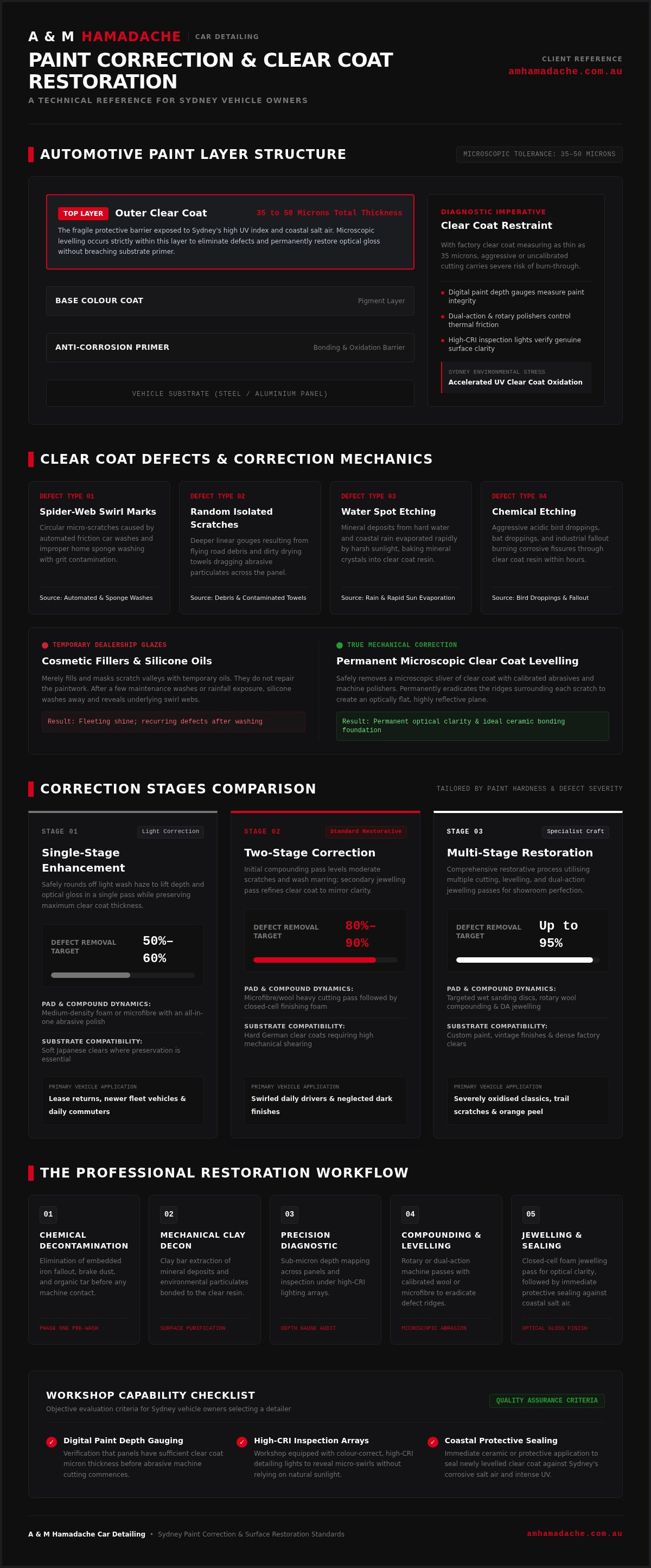
Modern automotive paint consists of several delicate layers: the vehicle substrate, an anti-corrosion primer, the base colour coat, and an outer clear coat. That protective clear coat is exceptionally thin, often measuring between 35 and 50 microns. Sydney's intense UV index accelerates clear coat oxidation, weakening this top layer and leaving it vulnerable to microscopic fissures. Professional paint correction and restoration Sydney vehicles undergo is the controlled, mechanical levelling of this clear coat. By refining the surface with dual-action or rotary polishers and calibrated abrasives, a specialist eliminates microscopic peaks and valleys, establishing an optically flat surface that reflects light with pure clarity.
Common Clear Coat Defects Found on Sydney Vehicles
Daily driving across Sydney exposes automotive finishes to severe mechanical and environmental friction. Without regular craftsman-level care, panels quickly accumulate visible damage:
- Spider-web swirl marks: Circular micro-scratches introduced by automated friction washes and gritty sponge washing at home.
- Random isolated scratches: Deeper linear gouges caused by road debris and dirty drying towels dragging grit across the panel.
- Mineral water spot etching: Hard water and coastal rain showers that evaporate rapidly under direct sunlight, baking mineral deposits into the clear coat.
- Chemical etching: Acidic bird droppings, bat droppings, and industrial fallout that chemically burn through clear coat resin within hours.
Mechanical Correction Versus Cosmetic Glazes and Fillers
Many dealership prep bays and rapid detailers cut corners by using cosmetic glazes rich in silicone fillers and mineral oils. These products don't repair damaged clear coat; they simply fill scratches to temporarily mask them. Once the vehicle endures a few maintenance washes or heavy rain, the silicone oils wash out, revealing the dullness and swirl marks beneath.
Genuine paint correction and restoration Sydney drivers trust takes the opposite path. Rather than hiding damage, an experienced trade specialist measures the paint with a digital gauge and safely removes a microscopic sliver of clear coat. This permanently eradicates the ridges surrounding each scratch. The result is authentic, lasting clarity that forms the ideal foundation for ceramic paint protection.
Comparing Paint Correction Stages: Enhancement Versus Multi-Stage Restoration
Selecting the right treatment balances clear coat preservation against aesthetic clarity. Clear coat hardness varies dramatically between manufacturers, ranging from soft Japanese finishes to ultra-dense German lacquers. Calibrating the machine interface, whether using dense microfibre cutting discs, natural wool, or closed-cell finishing foam, ensures the panel is refined without removing unnecessary clear coat.
| Correction Level | Pad & Compound Dynamics | Defect Removal Target | Ideal Application |
|---|---|---|---|
| Single-Stage Enhancement | Medium-density foam or microfibre with an all-in-one abrasive polish | 50% to 60% | Lease returns, newer fleet vehicles, and soft Japanese clears |
| Two-Stage Correction | Microfibre/wool heavy cutting pass followed by closed-cell finishing foam | 80% to 90% | Swirled daily drivers, neglected dark finishes, and hard German clear coats |
| Multi-Stage Restoration | Targeted wet sanding discs, rotary wool compounding, and dual-action jewelling | Up to 95% | Severely oxidised classic cars, deep trail scratches, and orange peel reduction |
Single-Stage Paint Enhancement for Daily Drivers
A single-stage enhancement combines moderate defect removal with high gloss refinement in a single machine pass. Rather than chasing deep scratches, it safely rounds off light wash haze to lift depth and clarity. This option offers sensible preservation for modern daily drivers, lease returns, or softer clear coats where panel thickness must be carefully safeguarded.
Two-Stage Correction for Swirl and Scuff Elimination
When paintwork displays noticeable grey haze and spider-webbing under direct sunlight, a two-stage correction provides true restoration. An initial compounding step levels moderate scratches and wash marring. A secondary jewelling pass follows with a soft finishing pad, eradicating compound haze and restoring sharp optical clarity across stubborn, scratch-resistant German clears.
Multi-Stage Restoration for Severe Oxidation and Classic Vehicles
Severe weathering, heavy bird-strike etching, and faded single-stage enamel require intensive, multi-phase intervention. Specialists employ precision wet sanding and staged rotary compounding to flatten defects while strictly monitoring remaining clear coat margins. For historic vehicles or heavily weathered finishes, partnering with experienced craftspeople in paint correction and restoration Sydney ensures delicate paintwork is revived safely without risking strike-through.
The Professional Paint Restoration Workflow: From Decontamination to Jewelling
Delivering high-clarity paintwork requires a strict, methodical workflow. Machine polishing without rigorous preparation simply grinds embedded road grit back into the clear coat, creating deep scour marks. A seasoned craftsman approaches the surface in sequential phases, moving carefully from multi-stage decontamination through to delicate machine jewelling.
Chemical Decontamination and Clay Bar Preparation
The restoration workflow begins with thorough surface decontamination before any machine touches the bodywork:
- Citrus Pre-Wash: A pH-neutral citrus pre-wash dissolves road films, greasy traffic grime, and tree sap, allowing grit to rinse away without mechanical friction.
- Ferrous Iron Dissolution: Dedicated iron fall-out removers target microscopic rail dust and metallic brake shavings, turning purple as they chemically dissolve embedded particles.
- Mechanical Clay Bar: Lubricated detailing clay glides across the panels, safely shearing off residual industrial fallout and baked-on mineral deposits.
Precision Paint Depth Measurement and Test Spot Diagnostics
Before selecting a machine, a specialist profiles panel thickness using a digital ultrasonic paint depth gauge. Bonnet, door, and boot readings identify natural variations and detect previously compounded edges where clear coat is thin. After mapping these safety margins, the detailer performs a controlled test spot under high-CRI inspection lamps. This diagnostic step identifies the least aggressive pad and compound combination required to level defects, preserving as much factory clear coat as possible.
Machine Polishing, Defect Removal, and Final Jewelling
True paint correction and restoration Sydney vehicles require relies on calibrated machinery and precise technique. Modern dual-action random orbital polishers oscillate and rotate simultaneously, distributing frictional heat evenly to prevent rotary strike-through or edge burning. Microfibre cutting discs paired with diminishing abrasives level the damaged clear coat smoothly.
Once compounding clears the swirl marks, the craftsperson transitions to the final jewelling phase. Using ultra-fine finishing compounds on soft, closed-cell foam pads, the machine refines micro-marring into an optically pure, mirror-like finish, preparing the paint for long-term protective sealing.
Preserving Restored Vehicle Paintwork in Sydney Coastal Environment
Freshly levelled clear coat is optically flat and completely bare. Without immediate sealing, the exposed resin is vulnerable to atmospheric humidity and airborne contaminants. A rigorous cycle of paint correction and restoration Sydney vehicles undergo creates an exceptional finish, but applying lasting surface protection is essential to lock in that clarity.
Environmental Hazards Specific to Sydney Northern Beaches
Driving along coastal corridors from Manly to Palm Beach exposes paintwork to abrasive airborne sea salt. As salty sea mist settles over warm panels, the moisture evaporates quickly under the Australian sun, leaving salt crystals that cause chemical micro-pitting. Intense summer ultraviolet radiation breaks down binder resins in modern clear coats, while corrosive coastal bat droppings and tree sap burn directly into unprotected panels within hours.
Long-Term Protection: Waxes, Sealants, and Gtechniq Ceramic Coatings
Traditional carnauba waxes and basic synthetic sealants sit loosely on the paint, deteriorating within weeks under coastal winds and rain. Advanced Gtechniq ceramic coatings create an inorganic, chemically bonded layer over the clear coat. This barrier delivers exceptional surface hardness, dense hydrophobic water beading, and persistent UV resistance. For comprehensive vehicle preservation near the coast, pairing exterior ceramic protection with chemical rustproofing or electronic rustproofing shields structural steel underneath as well. To safeguard your freshly refined paintwork against coastal fallout, explore our Gtechniq ceramic coating packages tailored for coastal vehicles.
Post-Correction Maintenance and Safe Washing Routines
Safe washing habits preserve your corrected clear coat and prevent swirl marks from returning. Adopt a disciplined routine using these practical steps:
- Two-Bucket Method: Place grit guards in both your wash and rinse buckets to trap grit at the bottom, keeping your wash mitt clean.
- High-Lubricity Shampoo: Use pH-neutral automotive soaps that encapsulate dirt particles and allow them to glide off without abrading the clear coat.
- Plush Microfibre Towels: Dry panels gently using heavy-gsm microfibre drying towels instead of old silicone blades or leather chamois.
- Avoid Harsh Automatic Washes: Steer clear of abrasive automatic brush machines and commercial touchless bays using caustic, high-pH chemicals that strip sealants.
How to Choose a Reputable Paint Correction Specialist in Sydney
Because machine correction permanently levels clear coat, selecting the right workshop is a critical decision. True paint correction and restoration Sydney drivers expect requires technical diagnostic tools, pristine working environments, and genuine trade accountability. Before entrusting your vehicle to any workshop, assess their operational standards against this practical checklist:
Essential Diagnostic Equipment and Facility Standards
A reputable specialist workshop should readily showcase disciplined facilities and specialised diagnostic instruments:
- Digital paint depth gauges: Calibrated gauges measure total coating thickness, ensuring adequate clear coat remains before buffing begins.
- High-CRI inspection arrays: High Colour Rendering Index (CRI) overhead lights and handheld inspection torches expose micro-swirls and compounding haze that ordinary fluorescent tubes hide.
- Enclosed, climate-controlled bays: Paint correction demands a sealed indoor environment to prevent coastal wind from blowing abrasive salt and grit onto panels during machine work.
- Comprehensive trade insurance: Dedicated commercial trade coverage safeguards high-value prestige and classic vehicles while in workshop care.
Evaluating Trade Experience, Accreditations, and Local Heritage
Clear coat chemistries differ significantly across global marques, from soft Japanese finishes to ultra-hard German ceramic lacquers. Mastering these nuances takes years of hands-on workshop repetition. Prioritise established businesses with long-standing ties to the local community rather than pop-up operators. Reputable shops also hold formal credentials, such as authorised Gtechniq ceramic coating accreditation, confirming they meet strict industry standards for surface preparation and chemical application.
Restoring Your Vehicle Finish with A & M Hamadache
Established by the Hamadache family in 1995, A & M Hamadache Car Detailing brings three decades of trade craftsmanship to the Northern Beaches. We understand how coastal conditions degrade delicate automotive finishes, taking pride in permanent paint correction rather than temporary cosmetic cover-ups.
Our workshop integrates paint restoration alongside complete vehicle rejuvenation, including Full Detail Packages, interior headlining repairs, and Gtechniq ceramic coating protection. Vehicle owners can arrange a comprehensive paint inspection at our workshop, where our craftspeople measure panel depths and tailor a precise restorative plan suited to their vehicle.
Revitalise Your Vehicle Finish with Proven Craftsmanship
Achieving authentic optical clarity isn't a matter of masking blemishes with temporary fillers; it demands calculated clear coat levelling guided by digital diagnostics and trade restraint. Whether your daily driver benefits from a measured single-stage enhancement or an older classic requires an intensive multi-stage revival, permanent defect removal restores rich colour depth while safeguarding irreplaceable factory microns. Once levelled, locking in that finish with durable ceramic shielding ensures your investment stands up to harsh coastal UV radiation and salt air.
For dedicated vehicle owners seeking reliable paint correction and restoration Sydney wide, our family-owned workshop has delivered dependable trade craftsmanship across the Northern Beaches since 1995. As accredited Gtechniq ceramic coating installers, we treat every panel with conservative preservation standards and meticulous care. Book a precision paint inspection with A & M Hamadache Car Detailing today, and let our specialists tailor a lasting restorative treatment that preserves your vehicle's value for the road ahead.
Frequently Asked Questions
What is the difference between car polishing and professional paint correction?
Car polishing is often a cosmetic hand application that uses glaze oils to temporarily conceal defects, whereas professional paint correction is a measured mechanical process. Specialists use dual-action or rotary machines with calibrated abrasives to permanently level a microscopic layer of clear coat. This removes scratches and swirl marks permanently, establishing true optical gloss rather than washing away after a few rains.
Will paint correction permanently thin or damage my vehicle clear coat?
Professional correction does reduce clear coat thickness, but reputable operators remove only a negligible amount, typically between two to five microns. By profiling panels with electronic depth gauges beforehand, a craftsman verifies safe working margins across every panel. This controlled levelling removes surface defects without sacrificing structural integrity or UV resistance, ensuring factory paint remains protected for long-term road use.
How long does a professional paint correction service take to complete?
Timelines depend on the initial paint condition and chosen stage. A single-stage enhancement generally takes a full business day, covering intensive wash decontamination, preparation, and machine refinement. Multi-stage corrections on heavily scratched or weathered finishes often require two to three days of dedicated workshop labour. Every panel demands methodical compounding, finishing passes, and careful inspection under specialised lighting arrays to guarantee uncompromised results.
Can deep stone chips and key scratches be removed with paint correction?
Paint correction can only eliminate defects residing inside the clear coat layer. If a stone chip or key scratch has penetrated through to the primer or bare metal substrate, machine levelling cannot restore it. In these instances, our Northern Beaches technicians gently round the harsh scratch edges to reduce optical visibility, but permanent repair requires spot touch-up paint before polishing commences.
Is paint correction necessary for a brand-new car delivered from the dealership?
Brand-new vehicles frequently arrive with transit fallout, adhesive residue, and fine marring from hasty dealership pre-delivery wash bays. Carrying out professional paint correction and restoration Sydney car owners seek ensures all factory imperfections and buffer trails are eliminated before sealing the finish. It creates an optically level, pristine surface that allows protective ceramic coatings to bond properly for maximum durability and gloss.
How long do the results of a multi-stage paint correction last in Sydney?
Because true correction permanently removes defects rather than filling them, the optical clarity remains indefinitely until new physical friction occurs. In coastal Sydney environments, maintaining these results over several years requires sealing the clear coat immediately with an accredited ceramic coating and following safe two-bucket washing routines. Without proper protection, exposure to coastal salt spray and harsh UV rays will eventually cause fresh surface weathering.
Can paint correction remove severe water spot etching caused by bore water or sea spray?
Yes, machine correction effectively levels the mineral etching left by coastal rain showers, sea mist, and hard bore water. While light mineral deposits dissolve during chemical decontamination, etched rings that have eaten into the clear coat require abrasive compounding to smooth the surface flat again. For stubborn etching, our workshop performs precision test spots to safely eliminate the craters without over-thinning adjacent paint.


